
 German
 Japanese
 Portuguese
 Korea
Korea
 Mexico
 Dutch
Dutch
MCU
The Automotive Electronics system is a critical component in modern vehicles, responsible for managing various functions to enhance comfort, safety, and performance. Within this domain, Body Electronics & Lighting plays a vital role in controlling the vehicle's exterior and interior systems. Specifically, Door / Trunk / Window Modules are designed to manage the operation of doors, windows, and trunk lids, offering convenience and security features. At the core of these modules is the MCU (Microcontroller Unit), which serves as the central processing unit, enabling intelligent control and communication.
The MCU is essential for processing input signals from sensors and user commands, then executing appropriate actions such as opening or closing windows, locking doors, or adjusting lighting. It ensures smooth operation, improves energy efficiency, and supports advanced features like automatic window roll-up, remote keyless entry, and smart lighting control.
These systems are widely used in passenger cars, commercial vehicles, and electric vehicles, contributing to enhanced driver experience and vehicle functionality. They are also integrated with vehicle networks like CAN bus, allowing seamless communication with other electronic control units. The use of MCUs in body electronics ensures reliable performance, reduced wiring complexity, and improved system scalability. As automotive technology continues to evolve, the role of Body Electronics & Lighting, supported by advanced MCUs, becomes increasingly important in delivering smarter, safer, and more connected driving experiences.
Details
MCU
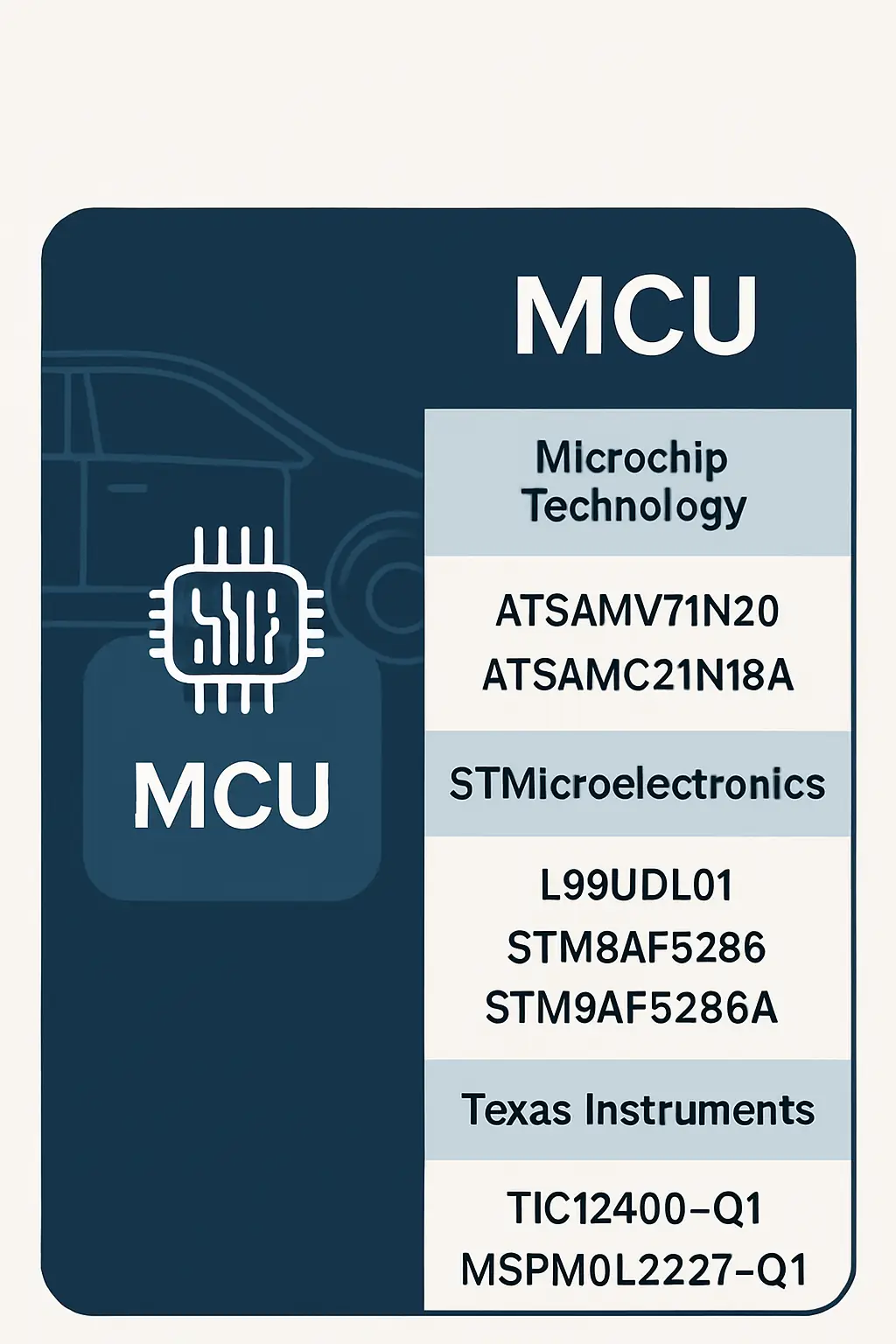
Related Parts
| Series Name | Description | Manufacturer Name | Attribute Description |
|---|---|---|---|
| Microchip Technology | 32-bit ARM Cortex-M7, 300 MHz, 2MB Flash, 384KB RAM, 100-pin TFBGA, operates up to 125°C, supports Ethernet, CAN, USB, UART, SPI, I2C, 12-bit ADC, PWM, and advanced crypto. | ||
| Microchip Technology | 32-bit ARM Cortex-M4F MCU, 120 MHz, 2048 KB Flash, 256 KB RAM, 1.62V-3.6V, QFP100, USB, CAN-FD, Ethernet, Crypto Engine, 12-bit ADC, DAC, Op-Amps, 5V tolerant I/O | ||
| Microchip Technology | 32-bit ARM Cortex-M0+ core, 48 MHz, 256 KB Flash, 32 KB RAM, 1.62V-3.6V operation, USB, CAN-FD, ADC, DAC, I2C, SPI, UART, QFN-64 package. | ||
| Microchip Technology | 8-bit microcontroller, 32 MHz internal oscillator, 3.5 KB Flash, 128 B RAM, 14-pin package, supports I²C, SPI, UART, 10-bit ADC, PWM, low-power modes, wide operating voltage 1.8-5.5V. | ||
| Microchip Technology | 8-bit AVR microcontroller, 20 MHz, 8 KB flash, 1 KB SRAM, 128-byte EEPROM, 12-channel 10-bit ADC, 2x analog comparators, 20-pin package, supports I2C, SPI, UART, PWM, and LIN. | ||
| Microchip Technology | 32-bit AVR MCU, 32 MHz, 32 KB Flash, 6 KB RAM, 12-bit ADC, 4x analog comparators, 5x 16-bit timers, UART, SPI, I2C, USB, up to 48 MHz PLL, 1.8–5.5 V operation. | ||
| Microchip Technology | 32V operating voltage, 4-channel high-side switch, integrated MOSFETs, over-temperature and over-current protection, SPI interface, designed for automotive applications. | ||
| Microchip Technology | 3.3V to 5.5V supply, 13.56MHz RFID transponder baseband, ISO14443A/B & ISO15693 compliant, integrated antenna driver, low-power standby mode, SPI interface, up to 80mA output current. | ||
| Microchip Technology | Input voltage: 2.7V to 5.5V; Output current: up to 1.5A; Switching frequency: 1.2MHz; Efficiency: up to 95%; Operating temperature: -40°C to +125°C; Fixed output options available. | ||
| Microchip Technology | 3.3V low-power RF transceiver, 868/915 MHz, OOK/FSK modulation, up to 30 kbps data rate, integrated PLL, low current consumption, suitable for AMI and sensor applications. |






.png?x-oss-process=image/format,webp/resize,h_32)


