
 German
 Japanese
 Portuguese
 Korea
Korea
 Mexico
 Dutch
Dutch
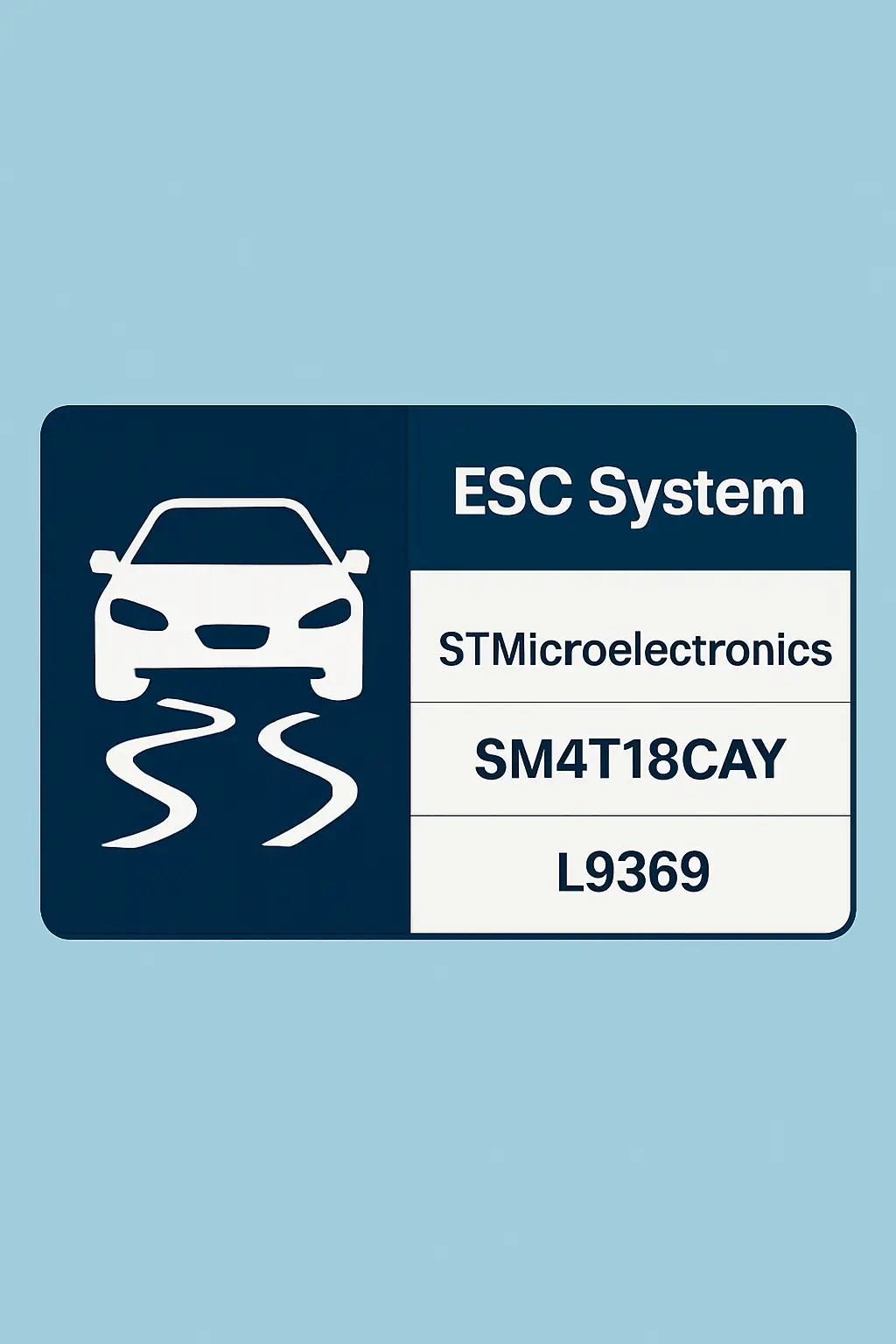
ESC System
The ESC System (Electronic Stability Control) is a critical safety feature in modern vehicles, designed to enhance vehicle handling and prevent loss of control during challenging driving conditions. It works by automatically applying brakes to individual wheels and reducing engine power when it detects signs of understeer or oversteer, helping the driver maintain control of the vehicle.
Integrated within the Chassis & Vehicle Dynamics domain, the ESC system plays a vital role in improving ride stability, especially on slippery or uneven surfaces. It continuously monitors the vehicle's movement through sensors that detect speed, steering angle, yaw rate, and lateral acceleration. By comparing this data with the driver's intended direction, the system can intervene swiftly to correct the vehicle's path.
The ESC system is widely used in Braking Systems of both passenger and commercial vehicles, ensuring safer driving experiences in various weather and road conditions. It is particularly effective in preventing skidding, spin-outs, and other dangerous situations that may arise from sudden maneuvers or loss of traction.
As part of the broader Automotive Electronics ecosystem, the ESC system exemplifies the integration of advanced electronics and software in modern vehicles. Its implementation not only enhances safety but also contributes to improved fuel efficiency and driving performance. Whether in everyday commuting or high-speed driving, the ESC system is an essential component for drivers seeking reliable and responsive vehicle control.
Details
ESC System
Related Parts
| Series Name | Description | Manufacturer Name | Attribute Description |
|---|---|---|---|
| STMicroelectronics | Uni-directional TVS diode, 18V breakdown voltage, 400W peak pulse power, 5.0A forward surge current, low leakage current, fast response, SMA package. | ||
| STMicroelectronics | 32-bit ARM Cortex-M3 microcontroller, 128 KB flash, 16 KB RAM, 48 MHz CPU, embedded CAN FD, LIN, SPI, I2C, 12-bit ADC, operating voltage 2.7-5.5V, 48-pin LQFP package. |






.png?x-oss-process=image/format,webp/resize,h_32)


