
 German
 Japanese
 Portuguese
 Korea
Korea
 Mexico
 Dutch
Dutch
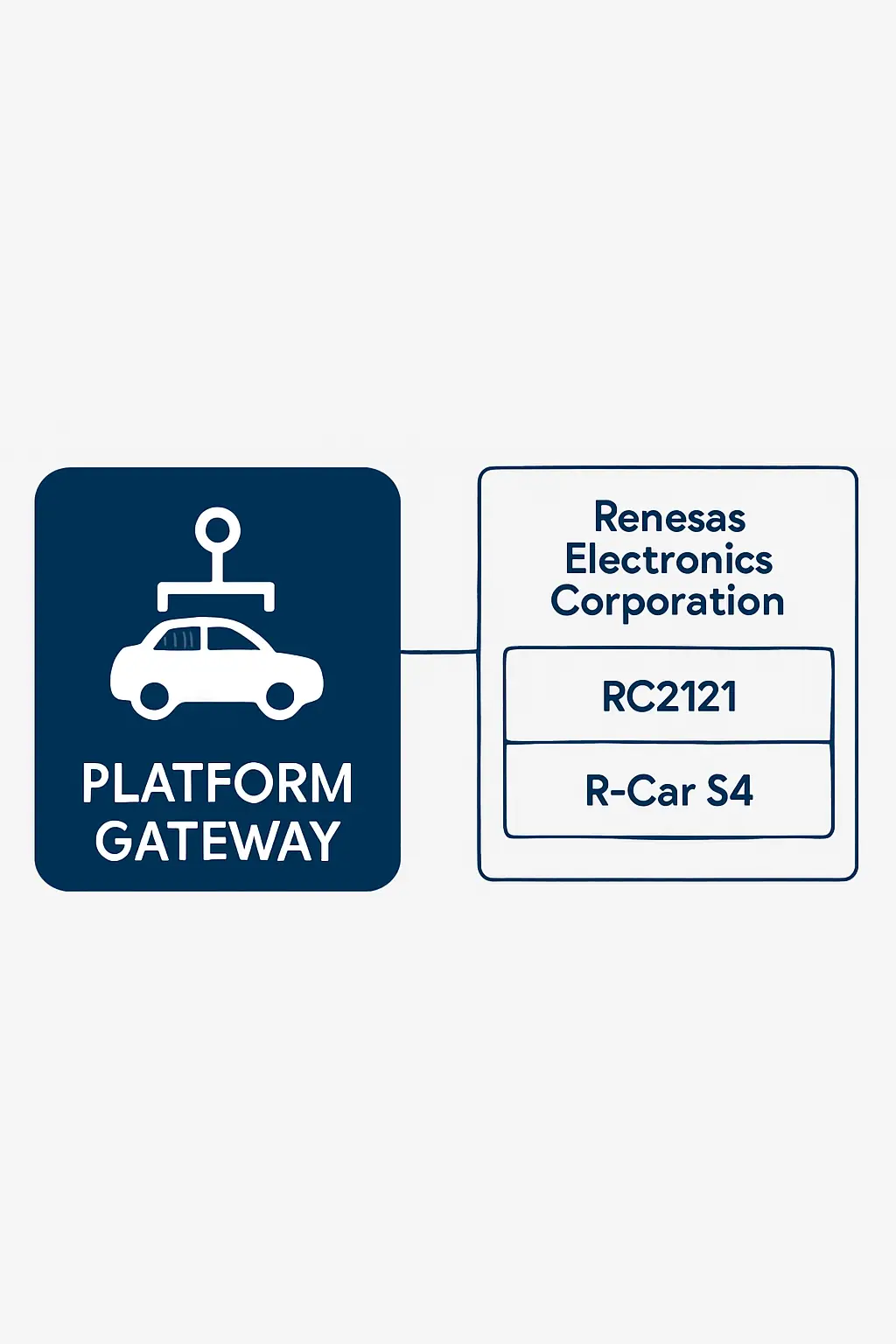
Platform Gateway
The Platform Gateway is a critical component in modern Software-Defined Vehicles, serving as the central communication hub that connects various Automotive Electronics systems. It acts as an intelligent interface, enabling seamless data exchange between different vehicle domains such as infotainment, driver assistance, and powertrain systems. Built on a robust Virtualization Platform, the Platform Gateway supports multiple operating systems and applications running concurrently, ensuring efficient resource management and real-time performance.
This gateway plays a vital role in enhancing vehicle connectivity, security, and scalability. It facilitates over-the-air (OTA) updates, integrates with cloud services, and supports advanced driver-assistance systems (ADAS). By leveraging virtualization, it allows for isolated execution of safety-critical and non-safety-critical functions, improving system reliability and flexibility.
In Software-Defined Vehicle architectures, the Platform Gateway enables modular development, reducing integration complexity and accelerating time-to-market. It is widely used in autonomous driving, connected car services, and smart mobility solutions. Its application spans across passenger cars, commercial vehicles, and electric vehicles, making it a key enabler for future automotive innovation. With its advanced capabilities, the Platform Gateway is essential for building next-generation, highly connected, and intelligent vehicles.
Details
Platform Gateway
Related Parts
| Series Name | Description | Manufacturer Name | Attribute Description |
|---|---|---|---|
| Renesas Electronics Corporation | 2.7V to 5.5V supply voltage, 1.8V I/O voltage, 32.768kHz crystal oscillator, integrated RTC, I2C interface, low power consumption, ±5ppm accuracy, operating temperature -40°C to +85°C. | ||
| Renesas Electronics Corporation | Quad-core ARM Cortex-A57, 1.5GHz, 32-bit DDR3L/DDR4 support, 8GB/s LPDDR4, integrated GPU, 14nm process, 300-pin BGA, -40°C to 125°C junction temperature, automotive-grade reliability. |






.png?x-oss-process=image/format,webp/resize,h_32)


