
 German
 Japanese
 Portuguese
 Korea
Korea
 Mexico
 Dutch
Dutch
Batteries Rechargeable
(8 results)Rechargeable (secondary) batteries are electrochemical storage cells that function on the basis of a reversible chemical reaction, allowing depleted cells to be replenished and reused numerous times before requiring disposal. Typically, secondary cells store less energy in a given space than comparable primary cells and exhibit higher levels of self-discharge, making them less stable in long-term storage. While generally more costly on a unit basis than primary cells, their potential for reuse makes them a more economical choice for many applications. While the term "battery" is most properly reserved for an assembly of multiple individual cells, its use in reference to a single cell is common.
| Part # | Manufacturer | Description | Availability | Pricing | Quantity |
|---|---|---|---|---|---|
 MIKROE-4471Batteries Rechargeable | MikroElektronika | BATTERY LITH POLY 3.7V 250MAH | 735 | - | |
 MIKROE-4475Batteries Rechargeable | MikroElektronika | BATTERY LITH POLY 3.7V 6AH | 66 | - | |
 MIKROE-4473Batteries Rechargeable | MikroElektronika | BATTERY LITH POLY 3.7V 1.5AH | 572 | - | |
 MIKROE-4474Batteries Rechargeable | MikroElektronika | BATTERY LITH POLY 3.7V 3AH | 116 | - | |
 MIKROE-698Batteries Rechargeable | MikroElektronika | BATTERY LITH POLY 3.7V 1AH | 93 | - | |
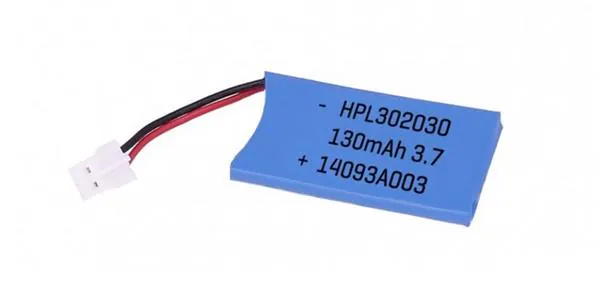 MIKROE-2625Batteries Rechargeable | MikroElektronika | BATTERY LITH POLY 3.7V 130MAH | 7 | - | |
 MIKROE-2759Batteries Rechargeable | MikroElektronika | Lithium Battery 3.7V 190mAh Rechargeable | 465 | - | |
 MIKROE-1120Batteries Rechargeable | MikroElektronika | Lithium Battery 3.7V 2Ah Rechargeable | 508 | - |




.png?x-oss-process=image/format,webp/resize,h_32)


