
 German
 Japanese
 Portuguese
 Korea
Korea
 Mexico
 Dutch
Dutch




Why Choose Us?
Professional Platform
B2B & B2C purchasingDelivery at full speed
1-2 days deliveryWide variety
Original manufacturers365 days guarantee
Responsible quality

.png)


Tech Specifications
XC95108-7PC84C Description
XC95108-7PC84C Description
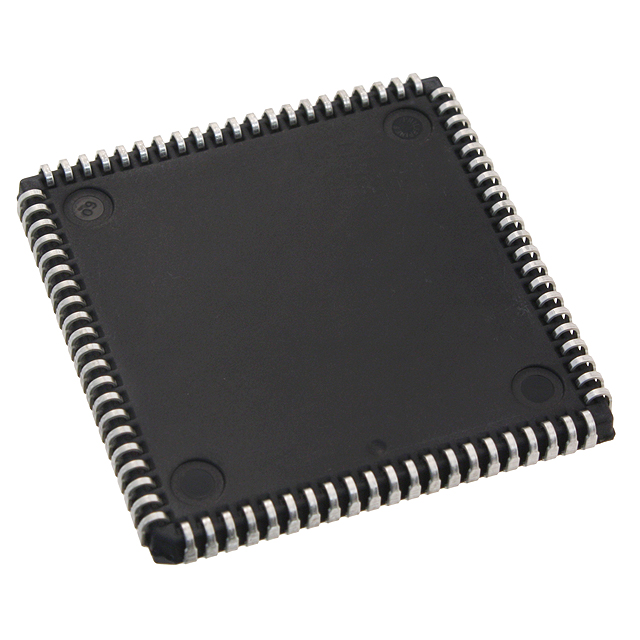
The XC95108-7PC84C is a Complex Programmable Logic Device (CPLD) from AMD's XC9500 series, designed for high-performance digital logic applications. This 84-pin PLCC (Plastic Leaded Chip Carrier) device integrates 108 macrocells and 6 logic blocks, delivering 2,400 gate equivalents with a maximum propagation delay of 7.5 ns. Operating within a 5V supply range (4.75V–5.25V) and a temperature range of 0°C to 70°C, it is optimized for real-time control and logic integration in embedded systems.
XC95108-7PC84C Features
- In-System Programmability (ISP): Supports 10,000 program/erase cycles, enabling field upgrades without desoldering.
- High I/O Density: 69 I/O pins provide flexible interfacing for peripheral integration.
- Fast Performance: 7.5 ns propagation delay ensures rapid signal processing for timing-critical applications.
- Surface-Mount Packaging: 84-PLCC form factor suits space-constrained PCB designs.
- Reliable Logic Blocks: 6 logic blocks with 108 macrocells offer scalable logic implementation.
- Obsolete Status: While no longer in production, it remains a robust choice for legacy system maintenance.
XC95108-7PC84C Applications
- Industrial Control Systems: Ideal for PLC (Programmable Logic Controller) logic due to deterministic timing.
- Telecommunications: Used in signal routing and protocol conversion for legacy telecom hardware.
- Embedded Systems: Suitable for glue logic in microcontroller-based designs.
- Automotive Electronics: Employed in diagnostic and control modules (non-extreme temperature environments).
- Legacy Equipment Upgrades: Facilitates retrofitting older systems with programmable logic.
Conclusion of XC95108-7PC84C
The XC95108-7PC84C is a high-speed, high-density CPLD offering reprogrammability, low latency, and industrial-grade reliability. Though obsolete, its 5V compatibility, macrocell density, and proven architecture make it a pragmatic choice for sustaining legacy systems or prototyping logic-intensive designs. Engineers value its balance of performance and flexibility, particularly in real-time control and interface management applications.
FAQ
Not available to buy online? Want the lower wholesale price? Please Send RFQ to get best price, we will respond immediately








.png?x-oss-process=image/format,webp/resize,h_32)


