
 German
 Japanese
 Portuguese
 Korea
Korea
 Mexico
 Dutch
Dutch


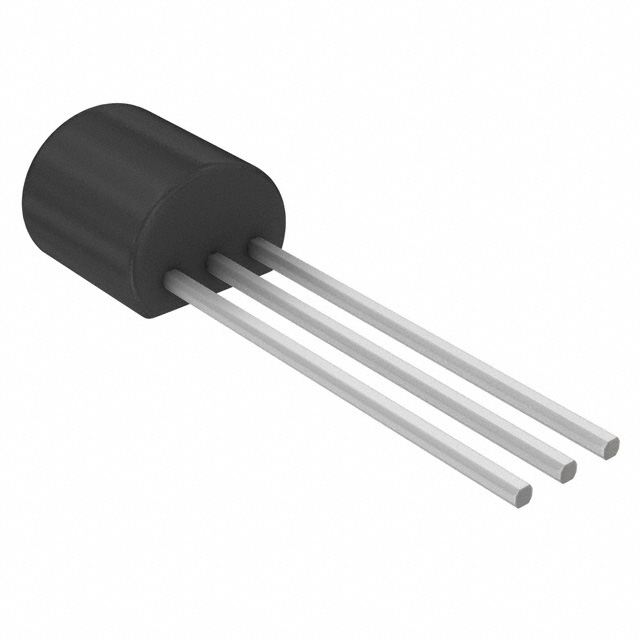

Analog Devices Inc.
AD592BN


Why Choose Us?
Professional Platform
B2B & B2C purchasingDelivery at full speed
1-2 days deliveryWide variety
Original manufacturers365 days guarantee
Responsible quality

.png)


Tech Specifications
AD592BN Description
AD592BN Description
The AD592BN from Analog Devices Inc. is a precision analog current-output temperature sensor designed for accurate temperature measurement in industrial, automotive, and instrumentation applications. Housed in a TO-92-3 package, this obsolete but reliable device operates over a -25°C to +105°C range with a ±1°C accuracy at 25°C. It features a 4V to 30V supply voltage range, making it versatile for various power environments. The analog current output (1µA/K) simplifies interfacing with ADCs or microcontrollers, eliminating the need for complex signal conditioning. Its through-hole mounting and MSL 1 (Unlimited) rating ensure ease of handling and assembly in harsh environments.
AD592BN Features
- High Accuracy: ±1°C at 25°C ensures reliable temperature monitoring.
- Wide Supply Range: 4V to 30V compatibility for flexible system integration.
- Analog Current Output: 1µA/K linear scaling simplifies signal processing.
- Robust Packaging: TO-92-3 through-hole design for durability.
- Low Sensitivity to Noise: Analog output minimizes interference in electrically noisy environments.
- No Calibration Needed: Factory-trimmed for plug-and-play operation.
AD592BN Applications
- Industrial Control Systems: Precise temperature monitoring in PLCs and process control equipment.
- Automotive Diagnostics: Engine or cabin temperature sensing due to wide operating range.
- HVAC Systems: Reliable feedback for thermal management in heating/cooling units.
- Medical Devices: Patient monitoring systems requiring stable analog outputs.
- Power Supply Modules: Over-temperature protection in high-voltage designs.
Conclusion of AD592BN
The AD592BN stands out for its simplicity, accuracy, and robustness, making it ideal for applications demanding low-complexity, high-reliability temperature sensing. While obsolete, its analog current output and wide voltage range offer advantages over digital sensors in noise-prone or resource-constrained systems. Engineers favor it for legacy designs or replacements where consistent performance is critical. For modern alternatives, consider ADI's digital sensors, but the AD592BN remains a proven choice for analog-centric designs.
FAQ
Not available to buy online? Want the lower wholesale price? Please Send RFQ to get best price, we will respond immediately








.png?x-oss-process=image/format,webp/resize,h_32)


