
 German
 Japanese
 Portuguese
 Korea
Korea
 Mexico
 Dutch
Dutch


Analog Devices Inc.
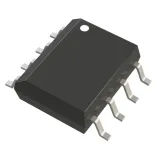
AD8400AR50


Why Choose Us?
Professional Platform
B2B & B2C purchasingDelivery at full speed
1-2 days deliveryWide variety
Original manufacturers365 days guarantee
Responsible quality

.png)


Tech Specifications
AD8400AR50 Description
AD8400AR50 Description
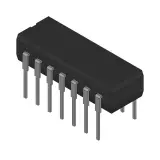
The AD8400AR50 from Analog Devices Inc. is a 50kΩ, 256-tap, digital potentiometer designed for precision analog signal adjustment in electronic circuits. Housed in an 8-SOIC package, this surface-mount device operates within a 2.7V to 5.5V supply range, making it suitable for low-voltage applications. It features a SPI interface for digital control, enabling seamless integration with microcontrollers and other digital systems. The volatile memory requires reinitialization on power-up, while its linear taper ensures uniform resistance adjustment. With a ±30% tolerance and a 500ppm/°C temperature coefficient, it balances cost and performance for general-purpose use.
AD8400AR50 Features
- 256-Tap Resolution: Provides fine-grained resistance adjustment for precision applications.
- SPI Interface: Enables fast, reliable digital communication with host systems.
- Low Wiper Resistance (200Ω typ): Minimizes signal distortion in voltage-divider configurations.
- Wide Supply Voltage (2.7V–5.5V): Compatible with both 3.3V and 5V systems.
- Linear Taper: Ideal for linear control applications like gain adjustment and calibration.
- Surface-Mount (SOIC) Package: Saves board space in compact designs.
- Moisture Sensitivity Level 1 (MSL1): Robust for standard assembly processes.
AD8400AR50 Applications
- Analog Signal Conditioning: Adjust gain, offset, or bias in op-amp circuits.
- Programmable Voltage References: Fine-tune reference voltages in DAC/ADC systems.
- Industrial Control Systems: Calibrate sensors or actuators digitally.
- Audio Equipment: Volume control or tone adjustment in portable devices.
- Test & Measurement: Replace mechanical potentiometers for automated calibration.
Conclusion of AD8400AR50
The AD8400AR50 is a versatile digital potentiometer offering 256-tap resolution, SPI control, and low-voltage operation, making it ideal for precision analog tuning in cost-sensitive designs. While obsolete, its balance of performance and ease of use still makes it relevant for legacy systems or applications requiring linear resistance adjustment. Its low wiper resistance and wide voltage range distinguish it from basic digital pots, though designers should consider newer alternatives for long-term availability.
FAQ
Not available to buy online? Want the lower wholesale price? Please Send RFQ to get best price, we will respond immediately








.png?x-oss-process=image/format,webp/resize,h_32)


