
 German
 Japanese
 Portuguese
 Korea
Korea
 Mexico
 Dutch
Dutch


Analog Devices Inc.
HMC615LP4E


Why Choose Us?
Professional Platform
B2B & B2C purchasingDelivery at full speed
1-2 days deliveryWide variety
Original manufacturers365 days guarantee
Responsible quality

.png)


Tech Specifications
HMC615LP4E Description
HMC615LP4E Description
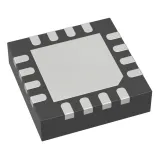
The HMC615LP4E from Analog Devices Inc. is a high-performance MMIC mixer designed for demanding RF applications. Operating within the 2.3GHz to 4GHz frequency range, this surface-mount device is optimized for WiMAX/WiBro systems, offering superior linearity and low noise performance. With a 5V supply voltage and 65mA current consumption, it delivers excellent efficiency while maintaining a 10dB noise figure, making it ideal for high-dynamic-range applications. Packaged in a 24-QFN strip format, the HMC615LP4E is classified under ECCN EAR99 and HTSUS 8542.39.0001, ensuring compliance with international trade regulations.
HMC615LP4E Features
- High IP3 Performance: Ensures minimal distortion in high-power signal environments.
- Wide Frequency Range: Covers 2.3GHz–4GHz, suitable for broadband and multi-band systems.
- Low Noise Figure (10dB): Enhances signal clarity in sensitive receive chains.
- Single Mixer Design: Simplifies circuit integration while maintaining high performance.
- 5V Single Supply: Reduces power complexity compared to dual-supply alternatives.
- Moisture Sensitivity Level (MSL) 1: Robust for extended storage and handling.
HMC615LP4E Applications
- WiMAX/WiBro Base Stations: High linearity ensures reliable signal processing in crowded spectra.
- Military & Aerospace Comms: Robust performance under harsh conditions.
- Test & Measurement Equipment: Precision mixing for signal analysis up to 4GHz.
- Point-to-Point Radios: Low noise and high IP3 improve link reliability.
Conclusion of HMC615LP4E
The HMC615LP4E stands out as a high-linearity, low-noise MMIC mixer for 2.3–4GHz applications. Its single-supply operation, compact 24-QFN package, and compliance with trade regulations make it a versatile choice for commercial and defense systems. While now obsolete, its performance legacy remains relevant for designs requiring high IP3 and low distortion in RF signal chains.
FAQ
Not available to buy online? Want the lower wholesale price? Please Send RFQ to get best price, we will respond immediately








.png?x-oss-process=image/format,webp/resize,h_32)


