
 German
 Japanese
 Portuguese
 Korea
Korea
 Mexico
 Dutch
Dutch


Analog Devices Inc.
HMC863LP4E


Why Choose Us?
Professional Platform
B2B & B2C purchasingDelivery at full speed
1-2 days deliveryWide variety
Original manufacturers365 days guarantee
Responsible quality

.png)


Tech Specifications
HMC863LP4E Description
HMC863LP4E Description
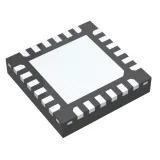
The HMC863LP4E from Analog Devices Inc. is a high-performance RF amplifier designed for general-purpose applications in the 22GHz to 26.5GHz frequency range. This surface-mount device delivers a robust gain of 21.5dB and an impressive output power at 1dB compression (P1dB) of 24.5dBm, making it suitable for demanding RF and microwave systems. Operating on a 6V supply voltage with a current draw of 350mA, the amplifier is housed in a 24QFN package and is classified under ECCN EAR99 and HTSUS 8542.33.0001. Although now obsolete, it remains a reliable choice for legacy designs requiring high-frequency amplification with low noise and high linearity.
HMC863LP4E Features
- Frequency Range: 22GHz–26.5GHz, ideal for Ka-band applications.
- High Gain & Power: 21.5dB gain and 24.5dBm P1dB ensure strong signal amplification.
- Low Power Consumption: Operates at 6V/350mA, balancing performance and efficiency.
- Robust Packaging: 24QFN strip package with MSL1 (Unlimited) moisture sensitivity, suitable for automated assembly.
- General-Purpose RF Use: Versatile for test equipment, radar, satellite communications, and microwave backhaul.
HMC863LP4E Applications
The HMC863LP4E excels in high-frequency systems requiring low-noise, high-gain amplification, including:
- Military & Aerospace: Radar systems, electronic warfare (EW), and satellite transceivers.
- Telecommunications: Ka-band point-to-point radios and 5G mmWave infrastructure.
- Test & Measurement: Signal generators and spectrum analyzers for microwave validation.
- Space & Defense: Phased-array antennas and satellite uplinks due to its wide bandwidth and stability.
Conclusion of HMC863LP4E
While obsolete, the HMC863LP4E remains a high-performance RF amplifier for 22GHz–26.5GHz applications, offering exceptional gain, power output, and reliability. Its general-purpose design makes it adaptable for defense, telecom, and test equipment, though newer alternatives may be preferred for forward-looking designs. Engineers leveraging legacy systems will find it a dependable solution for Ka-band challenges.
FAQ
Not available to buy online? Want the lower wholesale price? Please Send RFQ to get best price, we will respond immediately







.png?x-oss-process=image/format,webp/resize,h_32)


