German
 Japanese
 Portuguese
 Korea
 Mexico
 Dutch


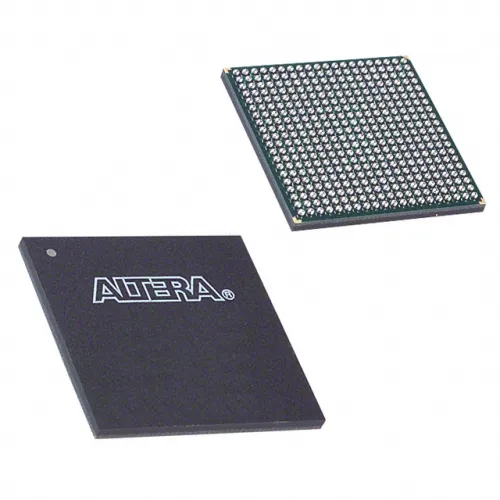
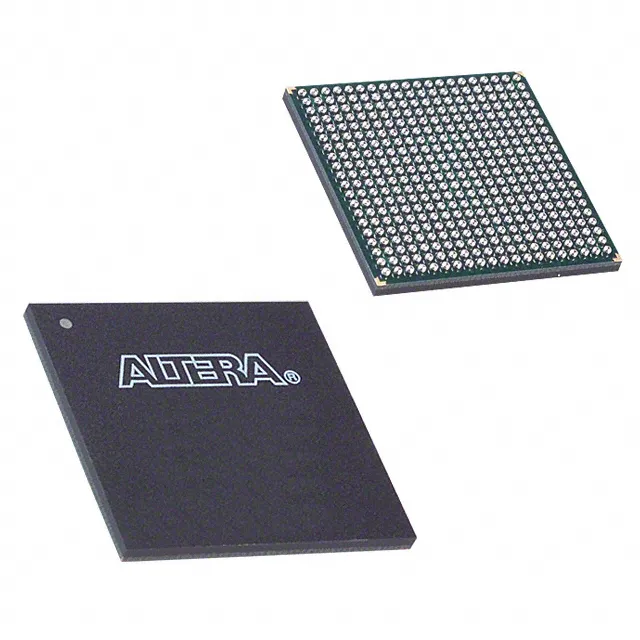
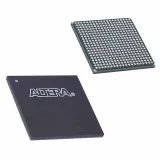
Images are for reference only. Product appearance may vary by batch. Refer to the product datasheet for exact specifications.
EP1C4F400C8



Not available to buy online? Want the lower wholesale price? Please Send RFQ to get best price, we will respond immediately
Submit an RFQ for current pricing and lead time.

EP1C4F400C8 Description
EP1C4F400C8
Key operational attribute: Max Operating Temperature is verified at 85 under manufacturer standard test conditions.
Key operational attribute: Number of Terminals is verified at 400 under manufacturer standard test conditions.
Key operational attribute: Min Operating Temperature is verified at 0 under manufacturer standard test conditions.
Key operational attribute: Terminal Position is verified at BOTTOM under manufacturer standard test conditions.
Key operational attribute: JEDEC Package Code is verified at S-PBGA-B400 under manufacturer standard test conditions.
Key operational attribute: Width is verified at 21 under manufacturer standard test conditions.
Key operational attribute: Length is verified at 21 under manufacturer standard test conditions.
Key operational attribute: Temperature Grade is verified at OTHER under manufacturer standard test conditions.
Key operational attribute: Supply Voltage-Nom is verified at 1.5 under manufacturer standard test conditions.
Intel's EP1C4F400C8 is a high-performance field-programmable gate array (FPGA) that offers a range of features and applications for various industries. Here's a description of the model, its features, and potential applications:
Model: EP1C4F400C8
Manufacturer: Intel
Description:
The EP1C4F400C8 is a member of Intel's Cyclone family of low-power, high-performance FPGAs. This device is designed to provide a balance between power consumption, performance, and cost, making it suitable for a wide range of applications.
Features:
- Performance: The EP1C4F400C8 offers high performance with its fast processing capabilities, making it ideal for applications that require real-time processing and quick response times.
- Low Power Consumption: This FPGA is designed to consume minimal power, which is essential for battery-operated devices or systems that require energy efficiency.
- Versatility: The EP1C4F400C8 is highly configurable, allowing developers to tailor the device to meet the specific requirements of their applications.
- Integrated Memory: The FPGA features on-chip memory resources, such as block RAM and distributed RAM, which can be used to store data and reduce the need for external memory components.
- I/O Capabilities: The EP1C4F400C8 provides a wide range of I/O options, including high-speed transceivers, to support various communication protocols and interfaces.
- Intellectual Property (IP) Cores: Intel offers a library of pre-built IP cores that can be easily integrated into the FPGA, reducing development time and effort.
Applications:
- Industrial Automation: The EP1C4F400C8 can be used in industrial control systems, where real-time processing and low power consumption are crucial.
- Telecommunications: The FPGA's high-speed transceivers and communication capabilities make it suitable for applications such as base stations, routers, and switches.
- Automotive: The EP1C4F400C8 can be used in various automotive applications, including infotainment systems, advanced driver assistance systems (ADAS), and power management.
- Consumer Electronics: The FPGA's versatility and low power consumption make it suitable for consumer devices such as smartphones, tablets, and wearables.
- Aerospace and Defense: The EP1C4F400C8 can be used in aerospace and defense applications, where reliability, performance, and power efficiency are critical.
- Medical Devices: The FPGA can be employed in medical imaging, diagnostic equipment, and patient monitoring systems, where real-time processing and low power consumption are essential.
In summary, Intel's EP1C4F400C8 is a versatile, high-performance FPGA that offers a range of features suitable for various applications across different industries. Its combination of performance, low power consumption, and configurability make it an attractive choice for developers looking to implement complex electronic systems.