German
 Japanese
 Portuguese
 Korea
 Mexico
 Dutch


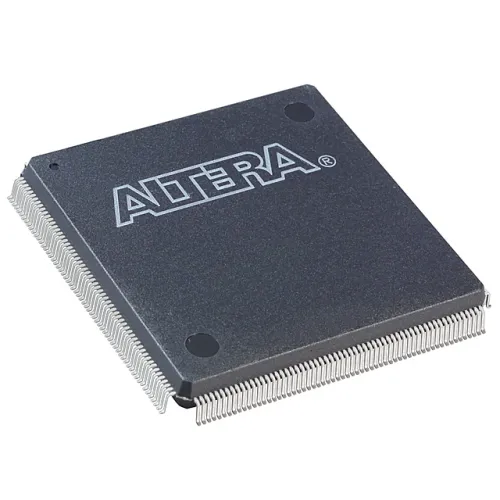
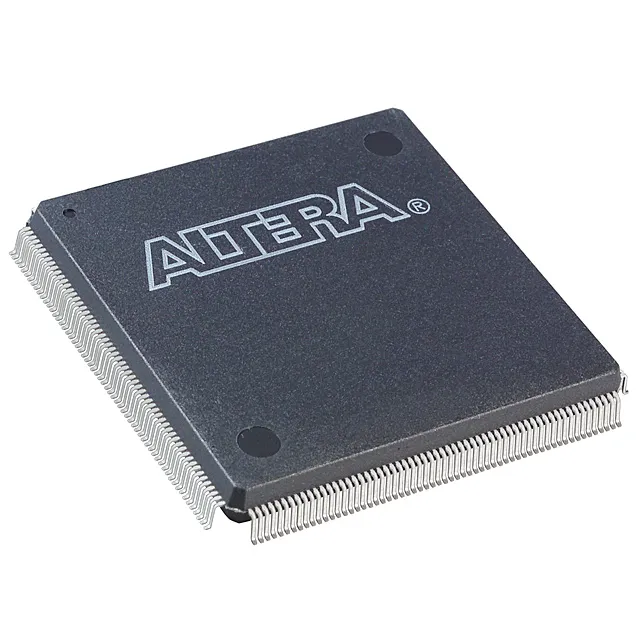
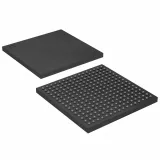
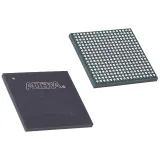
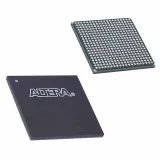
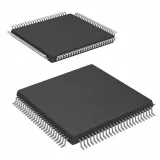
Images are for reference only. Product appearance may vary by batch. Refer to the product datasheet for exact specifications.
EP1C6Q240C6N



Not available to buy online? Want the lower wholesale price? Please Send RFQ to get best price, we will respond immediately
Submit an RFQ for current pricing and lead time.

EP1C6Q240C6N Description
EP1C6Q240C6N
Key operational attribute: Mfr is verified at Altera under manufacturer standard test conditions.
Key operational attribute: Series is verified at Cyclone® under manufacturer standard test conditions.
Key operational attribute: Packaging is verified at Tray under manufacturer standard test conditions.
Key operational attribute: Part Status is verified at Obsolete under manufacturer standard test conditions.
Key operational attribute: Number of LABs/CLBs is verified at 598 under manufacturer standard test conditions.
Key operational attribute: Number of Logic Elements/Cells is verified at 5980 under manufacturer standard test conditions.
Key operational attribute: Total RAM Bits is verified at 92160 under manufacturer standard test conditions.
Key operational attribute: Number of I/O is verified at 185 under manufacturer standard test conditions.
Key operational attribute: Voltage - Supply is verified at 1.425V ~ 1.575V under manufacturer standard test conditions.
Intel's EP1C6Q240C6N is a high-performance programmable logic device that is part of the Cyclone EP1C family. This device is designed for a wide range of applications, including industrial automation, automotive, and communications.
Description:
The EP1C6Q240C6N is a field programmable gate array (FPGA) that features a high-density of programmable logic elements, making it ideal for complex and demanding applications. It has a total of 240,000 logic elements and 240 DSP blocks, providing a high level of computational power.
Features:
Some of the key features of the EP1C6Q240C6N include:
- High-density programmable logic elements: With 240,000 logic elements, this FPGA can handle complex and demanding applications.
- DSP blocks: The device has 240 DSP blocks, providing high computational power for signal processing applications.
- High-speed transceivers: The EP1C6Q240C6N features high-speed transceivers that support data rates up to 11.3 Gbps, making it suitable for high-speed communications applications.
- Memory resources: The device has a large amount of memory resources, including block RAM, distributed RAM, and register files, providing flexibility for various memory-intensive applications.
- Low power consumption: The EP1C6Q240C6N is designed for low power consumption, making it suitable for battery-powered or energy-efficient applications.
Applications:
The EP1C6Q240C6N is suitable for a wide range of applications, including:
- Industrial automation: The high-density programmable logic elements and DSP blocks make this FPGA ideal for industrial automation applications, such as motor control and sensor processing.
- Automotive: The EP1C6Q240C6N can be used in automotive applications, such as advanced driver assistance systems (ADAS) and infotainment systems.
- Communications: The high-speed transceivers and low power consumption make this FPGA suitable for high-speed communications applications, such as 5G base stations and optical transport networks.
- Signal processing: The large number of DSP blocks and memory resources make the EP1C6Q240C6N ideal for signal processing applications, such as image and video processing, radar signal processing, and medical imaging.
- Embedded systems: The EP1C6Q240C6N can be used in embedded systems, such as aerospace and defense systems, where high reliability and performance are required.
In summary, the Intel EP1C6Q240C6N is a high-performance FPGA that offers a combination of high-density programmable logic elements, DSP blocks, high-speed transceivers, and memory resources. It is suitable for a wide range of applications, including industrial automation, automotive, communications, signal processing, and embedded systems.