
 German
 Japanese
 Portuguese
 Korea
Korea
 Mexico
 Dutch
Dutch




Why Choose Us?
Professional Platform
B2B & B2C purchasingDelivery at full speed
1-2 days deliveryWide variety
Original manufacturers365 days guarantee
Responsible quality

.png)



Tech Specifications
EPXA4F672C1 Description
EPXA4F672C1 Description
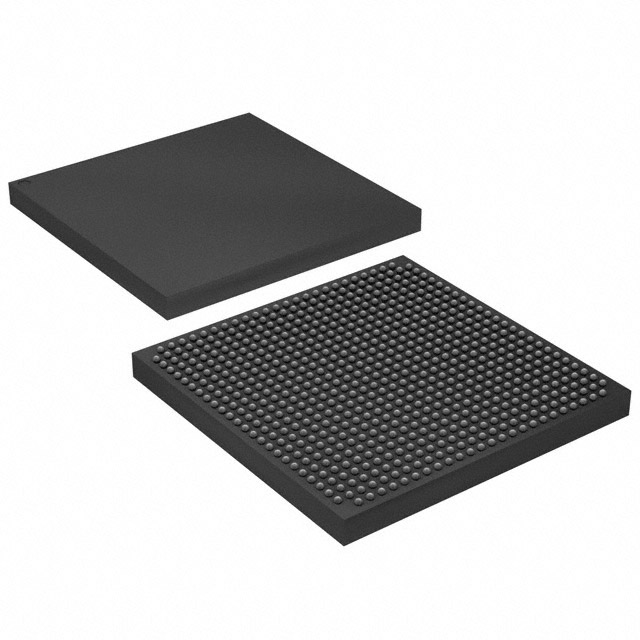
The EPXA4F672C1 is an Embedded IC Chip from Intel's Excalibur™ series, designed to deliver high performance in a compact and efficient package. This chip features a 266 MHz operating speed and a 1.8V supply voltage, making it suitable for applications requiring high-speed processing and low power consumption. The EPXA4F672C1 is housed in a 672-pin BGA package, which is ideal for surface mount applications. It has a program SRAM of 128K bytes and a data SRAM of 64K bytes, providing ample memory for complex operations. The chip also includes 400K FPGA gates and 16640 FPGA core cells, enhancing its flexibility and programmability. It supports interfaces such as EBI/EMI and UART/USART, making it versatile for various communication needs. The EPXA4F672C1 operates within a temperature range of 0°C to 85°C and has a moisture sensitivity level (MSL) of 3, ensuring reliability in diverse environmental conditions. Although this product is now obsolete, it remains a testament to Intel's commitment to innovation and performance in embedded systems.
EPXA4F672C1 Features
- High-Speed Performance: With a clock speed of 266 MHz, the EPXA4F672C1 ensures rapid processing capabilities, making it ideal for applications requiring quick data handling and computation.
- Low Power Consumption: Operating at a supply voltage of 1.8V, this chip is designed to minimize power usage, which is crucial for battery-powered and energy-efficient systems.
- Robust Memory Architecture: The EPXA4F672C1 boasts 128K bytes of program SRAM and 64K bytes of data SRAM, providing sufficient memory for both program storage and data manipulation.
- Advanced FPGA Capabilities: Equipped with 400K FPGA gates and 16640 core cells, this chip offers extensive programmability and flexibility, allowing for custom logic and complex algorithms.
- Versatile Interfaces: Support for EBI/EMI and UART/USART interfaces ensures compatibility with a wide range of peripheral devices and communication protocols.
- Reliable Operation: The EPXA4F672C1 is designed to operate within a temperature range of 0°C to 85°C and has an MSL of 3, making it suitable for industrial and rugged environments.
- Surface Mount Compatibility: The 672-pin BGA package is ideal for surface mount applications, ensuring ease of integration into modern PCB designs.
EPXA4F672C1 Applications
The EPXA4F672C1 is well-suited for a variety of applications due to its high performance, low power consumption, and versatile features. Some specific use cases include:
- Industrial Automation: The chip's robust performance and reliability make it ideal for controlling complex machinery and processes in industrial settings.
- Telecommunications: Its high-speed processing and communication interfaces are perfect for managing data transmission and network operations.
- Medical Devices: The EPXA4F672C1's low power consumption and reliability are crucial for portable and life-critical medical equipment.
- Automotive Systems: The chip's ability to operate in a wide temperature range and its surface mount compatibility make it suitable for automotive electronics, where space and environmental conditions are critical.
- Consumer Electronics: The EPXA4F672C1 can be used in high-end consumer devices that require advanced processing and low power usage, such as smart home systems and advanced gaming consoles.
Conclusion of EPXA4F672C1
The EPXA4F672C1 is a powerful and versatile Embedded IC Chip from Intel's Excalibur™ series, offering a combination of high-speed performance, low power consumption, and advanced programmability. Its robust memory architecture, extensive FPGA capabilities, and versatile interfaces make it suitable for a wide range of applications, from industrial automation to consumer electronics. Although now obsolete, the EPXA4F672C1 remains a benchmark for high-performance embedded systems and continues to influence the design and development of modern embedded technologies.
FAQ
Not available to buy online? Want the lower wholesale price? Please Send RFQ to get best price, we will respond immediately









.png?x-oss-process=image/format,webp/resize,h_32)


