
 German
 Japanese
 Portuguese
 Korea
Korea
 Mexico
 Dutch
Dutch


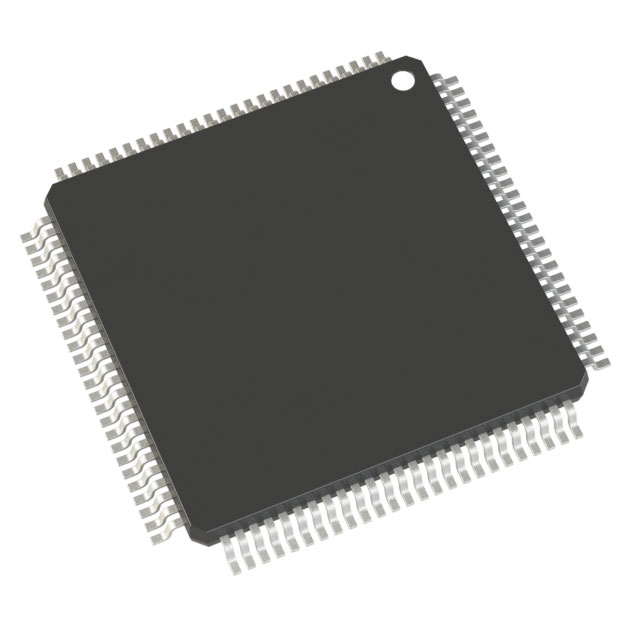

Microchip Technology
DSPIC33FJ256MC710A-H/PT


Why Choose Us?
Professional Platform
B2B & B2C purchasingDelivery at full speed
1-2 days deliveryWide variety
Original manufacturers365 days guarantee
Responsible quality

.png)



Tech Specifications
DSPIC33FJ256MC710A-H/PT Description
The Microchip Technology's DSPIC33FJ256MC710A-H/PT is a high-performance digital signal controller (DSC) that is designed for a wide range of applications, including motor control, power management, and industrial control systems.
Description:
The DSPIC33FJ256MC710A-H/PT is a member of the dsPIC33FJ series of DSCs from Microchip Technology. It is a 16-bit device that features a high-performance core with a maximum CPU speed of up to 100 MIPS. The device includes a range of integrated peripherals, including a 10-bit ADC, a 12-bit DAC, and a range of communication interfaces, including UART, SPI, and I2C.
Features:
- 16-bit digital signal controller with a 100 MIPS CPU
- Integrated 10-bit ADC and 12-bit DAC
- Range of communication interfaces, including UART, SPI, and I2C
- Up to 256 KB of flash memory and 16 KB of RAM
- Integrated peripherals, including a motor control PWM module, a dead-time controller, and a high-resolution timer
- Low-power mode for energy-efficient operation
- Available in a 100-pin PT package
Applications:
The DSPIC33FJ256MC710A-H/PT is suitable for a wide range of applications that require high-performance digital signal processing and control, including:
- Motor control systems, such as brushless DC (BLDC) motor control and AC motor control
- Power management systems, such as battery management and power conversion
- Industrial control systems, such as robotics and automation
- Medical devices, such as imaging and diagnostic equipment
- Automotive applications, such as engine control and safety systems
Overall, the DSPIC33FJ256MC710A-H/PT is a versatile and powerful digital signal controller that is well-suited for a wide range of applications that require high-performance digital signal processing and control. Its integrated peripherals and communication interfaces make it easy to integrate into complex systems, and its low-power mode allows for energy-efficient operation.
FAQ
Not available to buy online? Want the lower wholesale price? Please Send RFQ to get best price, we will respond immediately







.png?x-oss-process=image/format,webp/resize,h_32)


