
 German
 Japanese
 Portuguese
 Korea
Korea
 Mexico
 Dutch
Dutch



Microchip Technology
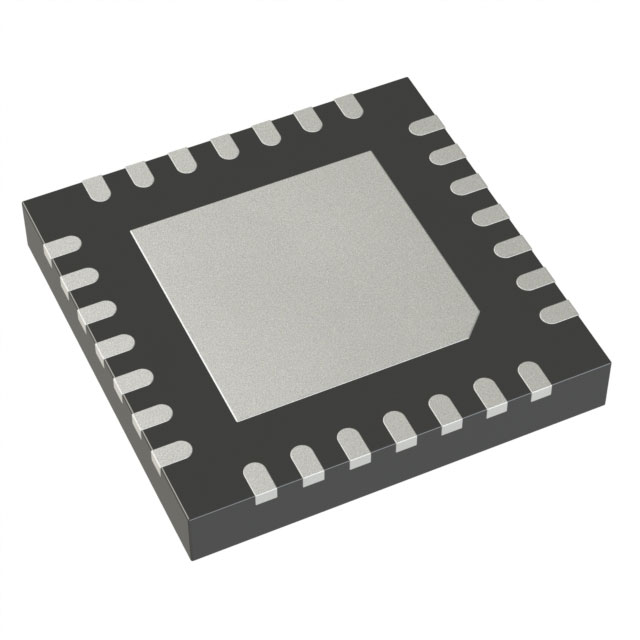
PIC16LF767-I/ML


Why Choose Us?
Professional Platform
B2B & B2C purchasingDelivery at full speed
1-2 days deliveryWide variety
Original manufacturers365 days guarantee
Responsible quality

.png)


Tech Specifications
PIC16LF767-I/ML Description
The PIC16LF767-I/ML is a microcontroller (MCU) from Microchip Technology's PIC16LF series. It is a 16-bit device that offers a range of features and is suitable for a variety of applications.
Description:
The PIC16LF767-I/ML is a low-power, high-performance microcontroller that features a 16-bit architecture and a wide range of integrated peripherals. It is available in a 28-pin PDIP (Plastic Dual In-Line Package) and operates with a supply voltage range of 2.0V to 5.5V.
Features:
- Core: The microcontroller features a 16-bit CPU core with a maximum clock speed of 20 MIPS.
- Memory: The device includes 8KB of Flash program memory, 368 bytes of RAM, and 256 bytes of EEPROM.
- Input/Output: The PIC16LF767-I/ML has 19 digital I/O pins, including 5-volt tolerant inputs.
- Communication: It offers a Universal Synchronous/Asynchronous Receiver/Transmitter (USART) for serial communication, as well as an SPI (Serial Peripheral Interface) and I2C (Inter-Integrated Circuit) interface.
- Timers: The device includes two 8-bit timers and one 16-bit timer with capture and compare capabilities.
- ADC: An 8-channel, 10-bit Analog-to-Digital Converter (ADC) is integrated into the microcontroller.
- PWM: It features a 7-channel Pulse Width Modulator (PWM) with programmable output options.
- Security: The microcontroller provides electronic and physical security features, including password protection and a unique ID.
Applications:
The PIC16LF767-I/ML is suitable for a wide range of applications, including:
- Industrial control systems
- Consumer electronics
- Automotive systems
- Medical devices
- Telecommunication systems
- IoT (Internet of Things) devices
- Smart home applications
- Battery-powered devices
The PIC16LF767-I/ML's combination of features, such as low power consumption, versatile communication interfaces, and integrated peripherals, make it a popular choice for embedded systems requiring a balance of performance, functionality, and cost-effectiveness.
FAQ
| Quantity | Unit Price | Ext. Price |
|---|---|---|
| 1+ | $6.56480 | $6.56 |
Not available to buy online? Want the lower wholesale price? Please Send RFQ to get best price, we will respond immediately






.png?x-oss-process=image/format,webp/resize,h_32)


