
 German
 Japanese
 Portuguese
 Korea
Korea
 Mexico
 Dutch
Dutch


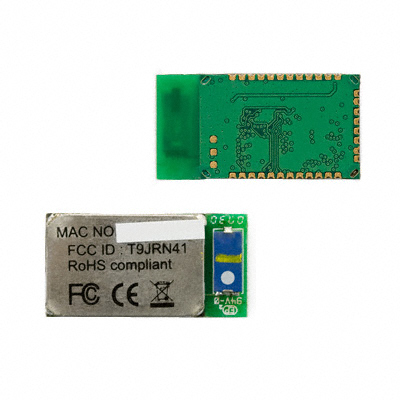

Microchip Technology
RN41-I/RM


Why Choose Us?
Professional Platform
B2B & B2C purchasingDelivery at full speed
1-2 days deliveryWide variety
Original manufacturers365 days guarantee
Responsible quality

.png)



Tech Specifications
RN41-I/RM Description
RN41-I/RM Description
The RN41-I/RM by Microchip Technology is a Class 1 Bluetooth v2.1 + EDR RF transceiver module designed for high-performance wireless communication. Operating in the 2.4GHz ISM band, it supports FHSS (Frequency Hopping Spread Spectrum) and GFSK (Gaussian Frequency Shift Keying) modulation, delivering a data rate of 300kbps with a robust 16dBm output power. The module integrates a chip antenna and features SPI, UART, and USB serial interfaces, making it versatile for embedded applications. With a 3V–3.6V supply range, it consumes 35mA (RX) and 65mA (TX), balancing power efficiency with reliable connectivity.
RN41-I/RM Features
- Bluetooth v2.1 + EDR: Enhanced data rate for faster transmission.
- Integrated Chip Antenna: Compact design with built-in RF components.
- Multi-Interface Support: SPI, UART, and USB for flexible integration.
- High Output Power (16dBm): Extended range for Class 1 Bluetooth devices.
- Low Power Consumption: Optimized for battery-operated systems.
- Industrial-Grade Firmware (v6.15): Stable performance with FHSS/GFSK modulation.
- RoHS3 & REACH Compliant: Meets environmental and safety standards.
RN41-I/RM Applications
Ideal for industrial IoT, medical devices, and automotive telematics, the RN41-I/RM excels in scenarios requiring long-range Bluetooth connectivity and low-latency data transfer. Its surface-mount package suits space-constrained designs, while the 6.15 firmware ensures compatibility with legacy Bluetooth systems. Key use cases include:
- Wireless Sensor Networks: Reliable data aggregation in harsh environments.
- Remote Monitoring Systems: High-power transmission for extended coverage.
- Embedded Bluetooth Hosts: Seamless integration with microcontrollers via UART/SPI.
Conclusion of RN41-I/RM
The RN41-I/RM stands out for its Class 1 Bluetooth range, multi-interface flexibility, and industrial durability. While now obsolete, its high output power and proven firmware make it a viable choice for legacy upgrades or niche applications requiring robust wireless links. Engineers valuing reliability over cutting-edge features may still find it advantageous in specific deployments.
FAQ
Not available to buy online? Want the lower wholesale price? Please Send RFQ to get best price, we will respond immediately







.png?x-oss-process=image/format,webp/resize,h_32)


