
 German
 Japanese
 Portuguese
 Korea
Korea
 Mexico
 Dutch
Dutch




Why Choose Us?
Professional Platform
B2B & B2C purchasingDelivery at full speed
1-2 days deliveryWide variety
Original manufacturers365 days guarantee
Responsible quality

.png)


Tech Specifications
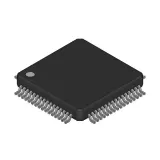
MC68030RC33C Description
The Motorola MC68030RC33C is a microprocessor that was developed by Motorola in the late 1980s. It is a member of the Motorola 68000 family of microprocessors, which were widely used in a variety of applications, including personal computers, workstations, and embedded systems.
Description:
The MC68030RC33C is a 32-bit microprocessor with a clock speed of up to 33 MHz. It features a 32-bit data bus and a 24-bit address bus, allowing it to access up to 16 MB of memory. The processor is fabricated using a 1-micron CMOS process and is available in a 120-pin PGA package.
Features:
- 32-bit data bus and 24-bit address bus
- Up to 33 MHz clock speed
- 1-micron CMOS process technology
- 120-pin PGA package
- Support for virtual memory management
- Integrated memory management unit (MMU)
- Support for 8, 16, and 32-bit data types
- Built-in support for multitasking and multiprocessing
- Advanced instruction set, including support for bit manipulation, multiply/divide, and barrel shift operations
Applications:
The Motorola MC68030RC33C was used in a variety of applications, including:
- Personal computers: The MC68030RC33C was used in some high-end personal computers, such as the Apple Macintosh Quadra series and the Atari ST series.
- Workstations: The processor was also used in some workstations, such as the Sun Microsystems Sparcstation series.
- Embedded systems: Due to its advanced features and performance, the MC68030RC33C was used in various embedded systems, including industrial control systems, medical equipment, and telecommunications equipment.
- Gaming consoles: The MC68030RC33C was used in some gaming consoles, such as the Sega Genesis/Mega Drive.
Overall, the Motorola MC68030RC33C was a powerful and versatile microprocessor that played a significant role in the development of personal computers, workstations, and embedded systems in the late 1980s and early 1990s. Its advanced features and performance made it a popular choice for a wide range of applications.
FAQ
| Quantity | Unit Price | Ext. Price |
|---|---|---|
| 2+ | $132.43120 | $264.86 |
Not available to buy online? Want the lower wholesale price? Please Send RFQ to get best price, we will respond immediately





.png?x-oss-process=image/format,webp/resize,h_32)


