
 German
 Japanese
 Portuguese
 Korea
Korea
 Mexico
 Dutch
Dutch


NXP Semiconductors
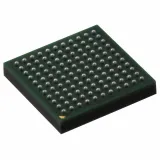
MK30DX256VMC7


Why Choose Us?
Professional Platform
B2B & B2C purchasingDelivery at full speed
1-2 days deliveryWide variety
Original manufacturers365 days guarantee
Responsible quality

.png)


Tech Specifications
MK30DX256VMC7 Description
The MK30DX256VMC7 is a microcontroller unit (MCU) developed by NXP Semiconductors. It belongs to the Kinetis K series, which is designed for a wide range of embedded control applications.
Description:
The MK30DX256VMC7 is a high-performance MCU based on the ARM Cortex-M4 processor. It features a 32-bit architecture and operates at a frequency of up to 120 MHz. The MCU is equipped with 256 KB of flash memory and 32 KB of SRAM, making it suitable for applications that require moderate memory capacity.
Features:
- ARM Cortex-M4 processor with DSP and floating-point unit (FPU) for high-performance computing.
- 256 KB of flash memory and 32 KB of SRAM for code and data storage.
- A wide range of communication interfaces, including UART, SPI, I2C, USB, and CAN.
- Advanced control features, such as PWM, ADC, and DAC, for precise control of external devices.
- Integrated security features, including a unique security ID and tamper detection.
- Low-power modes to extend battery life in portable applications.
- A range of integrated peripherals, including timers, watchdog, and a real-time clock (RTC).
Applications:
The MK30DX256VMC7 is suitable for a wide range of embedded control applications, including:
- Industrial control systems, such as motor control, sensor interfacing, and data acquisition.
- Medical devices, such as portable monitoring equipment and diagnostic tools.
- Consumer electronics, including home automation, smart appliances, and portable devices.
- Automotive applications, such as body control modules and infotainment systems.
- IoT devices, such as smart sensors, wearables, and connected home devices.
In summary, the MK30DX256VMC7 is a versatile and powerful MCU that offers a combination of high-performance processing, advanced control features, and a range of communication interfaces. Its low-power capabilities make it suitable for battery-powered applications, while its integrated security features provide protection against unauthorized access.
FAQ
Not available to buy online? Want the lower wholesale price? Please Send RFQ to get best price, we will respond immediately






.png?x-oss-process=image/format,webp/resize,h_32)


