
 German
 Japanese
 Portuguese
 Korea
Korea
 Mexico
 Dutch
Dutch



onsemi
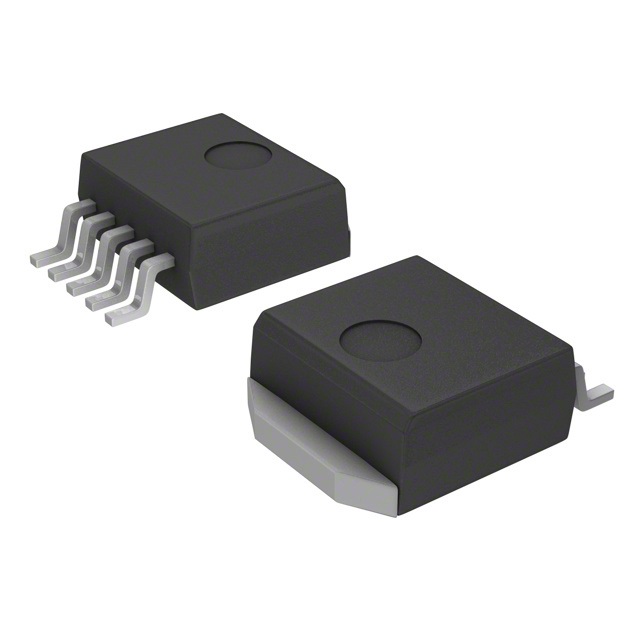
LM2576D2T-3.3


Why Choose Us?
Professional Platform
B2B & B2C purchasingDelivery at full speed
1-2 days deliveryWide variety
Original manufacturers365 days guarantee
Responsible quality

.png)


Tech Specifications
LM2576D2T-3.3 Description
LM2576D2T-3.3 Description
The LM2576D2T-3.3 from onsemi is a fixed-output 3.3V, 3A step-down (buck) switching voltage regulator in a D2PAK-5 surface-mount package. Designed for high-efficiency power conversion, it accepts a wide 7V to 40V input range, making it suitable for industrial, automotive, and telecom applications where input voltage fluctuations are common. With a 52kHz switching frequency, it balances efficiency and component size, reducing the need for large external filters. Although marked as obsolete, it remains a robust choice for legacy designs due to its reliability and simplicity.
LM2576D2T-3.3 Features
- Fixed 3.3V Output: Eliminates the need for external feedback resistors, simplifying design.
- High Current (3A): Supports power-hungry loads with minimal heat dissipation.
- Wide Input Range (7V–40V): Ideal for systems with unregulated or variable power sources.
- Non-Synchronous Buck Topology: Cost-effective for applications not requiring ultra-high efficiency.
- 52kHz Switching Frequency: Reduces inductor size while maintaining low EMI.
- D2PAK-5 Package: Offers superior thermal performance for high-current operation.
- REACH Unaffected: Compliant with environmental regulations.
LM2576D2T-3.3 Applications
This regulator excels in:
- Industrial Power Supplies: Converts 24V/12V rails to 3.3V for microcontrollers and sensors.
- Automotive Systems: Handles load-dump scenarios (up to 40V) in infotainment or ECUs.
- Telecom Equipment: Steps down 48V to 3.3V for low-voltage logic circuits.
- Legacy Designs: Replaces linear regulators to improve efficiency in older systems.
- Battery-Powered Devices: Efficiently manages voltage from multi-cell battery packs.
Conclusion of LM2576D2T-3.3
The LM2576D2T-3.3 is a proven, high-performance buck regulator offering simplicity, ruggedness, and broad compatibility. While newer synchronous alternatives may offer higher efficiency, its wide input range, fixed output, and robust package make it a reliable choice for demanding environments. Engineers designing for cost-sensitive or legacy systems will find it particularly valuable, despite its obsolete status. For applications requiring stable 3.3V power from variable sources, this IC remains a pragmatic solution.
FAQ
Not available to buy online? Want the lower wholesale price? Please Send RFQ to get best price, we will respond immediately







.png?x-oss-process=image/format,webp/resize,h_32)


