
 German
 Japanese
 Portuguese
 Korea
Korea
 Mexico
 Dutch
Dutch




onsemi
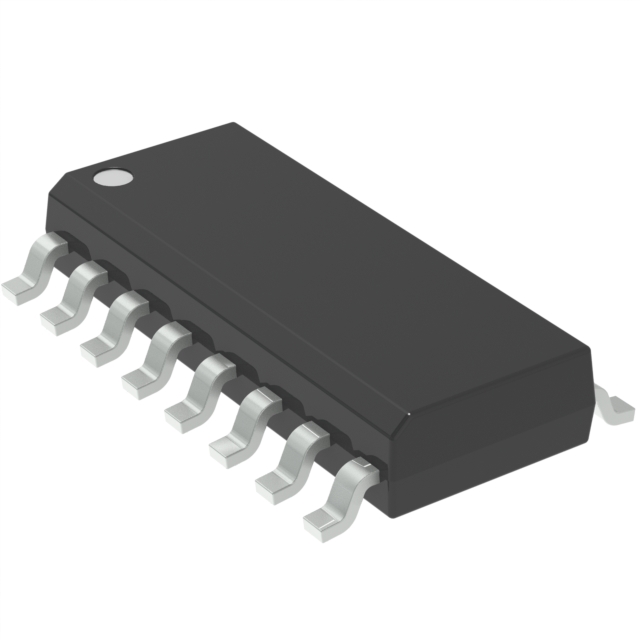
MC74HC4060ADG


Why Choose Us?
Professional Platform
B2B & B2C purchasingDelivery at full speed
1-2 days deliveryWide variety
Original manufacturers365 days guarantee
Responsible quality

.png)


Tech Specifications
MC74HC4060ADG Description
MC74HC4060ADG Description
The MC74HC4060ADG from onsemi is a high-speed 14-bit binary counter with an integrated oscillator, designed for precision timing and frequency division applications. Operating within a 2V to 6V supply range, this negative-edge-triggered device offers a 50 MHz count rate, making it suitable for high-performance digital systems. Housed in a 16-SOIC package, it features asynchronous reset and up-counting direction, ensuring flexible control in sequential logic designs. As part of the 74HC series, it combines low power consumption with CMOS-level compatibility, adhering to ROHS3 and REACH environmental standards.
MC74HC4060ADG Features
- 14-bit binary counter with integrated oscillator for standalone operation.
- Wide voltage range (2V–6V) supports mixed-voltage environments.
- High-speed performance: 50 MHz count rate for timing-critical applications.
- Asynchronous reset enables immediate counter initialization.
- Negative-edge triggering ensures reliable synchronization.
- Low-power CMOS technology with TTL-compatible inputs/outputs.
- Surface-mount (SOIC-16) packaging for compact PCB integration.
- ROHS3 compliant and REACH unaffected, meeting global environmental standards.
MC74HC4060ADG Applications
- Timing systems: Clock dividers, delay generators, and real-time counters.
- Frequency synthesis: Oscillator-based circuits for signal processing.
- Industrial controls: Sequential logic in automation and instrumentation.
- Consumer electronics: Used in timers, alarms, and display drivers.
- Embedded systems: Resource-efficient counting in microcontroller peripherals.
Conclusion of MC74HC4060ADG
The MC74HC4060ADG stands out for its high-speed counting, low-voltage operation, and integrated oscillator, making it ideal for precision timing and frequency division tasks. While classified as obsolete, its robust design and compatibility with modern CMOS/TTL systems ensure continued utility in legacy or niche applications. Engineers value its simplicity, reliability, and environmental compliance, though newer alternatives may be preferred for cutting-edge designs.
FAQ
Not available to buy online? Want the lower wholesale price? Please Send RFQ to get best price, we will respond immediately






.png?x-oss-process=image/format,webp/resize,h_32)


