
ROHM Semiconductor
BH1792GLC-E2


Why Choose Us?
Professional Platform
B2B & B2C purchasingDelivery at full speed
1-2 days deliveryWide variety
Original manufacturers365 days guarantee
Responsible quality

.png)



Tech Specifications
BH1792GLC-E2 Description
BH1792GLC-E2 Description
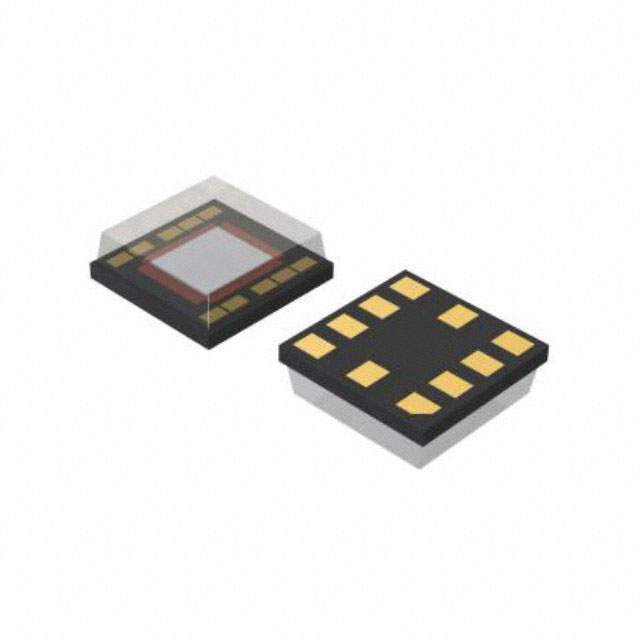
The BH1792GLC-E2 from ROHM Semiconductor is a highly integrated optical sensor designed for oximetry and heart rate monitoring applications. This I2C interface sensor combines precision photodetectors and signal processing to deliver accurate physiological data. With its compact Tape & Reel (TR) packaging and ROHS3 compliance, it meets stringent environmental and industry standards. Although marked as Not For New Designs, it remains a reliable choice for existing applications requiring stable performance. The sensor operates within MSL 3 (168 Hours) moisture sensitivity limits, ensuring durability in controlled environments. Its EAR99 classification and REACH Unaffected status further simplify global deployment.
BH1792GLC-E2 Features
- High Accuracy: Optimized for heart rate and SpO₂ measurement with low noise and high sensitivity.
- I2C Interface: Simplifies integration with microcontrollers and reduces system complexity.
- Compact Design: Small footprint ideal for wearable and portable medical devices.
- Low Power Consumption: Enhances battery life in continuous monitoring applications.
- Environmental Compliance: ROHS3 Compliant and REACH Unaffected, suitable for eco-conscious designs.
- Robust Packaging: Tape & Reel (TR) ensures safe handling and automated assembly.
BH1792GLC-E2 Applications
- Wearable Health Monitors: Fitness bands and smartwatches for real-time heart rate tracking.
- Medical Devices: Portable oximeters and patient monitoring systems.
- IoT Health Solutions: Remote health monitoring with embedded sensor data.
- Sports & Wellness Gadgets: Activity trackers with advanced physiological metrics.
Conclusion of BH1792GLC-E2
The BH1792GLC-E2 is a proven solution for optical biosensing, offering a balance of precision, integration ease, and compliance. While not recommended for new designs, its reliability makes it suitable for legacy systems in wearables, medical tech, and IoT health applications. Engineers value its low-power operation, I2C compatibility, and environmental resilience, ensuring long-term performance in demanding use cases.
FAQ
Not available to buy online? Want the lower wholesale price? Please Send RFQ to get best price, we will respond immediately







.png?x-oss-process=image/format,webp/resize,h_32)


