
 German
 Japanese
 Portuguese
 Korea
Korea
 Mexico
 Dutch
Dutch


ROHM Semiconductor
MNR15ERRPJ331


Why Choose Us?
Professional Platform
B2B & B2C purchasingDelivery at full speed
1-2 days deliveryWide variety
Original manufacturers365 days guarantee
Responsible quality

.png)


Tech Specifications
MNR15ERRPJ331 Description
MNR15ERRPJ331 Description
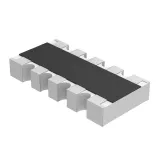
The MNR15ERRPJ331 from ROHM Semiconductor is a high-performance 8-resistor bussed network designed for precision surface-mount applications. Packaged in a compact 1206 (3216 Metric) convex long-side terminal format, this array offers a 330Ω resistance per element with a ±5% tolerance and ±200ppm/°C temperature coefficient. Its 31mW power rating per resistor and low-profile 0.026" (0.65mm) height make it ideal for space-constrained designs. Compliant with ROHS3 and REACH standards, the device is delivered in tape & reel (TR) packaging for automated assembly efficiency.
MNR15ERRPJ331 Features
- Optimized Circuit Design: Bussed configuration simplifies PCB layout by reducing trace complexity.
- High Reliability: MSL 1 (Unlimited) moisture sensitivity ensures robustness in humid environments.
- Space-Efficient: 3.20mm x 1.60mm footprint and ultra-thin profile suit high-density PCBs.
- Stable Performance: ±200ppm/°C TCR minimizes resistance drift across operating temperatures.
- Industry Compliance: EAR99 ECCN and HTSUS 8533.21.0020 classification facilitate global logistics.
MNR15ERRPJ331 Applications
This resistor network excels in:
- Voltage Division: Precision dividers in sensor interfaces or ADC circuits.
- Pull-Up/Down Networks: Signal conditioning in digital systems (e.g., I²C buses).
- Consumer Electronics: Space-saving solution for smartphones, wearables, and IoT devices.
- Industrial Controls: Stable performance in PLCs and motor drivers under varying temperatures.
- Automotive Electronics: REACH compliance supports use in non-critical automotive subsystems.
Conclusion of MNR15ERRPJ331
The MNR15ERRPJ331 combines miniaturization, reliability, and ease of integration, making it a superior choice for modern electronics. Its bussed architecture, tight TCR, and compliance with environmental standards address key challenges in circuit design, particularly where board space and thermal stability are critical. Engineers can leverage this component to streamline layouts and enhance system durability across consumer, industrial, and automotive applications.
FAQ
Not available to buy online? Want the lower wholesale price? Please Send RFQ to get best price, we will respond immediately






.png?x-oss-process=image/format,webp/resize,h_32)


