
 German
 Japanese
 Portuguese
 Korea
Korea
 Mexico
 Dutch
Dutch


Semtech
SX1232IMLTRT


Why Choose Us?
Professional Platform
B2B & B2C purchasingDelivery at full speed
1-2 days deliveryWide variety
Original manufacturers365 days guarantee
Responsible quality

.png)


Tech Specifications
SX1232IMLTRT Description
Semtech's SX1232IMLTRT is a highly integrated radio frequency (RF) transceiver designed for wireless communication applications. It operates in the 169 MHz to 178 MHz frequency range and is ideal for low-power, long-range communication systems.
Description:
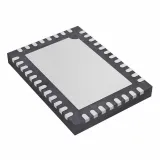
The SX1232IMLTRT is a compact, low-power RF transceiver that features a high level of integration. It includes an RF section, a modulation/demodulation section, a power amplifier, and a crystal oscillator. The device is housed in a 16-pin, 3 x 5 mm QFN package.
Features:
- Operating frequency range: 169 MHz to 178 MHz
- High integration: includes RF section, modulation/demodulation section, power amplifier, and crystal oscillator
- Low power consumption: suitable for battery-powered applications
- Programmable output power: up to +14 dBm
- Support for various modulation schemes: GFSK, MSK, OOK, and 4-FSK
- Robust communication: built-in error detection and correction capabilities
- Small form factor: 16-pin, 3 x 5 mm QFN package
Applications:
The SX1232IMLTRT is suitable for a wide range of wireless communication applications, including:
- Industrial automation and control systems
- Smart metering and monitoring systems
- Wireless sensor networks
- Remote control and telemetry applications
- Home automation and security systems
- Asset tracking and monitoring systems
- Low-power, long-range IoT devices
In summary, the Semtech SX1232IMLTRT is a versatile and low-power RF transceiver that is ideal for a variety of wireless communication applications. Its high level of integration, support for various modulation schemes, and robust communication capabilities make it a popular choice for designers looking to implement reliable and efficient wireless systems.
FAQ
Not available to buy online? Want the lower wholesale price? Please Send RFQ to get best price, we will respond immediately







.png?x-oss-process=image/format,webp/resize,h_32)


