
 German
 Japanese
 Portuguese
 Korea
Korea
 Mexico
 Dutch
Dutch


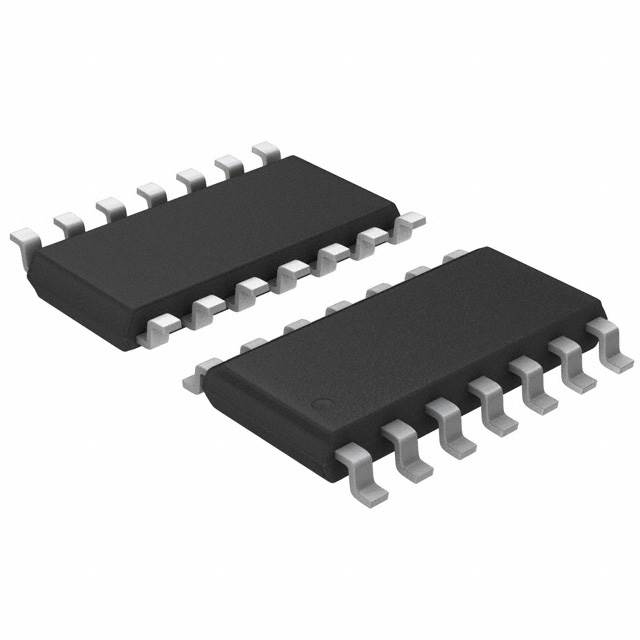

STMicroelectronics
74AC74MTR


Why Choose Us?
Professional Platform
B2B & B2C purchasingDelivery at full speed
1-2 days deliveryWide variety
Original manufacturers365 days guarantee
Responsible quality

.png)



Tech Specifications
74AC74MTR Description
74AC74MTR Description
The 74AC74MTR is a dual D-type flip-flop integrated circuit (IC) designed by STMicroelectronics. This logic IC chip features two independent D-type flip-flops, each capable of storing a single bit of data. The device operates within a supply voltage range of 2V to 6V, making it versatile for various power supply configurations. It is designed to function at a clock frequency of up to 300 MHz, ensuring high-speed performance suitable for modern digital systems.
The 74AC74MTR is equipped with complementary outputs, providing both true and inverted outputs for each flip-flop. This feature enhances the flexibility of the IC in digital circuit designs, allowing for a wider range of applications. The flip-flops are triggered on the positive edge of the clock signal, ensuring precise timing control. The maximum propagation delay is 10ns at 5V with a maximum load capacitance of 50pF, which is crucial for maintaining high-speed data integrity.
74AC74MTR Features
- High-Speed Performance: With a clock frequency of up to 300 MHz, the 74AC74MTR ensures fast data processing and transfer, making it suitable for high-speed digital applications.
- Complementary Outputs: Each flip-flop provides both true and inverted outputs, enhancing the versatility of the IC in various digital circuit designs.
- Low Power Consumption: The IC operates with a quiescent current of only 2 µA, making it energy-efficient and suitable for low-power applications.
- Wide Operating Voltage Range: The 74AC74MTR can operate within a supply voltage range of 2V to 6V, offering flexibility in power supply requirements.
- High Output Current Capability: The IC supports an output current of 24mA for both high and low states, ensuring robust performance in driving various loads.
- Positive Edge Triggering: The flip-flops are triggered on the positive edge of the clock signal, providing precise timing control and synchronization.
- Low Input Capacitance: The input capacitance of 3 pF minimizes signal delays and ensures high-speed operation.
- Compliance and Reliability: The 74AC74MTR is REACH unaffected and RoHS3 compliant, ensuring environmental safety and reliability in manufacturing processes.
74AC74MTR Applications
The 74AC74MTR is ideal for a variety of digital applications where high-speed data storage and transfer are required. Some specific use cases include:
- Digital Signal Processing: The high-speed performance and complementary outputs make the 74AC74MTR suitable for processing and manipulating digital signals in real-time.
- Clock Management: The positive edge triggering and precise timing control allow the IC to be used in clock distribution and synchronization circuits.
- Data Storage and Buffering: The dual D-type flip-flops can be used for temporary data storage and buffering in digital systems, ensuring data integrity and synchronization.
- Communication Systems: The high-speed operation and low power consumption make the 74AC74MTR suitable for use in communication systems where data needs to be processed and transmitted quickly and efficiently.
- Industrial Control Systems: The robust performance and wide operating voltage range make the IC suitable for industrial applications where reliability and flexibility are crucial.
Conclusion of 74AC74MTR
The 74AC74MTR from STMicroelectronics is a high-performance dual D-type flip-flop IC that offers a combination of speed, versatility, and low power consumption. Its complementary outputs, wide operating voltage range, and high output current capability make it a valuable component in various digital applications. Despite being marked as obsolete, the 74AC74MTR remains a reliable choice for designers looking for a high-speed, low-power solution in their digital circuit designs.
FAQ
Not available to buy online? Want the lower wholesale price? Please Send RFQ to get best price, we will respond immediately











.png?x-oss-process=image/format,webp/resize,h_32)


