
 German
 Japanese
 Portuguese
 Korea
Korea
 Mexico
 Dutch
Dutch



STMicroelectronics
STHV748QTR

Why Choose Us?
Professional Platform
B2B & B2C purchasingDelivery at full speed
1-2 days deliveryWide variety
Original manufacturers365 days guarantee
Responsible quality

.png)



Tech Specifications
STHV748QTR Description
STHV748QTR Description
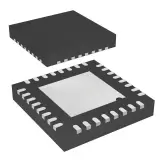
The STHV748QTR from STMicroelectronics is a specialized 4-channel pulser generator IC designed for ultrasound imaging systems. Packaged in a 64-QFN form factor, it operates within a 2.7V to 3.6V supply range, making it suitable for low-power, high-performance medical imaging applications. Although marked as Obsolete, it remains a robust solution for legacy designs, offering ROHS3 compliance and REACH unaffected status, ensuring environmental and regulatory adherence. Its surface-mount design and MSL 3 (168 hours) rating make it compatible with standard PCB assembly processes.
STHV748QTR Features
- High Integration: Combines 4 independent pulser channels in a compact 64-QFN package, reducing board space and complexity.
- Low-Voltage Operation: Optimized for 2.7V–3.6V supplies, ideal for portable and battery-powered ultrasound devices.
- Precision Timing: Delivers accurate pulse generation critical for high-resolution ultrasound imaging.
- Robust Compliance: Meets ROHS3 and REACH standards, ensuring environmental and safety compatibility.
- Thermal Efficiency: Surface-mount design enhances heat dissipation, improving reliability in continuous operation.
STHV748QTR Applications
- Medical Ultrasound Imaging: Ideal for portable and handheld ultrasound systems due to its low-voltage operation and compact footprint.
- Industrial Ultrasonic Testing: Suitable for non-destructive testing (NDT) equipment requiring precise pulse generation.
- Legacy System Upgrades: A reliable drop-in replacement for obsolete pulser ICs in existing medical or industrial designs.
Conclusion of STHV748QTR
The STHV748QTR is a highly integrated, low-voltage pulser generator tailored for ultrasound imaging and industrial ultrasonic applications. Its 4-channel architecture, compliance with environmental standards, and compact design make it a practical choice for legacy systems or space-constrained designs. While obsolete, its performance and reliability ensure continued suitability for specialized power management in medical and industrial markets.
FAQ
Not available to buy online? Want the lower wholesale price? Please Send RFQ to get best price, we will respond immediately











.png?x-oss-process=image/format,webp/resize,h_32)


