
 German
 Japanese
 Portuguese
 Korea
Korea
 Mexico
 Dutch
Dutch



Texas Instruments
CDC586PAHG4

Why Choose Us?
Professional Platform
B2B & B2C purchasingDelivery at full speed
1-2 days deliveryWide variety
Original manufacturers365 days guarantee
Responsible quality
.png)


Tech Specifications
CDC586PAHG4 Description
CDC586PAHG4 Description
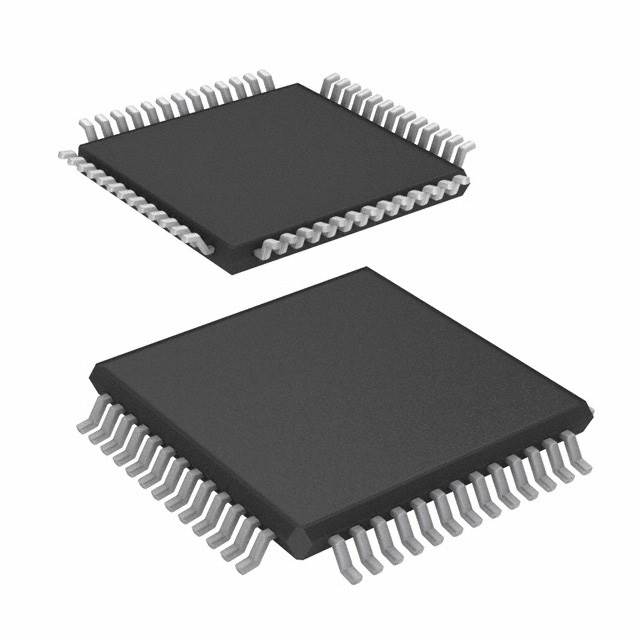
The CDC586PAHG4 is a PLL Clock Driver IC from Texas Instruments, designed to provide precise clock signal distribution and frequency synthesis. This device is housed in a 52-TQFP package, making it suitable for surface mount applications. Despite being marked as obsolete, the CDC586PAHG4 remains a robust solution for various clocking needs.
CDC586PAHG4 Features
-
PLL with Bypass Capability: The CDC586PAHG4 features an integrated Phase-Locked Loop (PLL) that can be bypassed, offering flexibility in clock signal generation and distribution. This allows for both high-frequency synthesis and direct input clock passing, depending on the application requirements.
-
LVTTL Compatibility: Both the input and output interfaces of the CDC586PAHG4 are compatible with Low-Voltage TTL (LVTTL) levels, ensuring seamless integration with a wide range of digital systems. This compatibility simplifies design and reduces the need for additional level-shifting components.
-
Wide Supply Voltage Range: Operating within a supply voltage range of 3V to 3.6V, the CDC586PAHG4 provides reliable performance across a broad range of power supply conditions. This flexibility makes it suitable for various power architectures without compromising performance.
-
High-Frequency Operation: With a maximum operating frequency of 100MHz, the CDC586PAHG4 is capable of supporting high-speed clocking applications. This high-frequency capability ensures precise timing and synchronization in demanding digital systems.
-
1:12 Input-to-Output Ratio: The CDC586PAHG4 offers a 1:12 input-to-output clock ratio, enabling the generation of multiple clock signals from a single input. This feature is particularly useful in systems requiring multiple clock domains or distributed clocking architectures.
-
Compliance and Reliability: The device is REACH unaffected and RoHS3 compliant, ensuring it meets environmental and regulatory standards. Additionally, with a Moisture Sensitivity Level (MSL) of 4 (72 hours), it is suitable for standard manufacturing processes without the risk of moisture-related damage.
CDC586PAHG4 Applications
The CDC586PAHG4 is ideal for a variety of applications where precise clock distribution and frequency synthesis are critical. Some specific use cases include:
-
Telecommunications: In systems requiring high-speed clocking for data transmission and synchronization, the CDC586PAHG4 can provide the necessary clock signals to maintain data integrity and timing accuracy.
-
Networking Equipment: For routers, switches, and other networking devices, the CDC586PAHG4 can distribute clock signals across multiple components, ensuring synchronized operation and reducing jitter.
-
Digital Signal Processing (DSP): In DSP applications, the ability to generate multiple clock signals from a single input is crucial for coordinating various processing stages. The CDC586PAHG4 can effectively manage these clocking requirements.
-
Industrial Control Systems: In environments where precise timing and robustness are essential, the CDC586PAHG4 can provide reliable clock signals to control systems and ensure accurate operation.
Conclusion of CDC586PAHG4
Despite its obsolete status, the CDC586PAHG4 remains a valuable component for applications requiring precise clock distribution and frequency synthesis. Its unique features, such as the PLL with bypass capability, LVTTL compatibility, and wide supply voltage range, make it a versatile solution for various digital systems. The CDC586PAHG4's compliance with environmental and regulatory standards further enhances its reliability and suitability for modern electronics. For engineers and designers looking for a robust clock driver solution, the CDC586PAHG4 is a reliable choice that offers significant performance benefits.
FAQ
Not available to buy online? Want the lower wholesale price? Please Send RFQ to get best price, we will respond immediately













.png?x-oss-process=image/format,webp/resize,h_32)


