
 German
 Japanese
 Portuguese
 Korea
Korea
 Mexico
 Dutch
Dutch



Texas Instruments
LM2574N-5.0


Why Choose Us?
Professional Platform
B2B & B2C purchasingDelivery at full speed
1-2 days deliveryWide variety
Original manufacturers365 days guarantee
Responsible quality

.png)


Tech Specifications
LM2574N-5.0 Description
LM2574N-5.0 Description
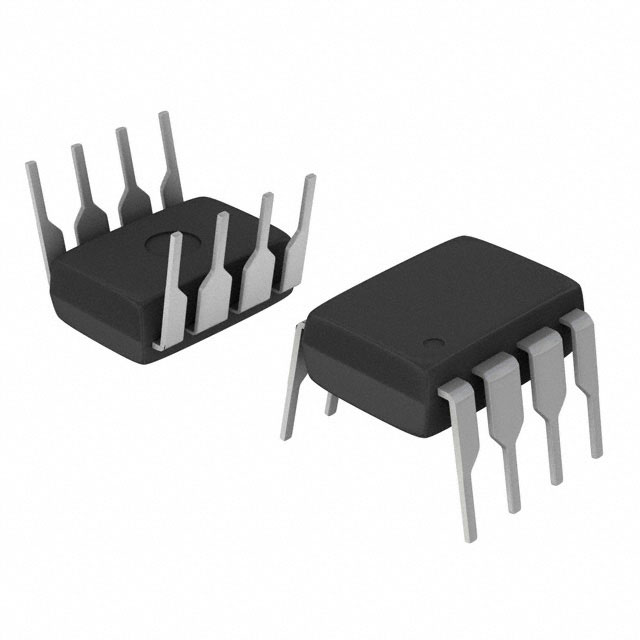
The LM2574N-5.0 is a fixed 5V output, 500mA step-down (buck) switching voltage regulator from Texas Instruments' SIMPLE SWITCHER® series. Designed for through-hole mounting (8-DIP package), it efficiently converts an input voltage range of 4V to 40V to a stable 5V output with a switching frequency of 52kHz. This regulator is ideal for applications requiring compact, efficient power conversion with minimal external components. Though marked obsolete, it remains a reliable choice for legacy designs due to its robustness and ease of use.
LM2574N-5.0 Features
- Fixed 5V Output: Eliminates the need for external feedback resistors, simplifying design.
- Wide Input Range (4V–40V): Supports diverse power sources, including unregulated DC supplies.
- High Efficiency (Up to 80%): Reduces heat dissipation compared to linear regulators.
- Low Standby Current: Enhances energy efficiency in battery-powered systems.
- Internal Frequency Compensation: Minimizes external component count.
- Non-Synchronous Rectification: Cost-effective for moderate-current applications.
- MSL 1 (Unlimited): Suitable for extended storage without moisture sensitivity concerns.
LM2574N-5.0 Applications
- Industrial Control Systems: Powering microcontrollers, sensors, and logic circuits.
- Automotive Electronics: Auxiliary power for infotainment or dashboard systems (within input range).
- Consumer Electronics: Battery chargers, portable devices, and low-power peripherals.
- Embedded Systems: Reliable voltage regulation for legacy or cost-sensitive designs.
- Telecom Equipment: Isolated DC/DC modules or board-level power supplies.
Conclusion of LM2574N-5.0
The LM2574N-5.0 excels in simplicity and efficiency, offering a compact, fixed-output solution for moderate-power applications. Its wide input range and minimal external component requirements make it a pragmatic choice for engineers prioritizing reliability and ease of integration. While newer alternatives exist, its proven performance in industrial, automotive, and consumer applications ensures continued relevance in legacy and cost-driven designs.
FAQ
Not available to buy online? Want the lower wholesale price? Please Send RFQ to get best price, we will respond immediately




.png?x-oss-process=image/format,webp/resize,h_32)


