
 German
 Japanese
 Portuguese
 Korea
Korea
 Mexico
 Dutch
Dutch



Texas Instruments
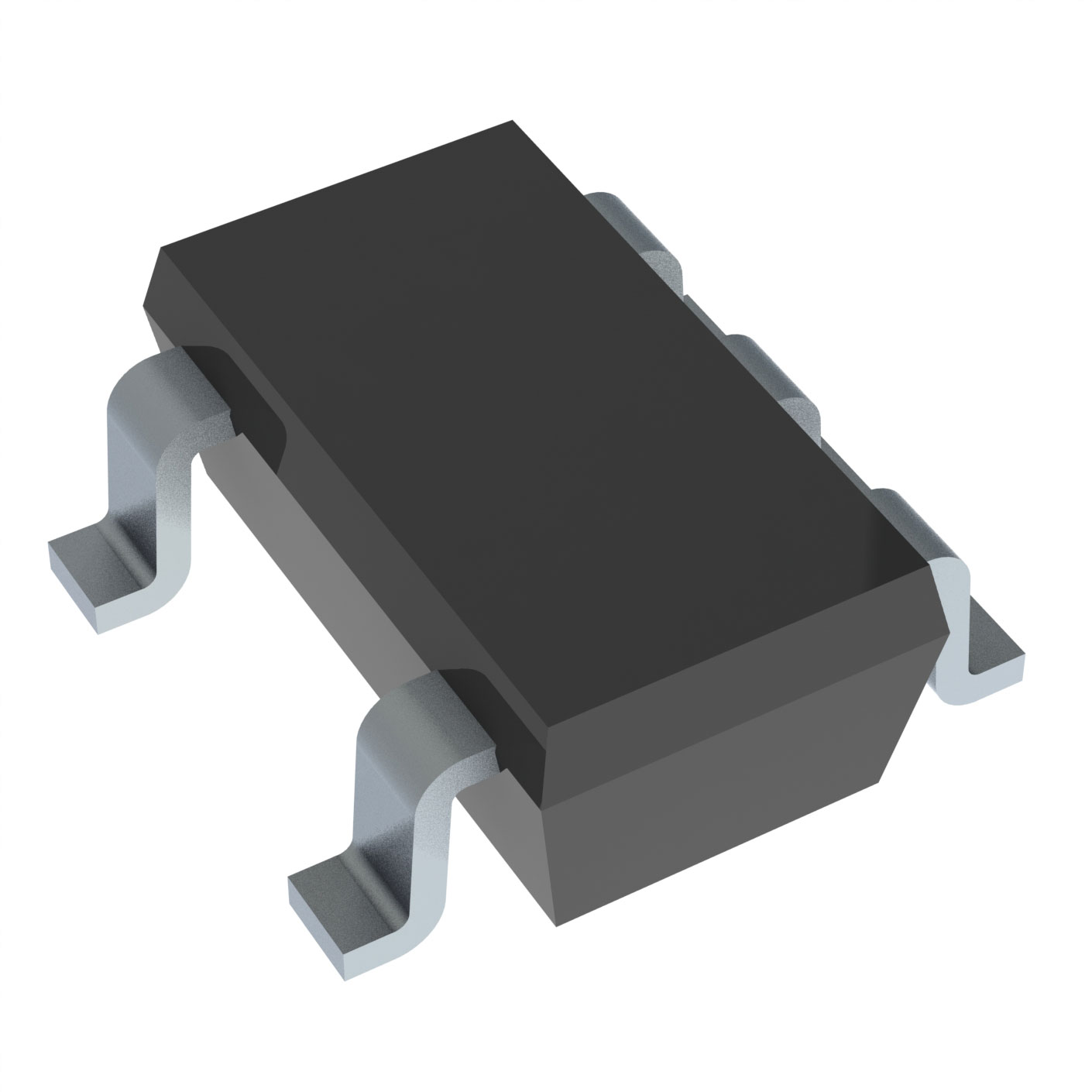
LM3671MF-3.3


Why Choose Us?
Professional Platform
B2B & B2C purchasingDelivery at full speed
1-2 days deliveryWide variety
Original manufacturers365 days guarantee
Responsible quality

.png)


Tech Specifications
LM3671MF-3.3 Description
LM3671MF-3.3 Description
The LM3671MF-3.3 is a high-efficiency, fixed-output 3.3V, 600mA synchronous buck regulator from Texas Instruments, designed for compact, power-sensitive applications. Operating within a 2.7V to 5.5V input range, it integrates a 2MHz switching frequency, enabling the use of small external components while minimizing output ripple. This SOT23-5 packaged IC is optimized for space-constrained designs, offering a synchronous rectifier for improved efficiency (up to 95%) and reduced power dissipation. Although marked as obsolete, it remains a reliable choice for legacy designs requiring stable, low-noise power conversion.
LM3671MF-3.3 Features
- Fixed 3.3V Output: Eliminates feedback resistors, simplifying design.
- High Efficiency (Up to 95%): Synchronous rectification reduces losses.
- Wide Input Range (2.7V–5.5V): Supports Li-ion, 3.3V/5V rail inputs.
- 2MHz Switching Frequency: Enables tiny inductors/capacitors (<1µH/1µF).
- Low Quiescent Current (16µA): Ideal for battery-powered devices.
- MSL1 (Unlimited Shelf Life): No moisture sensitivity concerns.
- Compact SOT23-5 Package: Saves PCB area in portable electronics.
LM3671MF-3.3 Applications
- Portable Electronics: Smartphones, wearables, and IoT sensors.
- Embedded Systems: Point-of-load (PoL) regulation for microcontrollers.
- Battery-Powered Devices: Energy-efficient operation extends runtime.
- Industrial Sensors: Stable 3.3V supply in harsh environments.
- Legacy Designs: Replacement for obsolete linear regulators.
Conclusion of LM3671MF-3.3
The LM3671MF-3.3 excels in miniaturized, efficiency-critical applications, leveraging its synchronous buck topology and high integration. While newer alternatives exist, its proven performance and simplicity make it a pragmatic choice for 3.3V rail generation in legacy or cost-sensitive projects. Engineers should evaluate newer TI offerings (e.g., TPS62xxx series) for active designs but may still select this IC for maintenance or low-volume production.
FAQ
Not available to buy online? Want the lower wholesale price? Please Send RFQ to get best price, we will respond immediately






.png?x-oss-process=image/format,webp/resize,h_32)


