
 German
 Japanese
 Portuguese
 Korea
Korea
 Mexico
 Dutch
Dutch



Texas Instruments
LMC6462AIM


Why Choose Us?
Professional Platform
B2B & B2C purchasingDelivery at full speed
1-2 days deliveryWide variety
Original manufacturers365 days guarantee
Responsible quality

.png)


Tech Specifications
LMC6462AIM Description
LMC6462AIM Description
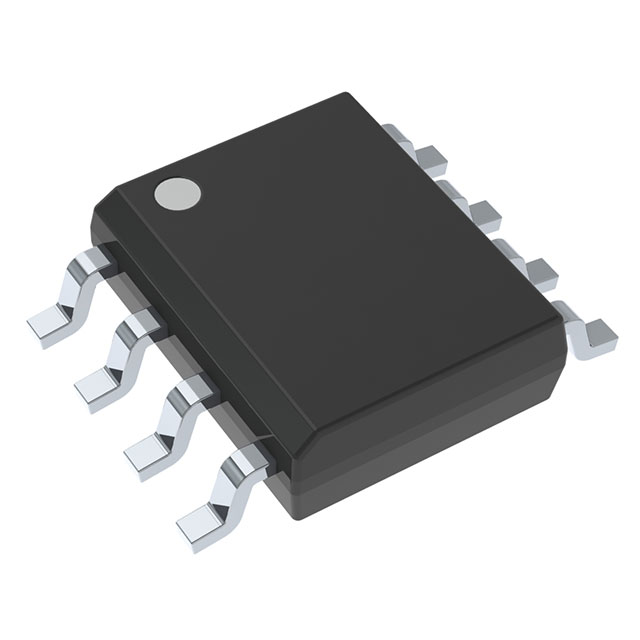
The LMC6462AIM from Texas Instruments is a dual-channel CMOS operational amplifier designed for precision, low-power applications. Operating within a 3V to 15.5V supply range, it delivers exceptional performance with ultra-low input bias current (0.15 pA) and minimal input offset voltage (250 µV). Its 50 kHz gain bandwidth product and 0.028V/µs slew rate make it suitable for low-frequency signal conditioning. Packaged in an 8-SOIC tube, this obsolete but RoHS3-compliant IC remains relevant for legacy designs requiring high input impedance and rail-to-rail output swing.
LMC6462AIM Features
- Ultra-Low Power: Consumes only 50µA per channel, ideal for battery-operated systems.
- High Input Impedance: CMOS architecture ensures minimal 0.15 pA input bias current, critical for sensor interfaces.
- Wide Supply Range: 3V to 15.5V operation supports diverse power environments.
- Robust Output: 75 mA output current per channel drives moderate loads.
- Low Noise: Optimized for precision applications with minimal offset voltage drift.
- REACH & RoHS3 Compliant: Environmentally friendly despite obsolete status.
LMC6462AIM Applications
- Sensor Signal Conditioning: Ideal for photodiodes, piezoelectric sensors, and high-impedance sources due to negligible input current.
- Portable Medical Devices: Low power consumption suits ECG amplifiers and wearable monitors.
- Battery-Powered Systems: Energy-efficient operation extends life in IoT nodes and wireless sensors.
- Industrial Controls: Reliable performance in low-speed analog circuits like integrators or filters.
- Legacy Equipment Maintenance: Replaces aging CMOS op-amps in vintage test gear or audio systems.
Conclusion of LMC6462AIM
The LMC6462AIM excels in precision, low-power applications where high input impedance and minimal noise are paramount. While obsolete, its CMOS architecture, wide voltage range, and ultra-low bias current make it a standout choice for niche designs. Engineers working on sensor interfaces, portable electronics, or legacy upgrades will find its balance of performance and efficiency unmatched by many modern alternatives.
FAQ
Not available to buy online? Want the lower wholesale price? Please Send RFQ to get best price, we will respond immediately









.png?x-oss-process=image/format,webp/resize,h_32)


