
 German
 Japanese
 Portuguese
 Korea
Korea
 Mexico
 Dutch
Dutch



Texas Instruments
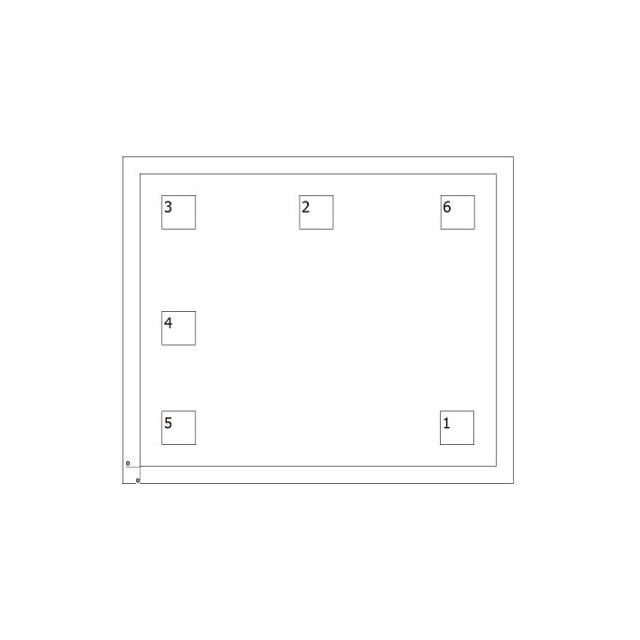
LMV791TDA2

Why Choose Us?
Professional Platform
B2B & B2C purchasingDelivery at full speed
1-2 days deliveryWide variety
Original manufacturers365 days guarantee
Responsible quality

.png)


Tech Specifications
LMV791TDA2 Description
LMV791TDA2 Description
The LMV791TDA2 is a high-performance CMOS operational amplifier designed by Texas Instruments, renowned for its exceptional speed and precision. This single-circuit die is optimized for surface-mount applications, making it ideal for compact and high-density electronic designs. With an operating temperature of 25°C, the LMV791TDA2 ensures stable performance under standard ambient conditions. Its low supply current of 1.15mA and minimal input bias current of 1 pA make it highly energy-efficient and suitable for low-power applications. The amplifier boasts a slew rate of 9.5V/µs and a gain bandwidth product of 17 MHz, enabling it to handle high-frequency signals with ease. The low input offset voltage of 1.35 mV ensures accurate signal processing, while the maximum output current of 21 mA per channel provides robust drive capabilities. Packaged in a die format, the LMV791TDA2 is available in a tube for easy handling and integration. It complies with REACH and ROHS3 standards, ensuring environmental sustainability and regulatory compliance.
LMV791TDA2 Features
- High-Speed Performance: With a gain bandwidth product of 17 MHz and a slew rate of 9.5V/µs, the LMV791TDA2 excels in handling high-frequency signals, making it suitable for applications requiring fast response times.
- Low Power Consumption: The operational amplifier operates with a supply current of just 1.15mA, making it ideal for battery-powered and energy-sensitive applications.
- Precision Signal Processing: The low input offset voltage of 1.35 mV and minimal input bias current of 1 pA ensure accurate and stable signal processing, crucial for precision analog circuits.
- Robust Output Drive: The LMV791TDA2 can deliver up to 21 mA per channel, providing strong output drive capabilities necessary for driving various loads.
- Surface-Mount Compatibility: The die package is designed for surface-mount applications, allowing for high-density PCB layouts and efficient manufacturing processes.
- Regulatory Compliance: The LMV791TDA2 is REACH unaffected and ROHS3 compliant, ensuring it meets environmental and safety standards for global markets.
LMV791TDA2 Applications
The LMV791TDA2 is well-suited for a variety of applications where high-speed, low-power, and precision performance are critical. Some specific use cases include:
- Signal Conditioning: Ideal for conditioning high-frequency signals in communication systems, medical equipment, and industrial control applications.
- Analog Filters: Its high gain bandwidth product makes it suitable for designing active filters that require precise frequency response.
- Sensor Interfaces: The low input bias current and input offset voltage make it an excellent choice for interfacing with sensitive sensors, ensuring accurate signal amplification.
- Audio Processing: The high slew rate and bandwidth are beneficial for audio applications, providing clear and distortion-free signal processing.
- Power Management: The low supply current and efficient power handling capabilities make it suitable for power management circuits in portable devices.
Conclusion of LMV791TDA2
The LMV791TDA2 by Texas Instruments stands out as a versatile and high-performance CMOS operational amplifier. Its combination of high-speed operation, low power consumption, and precision signal processing makes it a valuable component for a wide range of applications. Whether used in signal conditioning, analog filters, sensor interfaces, audio processing, or power management, the LMV791TDA2 delivers reliable performance with minimal power usage. Its surface-mount compatibility and regulatory compliance further enhance its appeal for modern electronic designs. For engineers and designers seeking a reliable, high-performance op-amp, the LMV791TDA2 is an excellent choice.
FAQ
Not available to buy online? Want the lower wholesale price? Please Send RFQ to get best price, we will respond immediately






.png?x-oss-process=image/format,webp/resize,h_32)


