
 German
 Japanese
 Portuguese
 Korea
Korea
 Mexico
 Dutch
Dutch



Texas Instruments
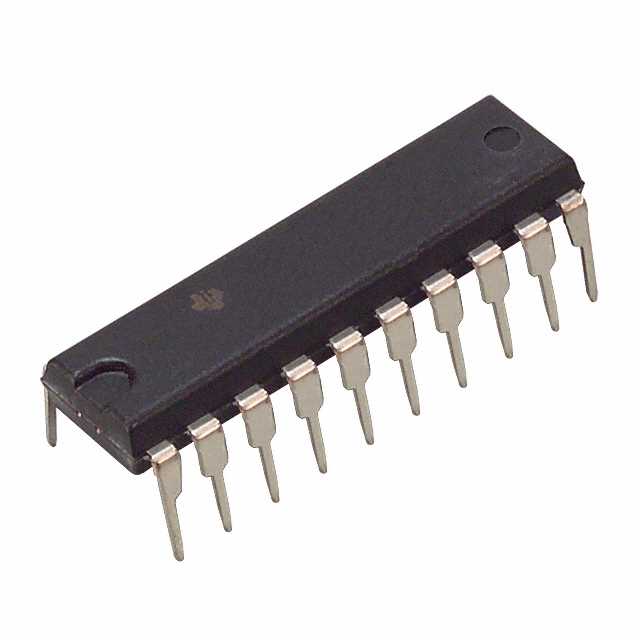
SN75ALS160N


Why Choose Us?
Professional Platform
B2B & B2C purchasingDelivery at full speed
1-2 days deliveryWide variety
Original manufacturers365 days guarantee
Responsible quality

.png)


Tech Specifications
SN75ALS160N Description
SN75ALS160N Description
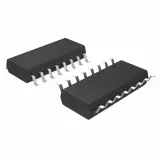
The SN75ALS160N from Texas Instruments is an 8/8-channel half-duplex transceiver designed for IEEE 488 (GPIB) bus applications. Housed in a 20-pin DIP (Through Hole) package, this device operates within a 4.75V to 5.25V supply range and is optimized for industrial and instrumentation systems requiring robust data communication. Although marked as obsolete, it remains a reliable choice for legacy systems due to its high noise immunity (650 mV receiver hysteresis) and compliance with ROHS3 and REACH environmental standards.
SN75ALS160N Features
- 8 Drivers/8 Receivers: Supports bidirectional data flow with balanced line driving capability.
- Half-Duplex Operation: Enables efficient data transmission and reception on shared lines.
- Wide Hysteresis (650 mV): Enhances noise immunity in electrically noisy environments.
- IEEE 488 Protocol Compliance: Ideal for GPIB bus systems in test/measurement equipment.
- Industrial Temperature Range (0°C to 70°C): Suitable for controlled-environment applications.
- Through-Hole Mounting (DIP): Facilitates easy integration into legacy PCB designs.
- RoHS3 Compliant & REACH Unaffected: Meets modern environmental regulations despite its obsolete status.
SN75ALS160N Applications
- GPIB (IEEE 488) Instrumentation: Connects controllers with programmable test equipment (e.g., oscilloscopes, power supplies).
- Industrial Automation: Used in legacy factory communication systems requiring noise-resistant transceivers.
- Data Acquisition Systems: Interfaces sensors and actuators in environments with moderate EMI.
- Retrofit/Repair Projects: Replaces faulty transceivers in aging electronics without redesign.
Conclusion of SN75ALS160N
The SN75ALS160N excels in noise-critical, half-duplex communication systems, particularly where IEEE 488 compatibility is essential. Its high hysteresis and robust driver/receiver design make it a dependable choice for industrial and lab applications, despite its obsolete status. Engineers maintaining or repairing GPIB-based systems will find this transceiver a cost-effective solution with proven performance. For new designs, consider modern alternatives, but for legacy support, the SN75ALS160N remains a technically sound option.
FAQ
Not available to buy online? Want the lower wholesale price? Please Send RFQ to get best price, we will respond immediately









.png?x-oss-process=image/format,webp/resize,h_32)


