
 German
 Japanese
 Portuguese
 Korea
Korea
 Mexico
 Dutch
Dutch



Texas Instruments
TPS62003DGS


Why Choose Us?
Professional Platform
B2B & B2C purchasingDelivery at full speed
1-2 days deliveryWide variety
Original manufacturers365 days guarantee
Responsible quality

.png)


Tech Specifications
TPS62003DGS Description
TPS62003DGS Description
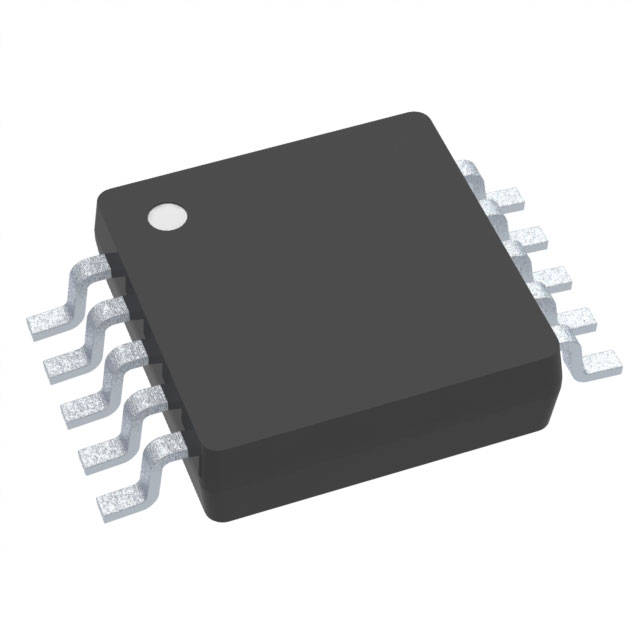
The TPS62003DGS from Texas Instruments is a high-efficiency, synchronous step-down (buck) DC-DC converter designed for low-power applications. It delivers a fixed 1.2V output with a 600mA current rating, making it ideal for powering sensitive low-voltage circuits. With an input voltage range of 2.5V to 5.5V, it supports a variety of power sources, including single-cell Li-ion batteries and 3.3V/5V rails. The device operates at a 750kHz switching frequency, enabling compact designs with minimal external components. Packaged in a 10-VSSOP form factor, it is optimized for space-constrained applications while maintaining high performance.
TPS62003DGS Features
- High Efficiency: Synchronous rectification ensures up to 95% efficiency, reducing power loss and heat dissipation.
- Wide Input Range: Supports 2.5V–5.5V, accommodating diverse power sources.
- Compact Design: 750kHz switching frequency allows for smaller inductors and capacitors.
- Low Quiescent Current: Enhances battery life in portable applications.
- Robust Protection: Includes undervoltage lockout (UVLO) and thermal shutdown.
- RoHS3 & REACH Compliant: Meets environmental and safety standards.
TPS62003DGS Applications
The TPS62003DGS is particularly suited for:
- Portable Electronics: Smartphones, tablets, and wearables requiring efficient power conversion.
- IoT Devices: Sensors and wireless modules powered by batteries or low-voltage rails.
- Embedded Systems: Microcontroller (MCU) and FPGA power supplies in industrial/consumer applications.
- Point-of-Load (POL) Regulation: Provides stable voltage to high-precision analog/digital circuits.
Conclusion of TPS62003DGS
The TPS62003DGS stands out as a highly efficient, compact, and versatile buck regulator, ideal for modern low-power designs. Its synchronous architecture, wide input range, and robust protection make it superior to non-synchronous alternatives, particularly in battery-operated and space-sensitive applications. Engineers can leverage its small footprint and high performance to optimize power management in portable, IoT, and embedded systems.
FAQ
| Quantity | Unit Price | Ext. Price |
|---|---|---|
| 1+ | $1.94915 | $1.95 |
| 10+ | $1.90457 | $19.05 |
| 30+ | $1.87372 | $56.21 |
Not available to buy online? Want the lower wholesale price? Please Send RFQ to get best price, we will respond immediately






.png?x-oss-process=image/format,webp/resize,h_32)


