
 German
 Japanese
 Portuguese
 Korea
Korea
 Mexico
 Dutch
Dutch



TT Electronics/IRC
GS8A013301FAT


Why Choose Us?
Professional Platform
B2B & B2C purchasingDelivery at full speed
1-2 days deliveryWide variety
Original manufacturers365 days guarantee
Responsible quality

.png)


Tech Specifications
GS8A013301FAT Description
GS8A013301FAT Description
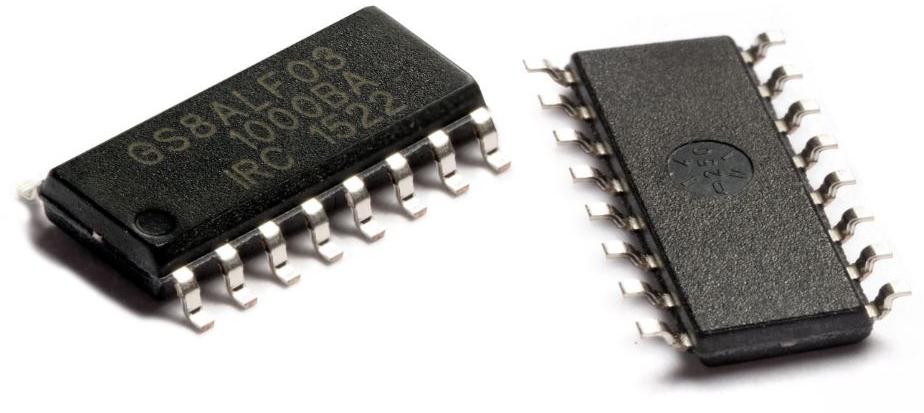
The GS8A013301FAT from TT Electronics/IRC is a high-performance 8-resistor isolated network in a 16-pin narrow SOIC package. Designed with thin-film technology, it offers a 3.3KΩ resistance per element with a tight ±1% absolute tolerance and an exceptional ±0.05% ratio tolerance, ensuring precision in differential signal applications. The ceramic case provides superior thermal stability, operating reliably from 70°C to 125°C with a ±100ppm/°C temperature coefficient. Rated for 100V maximum voltage and 0.1W power dissipation per resistor, it is ideal for high-density PCB designs requiring consistent performance under thermal stress.
GS8A013301FAT Features
- Isolated Circuit Design: Each of the 8 resistors is electrically isolated, enabling flexible configurations.
- Precision Thin Film: Delivers low noise and stable resistance across temperature fluctuations.
- Robust Construction: Ceramic SOIC package ensures durability and heat dissipation.
- High Tolerance: ±1% absolute and ±0.05% ratio tolerance for critical analog circuits.
- Surface-Mount Gull Wing Terminals: Compatible with automated assembly processes (1.27mm pitch).
- Wide Operating Range: Supports -55°C to +125°C with derated power up to 125°C.
GS8A013301FAT Applications
This resistor network excels in:
- Industrial Automation: Precision voltage dividers and sensor calibration circuits.
- Medical Equipment: Signal conditioning in diagnostic devices due to low drift.
- Telecommunications: Impedance matching and line termination in high-frequency modules.
- Automotive (Non-Automotive Rated): Test/measurement systems where thermal resilience is critical.
- Aerospace: Avionics systems requiring stable performance in harsh environments.
Conclusion of GS8A013301FAT
The GS8A013301FAT stands out for its isolation, precision, and thermal resilience, making it a superior choice for applications demanding tight tolerance and reliability. Its ceramic SOIC package and thin-film technology provide a competitive edge over polymer-based networks, particularly in high-temperature or precision analog designs. While not PPAP or automotive-qualified, it is ideal for industrial, medical, and telecom systems where accuracy and stability are paramount.
FAQ
Not available to buy online? Want the lower wholesale price? Please Send RFQ to get best price, we will respond immediately







.png?x-oss-process=image/format,webp/resize,h_32)


