
 German
 Japanese
 Portuguese
 Korea
Korea
 Mexico
 Dutch
Dutch


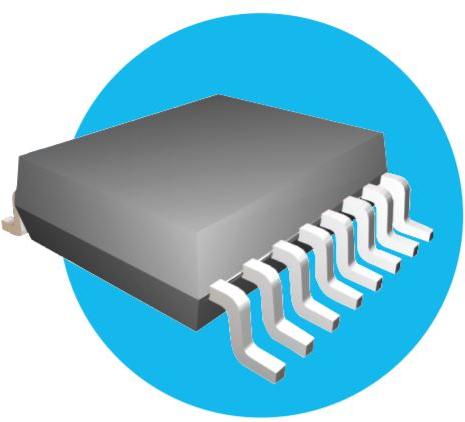

TT Electronics/IRC
GUS-QS8A-03-1622-CA


Why Choose Us?
Professional Platform
B2B & B2C purchasingDelivery at full speed
1-2 days deliveryWide variety
Original manufacturers365 days guarantee
Responsible quality

.png)


Tech Specifications
GUS-QS8A-03-1622-CA Description
GUS-QS8A-03-1622-CA Description
The GUS-QS8A-03-1622-CA is a high-precision 16.2K Ohm thin-film resistor network from TT Electronics/IRC, designed for demanding surface-mount applications. Packaged in a 16-pin QSOP with gull wing termination, it features 8 isolated resistors with a tight tolerance of ±0.25% and a low ±25ppm/°C temperature coefficient, ensuring stable performance across a wide temperature range (70°C to 125°C). With a 0.75W (3/4W) total power rating and 100V maximum voltage rating, this component is engineered for reliability in precision circuits. Its compact dimensions (4.9mm x 6.02mm x 1.47mm) make it ideal for space-constrained designs.
GUS-QS8A-03-1622-CA Features
- High Precision: 0.25% tolerance and ±25ppm/°C TCR for stable operation in critical applications.
- Robust Construction: Thin-film technology ensures low noise and high accuracy.
- Isolated Resistors: 8 independent 16.2K Ohm resistors with 100V isolation, reducing crosstalk.
- Compact QSOP Package: 16-pin gull wing SMD with 0.64mm pitch, optimized for automated assembly.
- Wide Temperature Range: Operates reliably from 70°C to 125°C with derated power handling.
- High Power Handling: 0.1W per resistor (0.75W total) for demanding analog/digital circuits.
GUS-QS8A-03-1622-CA Applications
- Precision Analog Circuits: Voltage dividers, feedback networks, and sensor interfaces.
- Medical & Test Equipment: High-accuracy signal conditioning and measurement systems.
- Industrial Controls: Isolated signal paths in PLCs and motor drivers.
- Communications: Impedance matching and filtering in RF/analog modules.
- Automotive (Non-Automotive Rated): Non-safety-critical systems requiring stable resistance.
Conclusion of GUS-QS8A-03-1622-CA
The GUS-QS8A-03-1622-CA excels in applications demanding precision, stability, and compactness. Its thin-film isolation, tight tolerance, and robust power handling make it superior to standard thick-film networks, particularly in medical, industrial, and communication systems. While not PPAP or automotive-rated, its performance metrics align with high-reliability requirements, offering engineers a dependable solution for critical designs.
FAQ
Not available to buy online? Want the lower wholesale price? Please Send RFQ to get best price, we will respond immediately







.png?x-oss-process=image/format,webp/resize,h_32)


