
 German
 Japanese
 Portuguese
 Korea
Korea
 Mexico
 Dutch
Dutch


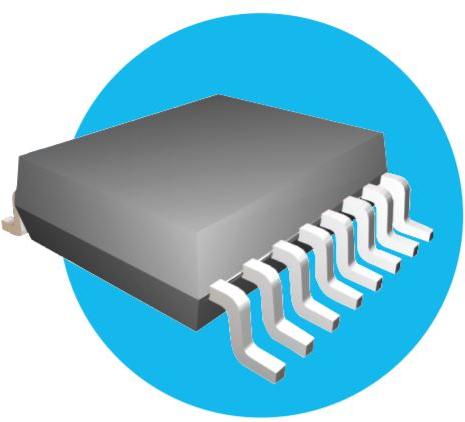

TT Electronics/IRC
GUS-QS8B-01-1691-C


Why Choose Us?
Professional Platform
B2B & B2C purchasingDelivery at full speed
1-2 days deliveryWide variety
Original manufacturers365 days guarantee
Responsible quality

.png)


Tech Specifications
GUS-QS8B-01-1691-C Description
GUS-QS8B-01-1691-C Description
The GUS-QS8B-01-1691-C from TT Electronics/IRC is a high-precision thin-film resistor network designed for demanding surface-mount applications. This 16-pin QSOP package features 15 resistors with a 1.69KΩ resistance value, offering an exceptional ±0.25% tolerance and a ±100ppm/°C temperature coefficient. With a 0.75W (3/4W) total power rating (0.05W per resistor) and a 100V maximum voltage rating, it operates reliably across a wide temperature range of 70°C to 125°C. The gull-wing termination ensures secure PCB mounting, while the compact 4.9mm x 6.02mm x 1.47mm footprint suits space-constrained designs.
GUS-QS8B-01-1691-C Features
- Precision Thin Film Technology: Delivers stable performance with low noise and high accuracy.
- Robust Power Handling: 0.75W total power dissipation (3/4W) with derated operation up to 125°C.
- Tight Tolerances: ±0.25% resistance tolerance and ±100ppm/°C TCR for critical analog circuits.
- Compact QSOP Package: 16-pin gull-wing SMD design with 0.64mm terminal pitch for high-density layouts.
- Wide Voltage Range: Supports up to 100V, ideal for industrial and instrumentation applications.
- Non-Automotive Grade: Suitable for non-PPAP commercial and industrial uses.
GUS-QS8B-01-1691-C Applications
This resistor network excels in precision circuitry, including:
- Analog Signal Conditioning: Voltage dividers, DAC/ADC reference networks.
- Medical Electronics: Patient monitoring systems requiring low drift.
- Test & Measurement Equipment: Calibration circuits and sensor interfaces.
- Industrial Control Systems: PLCs and process control modules demanding long-term stability.
- Communications Infrastructure: RF and baseband signal processing.
Conclusion of GUS-QS8B-01-1691-C
The GUS-QS8B-01-1691-C combines high precision, power efficiency, and compactness, making it a superior choice for engineers prioritizing reliability in analog designs. Its thin-film construction and tight tolerances outperform carbon or thick-film alternatives, particularly in environments with thermal fluctuations. While not RoHS-compliant, it remains a robust solution for industrial and professional electronics where performance outweighs regulatory constraints.
FAQ
Not available to buy online? Want the lower wholesale price? Please Send RFQ to get best price, we will respond immediately







.png?x-oss-process=image/format,webp/resize,h_32)


