
 German
 Japanese
 Portuguese
 Korea
Korea
 Mexico
 Dutch
Dutch
TJA1463
The TJA1463 is a high-speed CAN transceiver manufactured by NXP Semiconductors, designed for robust and efficient communication in automotive and industrial applications. It supports data rates up to 1 Mbps, making it suitable for demanding environments where reliable real-time data transmission is critical. The device complies with the ISO 11898-2 standard for high-speed CAN, ensuring compatibility with established CAN protocols.
This transceiver features integrated protection mechanisms, including electrostatic discharge (ESD) protection up to ±8 kV (contact) and ±15 kV (air), as well as short-circuit and overvoltage protection on the bus lines. These protections enhance system reliability and durability, especially in harsh electromagnetic environments typical of automotive systems. The TJA1463 operates from a single 5 V supply, drawing low quiescent current—typically 2.5 mA in active mode—which contributes to energy efficiency in battery-powered or power-sensitive applications.
It includes a differential receiver and driver, enabling bidirectional communication between the microcontroller and the CAN bus. The chip also offers a wake-up function that allows the transceiver to transition from low-power sleep mode to active mode upon detection of a valid CAN message, reducing overall system power consumption during idle periods. This feature is particularly valuable in modern vehicle architectures where power management is crucial.
The TJA1463 is commonly used in automotive subsystems such as engine control units (ECUs), body electronics, chassis control, and telematics systems. Its ability to operate reliably under extreme temperature conditions—from –40°C to +125°C—makes it ideal for deployment in both passenger cars and commercial vehicles. Additionally, the device supports hot-plug capability, allowing safe insertion or removal of modules without disrupting the network.
With its compact SO8 package and compliance with AEC-Q100 Grade 1 qualification, the TJA1463 meets stringent automotive reliability standards. It is optimized for use in systems requiring high noise immunity, fast signal propagation, and long-term stability. NXP’s design ensures minimal external component count, simplifying PCB layout and reducing overall system cost while maintaining performance.
Related Parts
| Part # | Manufacturer | Description | Availability | Pricing | Quantity |
|---|---|---|---|---|---|
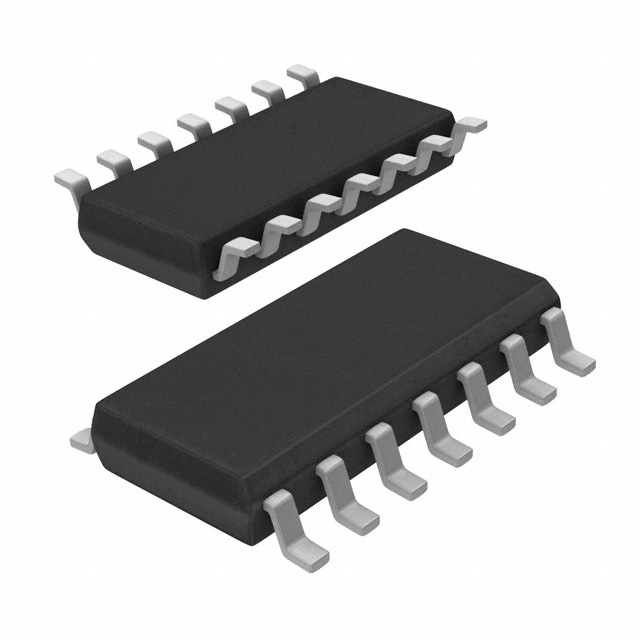 TJA1463AT/0ZDrivers, Receivers, Transceivers | NXP Semiconductors | IC TRANSCEIVER HALF 1/1 14SO | 2341 | 1+: $1.43440 10+: $1.05336 25+: $0.95709
Show More | |
 TJA1463ATK/0ZDrivers, Receivers, Transceivers | NXP Semiconductors | IC TRANSCEIVER HALF 1/1 14HVSON | 24768 | 1+: $1.43440 10+: $1.05336 25+: $0.95709
Show More |




.png?x-oss-process=image/format,webp/resize,h_32)


