
 German
 Japanese
 Portuguese
 Korea
Korea
 Mexico
 Dutch
Dutch
AT25SF081B
The AT25SF081B is a high-performance serial flash memory device from Renesas Electronics Corporation, designed for reliable data storage in embedded systems. It offers a total capacity of 8 Mbits (1 Mbyte), organized as 128 pages of 64 bytes each, enabling efficient read and write operations with minimal overhead. The device supports the standard SPI (Serial Peripheral Interface) protocol, operating at speeds up to 50 MHz, ensuring fast data transfer rates suitable for real-time applications.
This memory features an industrial temperature range of -40°C to +85°C, making it ideal for harsh environments such as automotive, industrial automation, and consumer electronics. It includes built-in protection mechanisms like write enable/disable controls, sector erase, and chip erase functions, which enhance data integrity and system reliability. Additionally, the AT25SF081B supports both byte and page programming modes, allowing flexible data handling depending on application needs.
The device operates on a single 2.7V to 3.6V power supply, consuming low current during active and standby modes—typically 5 mA in read mode and less than 1 μA in deep power-down mode. This energy-efficient design makes it well-suited for battery-powered devices where power conservation is critical. Its robust endurance specification allows for up to 1 million erase/write cycles, ensuring long-term operational stability in demanding use cases.
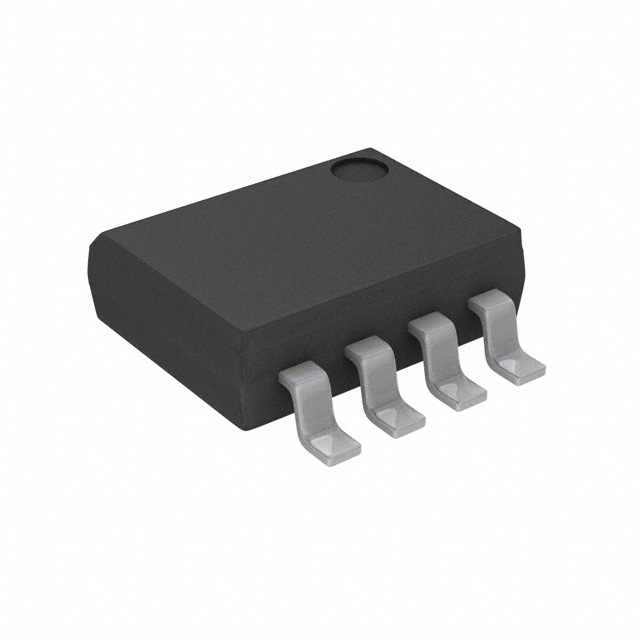
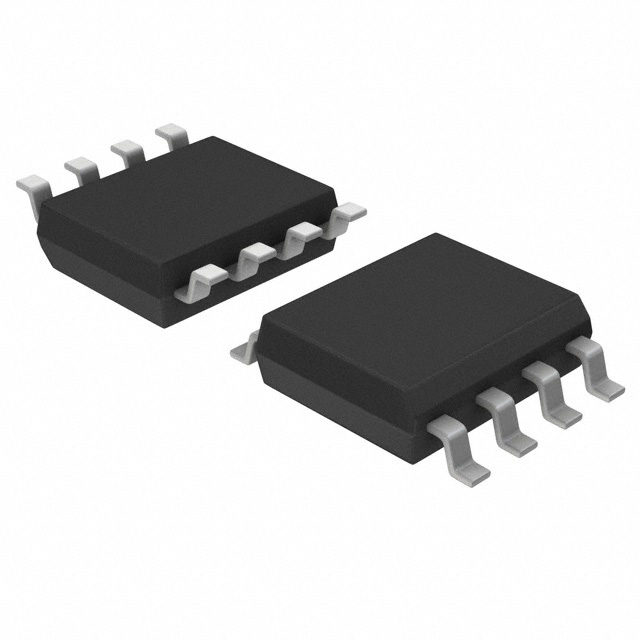
With a compact 8-pin SOIC package, the AT25SF081B provides easy integration into space-constrained designs without compromising performance. It also includes hardware write protection pins (WP# and HOLD#), enabling secure data management by preventing unintended modifications or accidental erasures. These features are particularly beneficial in applications requiring firmware updates, configuration storage, or persistent logging.
Common applications include industrial control systems, smart meters, medical devices, IoT sensors, and automotive modules where non-volatile memory must be both durable and accessible via simple interfaces. Its compatibility with standard SPI protocols simplifies development across various microcontroller platforms, reducing design complexity and time-to-market.
Related Parts
| Part # | Manufacturer | Description | Availability | Pricing | Quantity |
|---|---|---|---|---|---|
 AT25SF081B-SSHB-TMemory ICs Products | Renesas Electronics Corporation | IC FLASH 8MBIT SPI/QUAD 8SOIC | 9398 | 10+: $0.54343 30+: $0.48172 100+: $0.41828
Show More | |
AT25SF081B-SSHB-BMemory ICs Products | Renesas Electronics Corporation | IC FLASH 8MBIT SPI/QUAD 8SOIC | 200568 | 1+: $0.30800 10+: $0.28688 25+: $0.27984
Show More | |
 AT25SF081B-MAHB-TMemory ICs Products | Renesas Electronics Corporation | IC FLASH 8MBIT SPI/QUAD 8UDFN | 2 | 1+: $0.69772 10+: $0.68228 30+: $0.67200 | |
 AT25SF081B-SHB-BMemory ICs Products | Renesas Electronics Corporation | IC FLASH 8MBIT SPI/QUAD 8SOIC | In Stock | 4500+: $0.31353 | |
 AT25SF081B-DWFMemory ICs Products | Renesas Electronics Corporation | IC FLASH 8MBIT SPI/QUAD WAFER | In Stock | 40000+: $105598.94400 | |
AT25SF081B-SHB-TMemory ICs Products | Renesas Electronics Corporation | IC FLASH 8MBIT SPI/QUAD 8SOIC | 35767 | 1+: $0.39600 10+: $0.36960 25+: $0.35974
Show More |




.png?x-oss-process=image/format,webp/resize,h_32)


