
 German
 Japanese
 Portuguese
 Korea
Korea
 Mexico
 Dutch
Dutch
AT25SF321B
The AT25SF321B is a high-performance serial flash memory device manufactured by Renesas Electronics Corporation, designed for applications requiring reliable data storage and fast access times. It offers a total memory capacity of 32 Mbits (4 MB), organized in 64 sectors of 64 KB each and 1024 pages of 256 bytes, enabling flexible read, write, and erase operations tailored to various system needs.
This device supports the standard SPI (Serial Peripheral Interface) mode, along with enhanced modes such as Dual I/O and Quad I/O, allowing data transfer rates up to 80 MHz. Its quad I/O capability significantly improves throughput, making it suitable for bandwidth-intensive applications like firmware updates, configuration data storage, and audio or sensor data logging. The chip also features an integrated command queue that allows overlapping of commands, enhancing efficiency during continuous operations.
The AT25SF321B operates on a 2.7 V to 3.6 V supply voltage range, ensuring compatibility with low-power systems. It includes built-in protection mechanisms such as Write Protect (WP) pin, Chip Erase, Sector Erase, and Page Program functions, which safeguard against accidental data corruption. Additionally, the device supports hardware write protection via the WP pin and software-based protection through status register bits, offering dual-layer security for critical data.
With a robust endurance of up to 100,000 erase/write cycles per sector and data retention of up to 20 years at 105°C, the AT25SF321B is ideal for industrial, automotive, and consumer electronics where long-term reliability is essential. It is packaged in a compact 8-pin SOIC (Small Outline Integrated Circuit) form factor, facilitating easy integration into space-constrained designs.
Applications include embedded systems, IoT devices, medical equipment, automotive control units, and industrial automation systems—any environment demanding non-volatile memory with fast access, durability, and low power consumption. The device is fully compliant with JEDEC standards and supports both 3.3V and 2.7V logic levels, enhancing its versatility across different platforms.
Related Parts
| Part # | Manufacturer | Description | Availability | Pricing | Quantity |
|---|---|---|---|---|---|
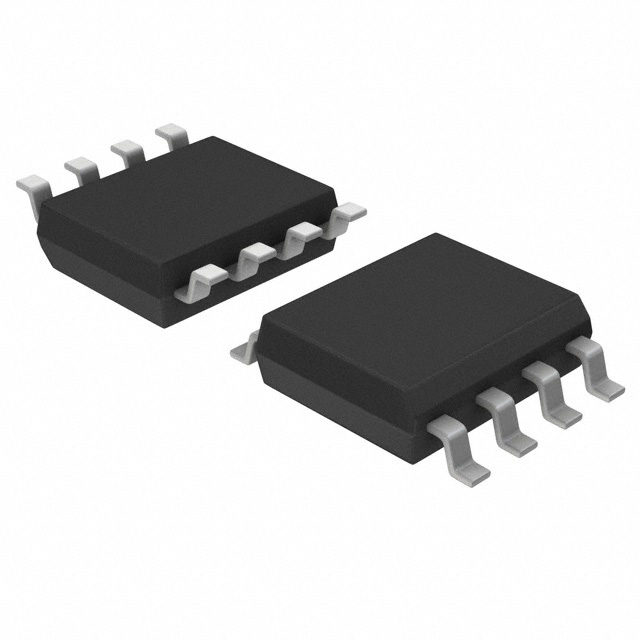 AT25SF321B-SHB-TMemory ICs Products | Renesas Electronics Corporation | IC FLASH 32MBIT SPI/QUAD 8SOIC | In Stock | 2000+: $0.58273 | |
 AT25SF321B-MHB-TMemory ICs Products | Renesas Electronics Corporation | IC FLASH 32MBIT SPI/QUAD 8UDFN | 5299 | 1+: $0.70400 10+: $0.66088 25+: $0.64275
Show More | |
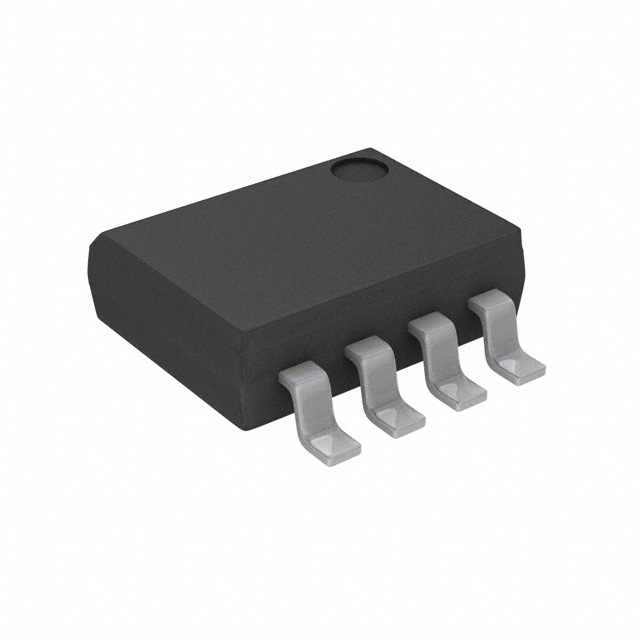 AT25SF321B-SSHB-BMemory ICs Products | Renesas Electronics Corporation | IC FLASH 32MBIT SPI/QUAD 8SOIC | 22 | 1+: $1.23943 10+: $1.21200 30+: $1.19485 | |
AT25SF321B-SSHB-TMemory ICs Products | Renesas Electronics Corporation | IC FLASH 32MBIT SPI/QUAD 8SOIC | 1 | 10+: $0.72000 30+: $0.63600 100+: $0.55200
Show More | |
AT25SF321B-SHB-BMemory ICs Products | Renesas Electronics Corporation | IC FLASH 32MBIT SPI/QUAD 8SOIC | In Stock | 4500+: $0.45544 | |
 AT25SF321B-DWFMemory ICs Products | Renesas Electronics Corporation | 32Mbit, 2.7V Minimum SPI Serial Flash Memory with Dual I/O Support | In Stock | 19000+: $109998.90000 |




.png?x-oss-process=image/format,webp/resize,h_32)


