
 German
 Japanese
 Portuguese
 Korea
Korea
 Mexico
 Dutch
Dutch
ADC3244
The ADC3244 is a high-performance analog-to-digital converter (ADC) manufactured by Texas Instruments, designed for demanding applications requiring precision and speed. It features a 14-bit resolution with a sampling rate of up to 40 MSPS (Mega Samples Per Second), enabling accurate digital representation of fast-changing analog signals. The device supports both single-ended and differential input configurations, offering flexibility in system design and improved noise immunity.
This ADC employs a low-power, pipeline architecture that balances performance and efficiency, consuming only 650 mW at full sampling rate. Its integrated on-chip voltage reference and programmable gain amplifier (PGA) reduce the need for external components, simplifying board layout and enhancing signal integrity. The ADC3244 also includes advanced features such as digital offset and gain calibration, which improve linearity and ensure consistent performance over temperature and time.
The device operates from a single 3.3V supply and offers a serial LVDS (Low-Voltage Differential Signaling) interface for high-speed data transmission, minimizing electromagnetic interference (EMI) and enabling long-distance signal routing. It supports both synchronous and asynchronous modes, allowing seamless integration into complex multi-channel systems. Additionally, the ADC3244 includes built-in self-test functions for diagnostic purposes, ensuring reliability in mission-critical applications.
Common applications include industrial automation, medical imaging, communications infrastructure, and test and measurement equipment. In industrial settings, it enables precise sensor signal digitization for process control. In medical devices like ultrasound systems, its high resolution and speed support real-time image processing. For RF and wireless communication systems, the ADC3244 effectively captures intermediate frequency (IF) signals without compromising dynamic range or spurious-free dynamic range (SFDR).
The ADC3244 is available in a compact 64-pin QFN package, making it suitable for space-constrained designs. Its robust design and comprehensive feature set make it ideal for engineers seeking a reliable, high-performance solution in modern electronic systems.
Related Parts
| Part # | Manufacturer | Description | Availability | Pricing | Quantity |
|---|---|---|---|---|---|
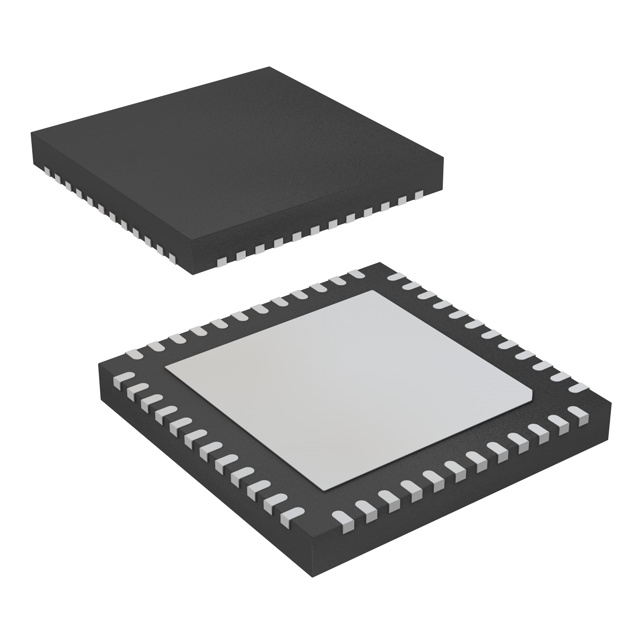 ADC3244IRGZRAnalog to Digital Converters | Texas Instruments | Dual-channel 14-bit 125-MSPS analog-to-digital converter (ADC) 48-VQFN -40 to 85 | 20 | 1+: $70.59750 30+: $67.28730 | |
ADC3244IRGZTAnalog to Digital Converters | Texas Instruments | Dual-channel 14-bit 125-MSPS analog-to-digital converter (ADC) 48-VQFN -40 to 85 | In Stock | - |





.png?x-oss-process=image/format,webp/resize,h_32)


