
 German
 Japanese
 Portuguese
 Korea
Korea
 Mexico
 Dutch
Dutch
AMC1303E2520
The AMC1303E2520 is a high-precision isolated amplifier from Texas Instruments designed for accurate signal conditioning in harsh electrical environments. It features a 25 kV/μs common-mode transient immunity, enabling reliable operation in systems with high electromagnetic interference (EMI). The device provides galvanic isolation between input and output using a proprietary silicon dioxide (SiO₂) isolation barrier, ensuring safety and noise immunity in industrial and power applications.
This isolated amplifier supports a wide supply voltage range of 3.3 V to 5.5 V, making it compatible with various digital and analog interfaces. It offers a low offset error of ±1 mV and a maximum gain error of ±0.1%, ensuring high accuracy across temperature and time. The AMC1303E2520 operates at a bandwidth of up to 1 MHz, allowing it to handle fast-changing signals typically found in current sensing and motor control applications.
The device includes an integrated digital filter that reduces noise without introducing significant phase delay, improving system stability. Its CMOS logic output is compatible with standard TTL and CMOS levels, simplifying integration into microcontroller-based systems. Additionally, the AMC1303E2520 is available in a compact 8-pin SOIC package, ideal for space-constrained designs.
Common applications include isolated current sensing in industrial motor drives, power supplies, and renewable energy inverters. It is also used in medical equipment where patient safety and signal integrity are critical, as well as in automotive systems requiring robust performance under extreme conditions. The part’s wide operating temperature range (-40°C to +125°C) ensures reliability in demanding environments.
Texas Instruments’ AMC1303E2520 combines precision, safety, and ease of use in a single-chip solution. Its robust design meets stringent isolation standards such as UL 1577 and IEC 60747-17, making it suitable for compliance-critical applications. With minimal external components required, it reduces design complexity and cost while maintaining high performance.
Related Parts
| Part # | Manufacturer | Description | Availability | Pricing | Quantity |
|---|---|---|---|---|---|
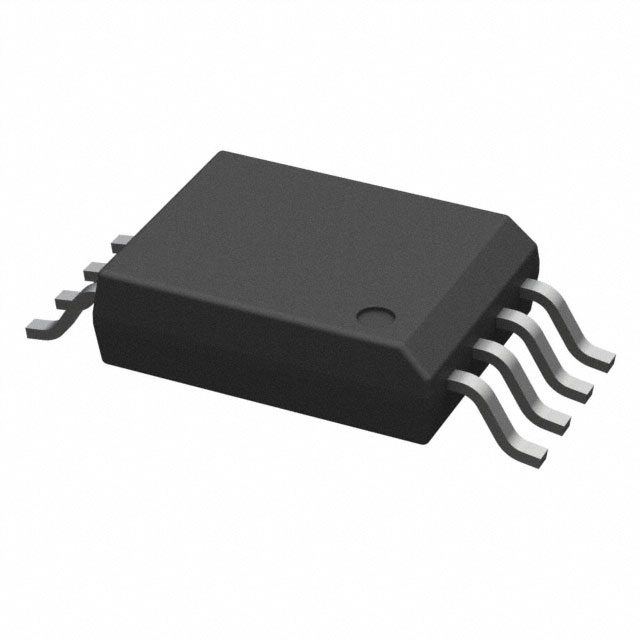 AMC1303E2520DWVRADCs/DACs - Special Purpose ICs | Texas Instruments | Small Reinforced Isolated Modulator w/ ±250mV Input, Int Clk, and Manchester-Encoded CMOS Interface 8-SOIC -40 to 125 | 5 | 1+: $11.08720 10+: $9.49210 30+: $8.52120
Show More | |
AMC1303E2520DWVADCs/DACs - Special Purpose ICs | Texas Instruments | Small Reinforced Isolated Modulator w/ ±250mV Input, Int Clk, and Manchester-Encoded CMOS Interface 8-SOIC -40 to 125 | 91 | - |





.png?x-oss-process=image/format,webp/resize,h_32)


