
 German
 Japanese
 Portuguese
 Korea
Korea
 Mexico
 Dutch
Dutch
LMV321A-Q1
The LMV321A-Q1 is a low-power, single-supply operational amplifier from Texas Instruments designed for automotive and industrial applications requiring high reliability and extended temperature performance. It operates from a single supply voltage ranging from 2.7 V to 5.5 V, making it suitable for battery-powered systems where power efficiency is critical. The device features a wide bandwidth of 1.5 MHz and a slew rate of 0.6 V/μs, enabling fast response times and stable operation in signal conditioning tasks.
This op-amp offers rail-to-rail input and output swing, allowing maximum signal utilization across the full supply range without distortion. Its low quiescent current—just 85 μA per channel—ensures minimal power consumption, ideal for energy-sensitive designs such as sensor interfaces and portable instrumentation. The LMV321A-Q1 also includes internal EMI filtering and protection circuitry, enhancing robustness in noisy environments commonly found in automotive electronics.
Designed for AEC-Q100 Grade 1 qualification, the LMV321A-Q1 meets stringent automotive reliability standards, operating reliably over an extended temperature range from –40°C to +125°C. This makes it particularly well-suited for harsh conditions in engine control units (ECUs), body control modules, and telematics systems. The device supports both inverting and non-inverting configurations, offering flexibility in analog circuit design for amplification, filtering, and buffering applications.
Key features include a unity-gain stability, low offset voltage (maximum 2 mV), and excellent DC precision, which are essential for accurate measurement and control loops. Additionally, the LMV321A-Q1 is available in compact packages such as SOIC-8 and TSSOP-8, supporting space-constrained PCB layouts typical in modern embedded systems. Its compatibility with standard CMOS logic levels and ease of integration into mixed-signal designs further simplify system-level implementation.
Common applications include sensor signal conditioning in automotive systems, active filters in data acquisition circuits, and level shifting in communication interfaces. The device’s combination of low power, high precision, and automotive-grade reliability positions it as a preferred choice for engineers seeking robust analog performance in demanding environments.
Related Parts
| Part # | Manufacturer | Description | Availability | Pricing | Quantity |
|---|---|---|---|---|---|
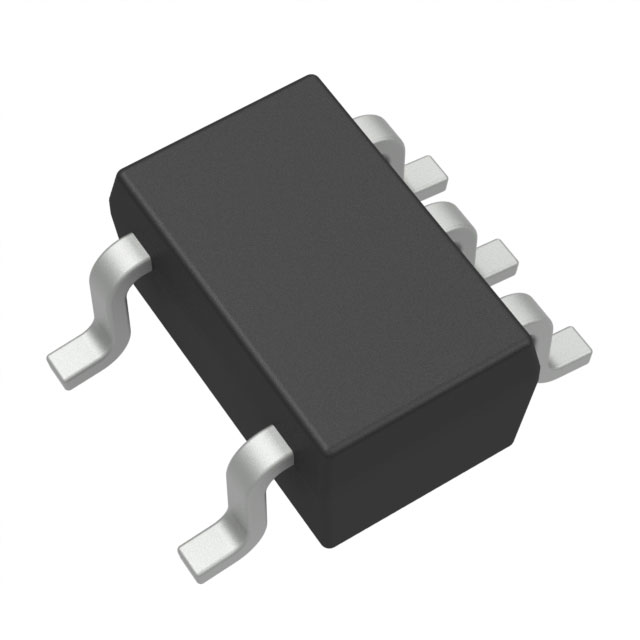 LMV321AQDCKRQ1OP Amps, Buffer Amps ICs | Texas Instruments | AUTOMOTIVE, SINGLE-CHANNEL, 5.5- | 1431 | 1+: $0.50228 10+: $0.39085 30+: $0.34285
Show More | |
 LMV321AUQDBVRQ1OP Amps, Buffer Amps ICs | Texas Instruments | AUTOMOTIVE, SINGLE-CHANNEL, 5.5- | 2114 | 1+: $0.43543 10+: $0.34115 30+: $0.29657
Show More | |
 LMV321AQDBVRQ1OP Amps, Buffer Amps ICs | Texas Instruments | AUTOMOTIVE, SINGLE-CHANNEL, 5.5- | 2105 | 1+: $0.49200 10+: $0.38228 30+: $0.33600
Show More |





.png?x-oss-process=image/format,webp/resize,h_32)


