
 German
 Japanese
 Portuguese
 Korea
Korea
 Mexico
 Dutch
Dutch
OPA2354A-Q1
The OPA2354A-Q1 is a precision operational amplifier from Texas Instruments, designed for high-performance analog signal conditioning in automotive and industrial applications. It features a low offset voltage of 100 µV (max) and a very low input bias current of 1 pA (typical), ensuring high accuracy in sensitive measurement circuits. The device operates over a wide supply voltage range of 2.7 V to 5.5 V, making it compatible with both single-supply and dual-supply systems.
This amplifier offers a gain bandwidth product of 1.6 MHz and a slew rate of 0.6 V/µs, enabling stable operation in filter, buffer, and sensor interface designs. Its low noise performance—2.8 µVpp (0.1 Hz to 10 Hz)—makes it ideal for amplifying small signals from temperature sensors, strain gauges, and other precision transducers. The OPA2354A-Q1 is also characterized for automotive use, meeting AEC-Q100 Grade 1 qualification, which ensures robustness under harsh environmental conditions such as wide temperature ranges (-40°C to +125°C) and high vibration levels.
The device supports rail-to-rail input and output swing, maximizing dynamic range without signal clipping, and includes internal EMI filtering to reduce susceptibility to electromagnetic interference. With a typical quiescent current of just 190 µA per channel, it provides excellent power efficiency—critical for battery-powered or energy-constrained systems. Additionally, the OPA2354A-Q1 is available in space-saving packages like SOIC-8 and WSON-8, facilitating compact PCB layouts.
Common applications include automotive sensor signal conditioning (e.g., pressure, temperature, and position sensors), medical instrumentation, industrial process control, and data acquisition systems. Its high reliability, low distortion, and compatibility with digital control systems make it suitable for integration into safety-critical and precision analog front-ends. The device is fully specified across temperature and supply variations, offering consistent performance in demanding environments.
Related Parts
| Part # | Manufacturer | Description | Availability | Pricing | Quantity |
|---|---|---|---|---|---|
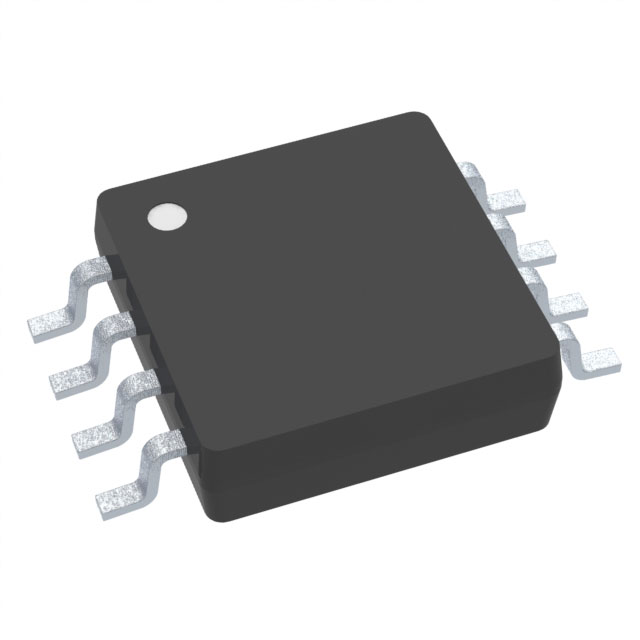 OPA2354AQDGKRQ1OP Amps, Buffer Amps ICs | Texas Instruments | 250MHz CMOS Dual Op Amp, Rail-to-Rail I/O, 5.5V, VSSOP | 40 | 1+: $5.59540 10+: $4.81670 30+: $4.34360 |





.png?x-oss-process=image/format,webp/resize,h_32)


