
 German
 Japanese
 Portuguese
 Korea
Korea
 Mexico
 Dutch
Dutch


A76 Battery: A Comprehensive Guide

What is the A76 Battery?
The A76 battery, also known as the LR44 battery, is a small button cell commonly used in various electronic devices. It comes in two types: alkaline (1.5V, 150–200 mAh, 3–5 years shelf life) and silver oxide (1.55V, 150–170 mAh, 5–10 years shelf life). Measuring approximately 11.6 mm in diameter, 5.4 mm in height, and weighing about 1.8 grams, it operates within a temperature range of -10°C to 60°C.
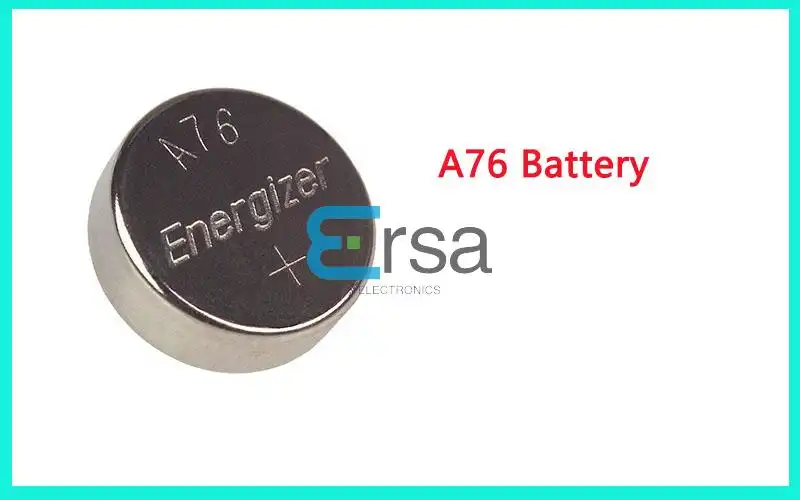
The A76 is widely used in watches, calculators, hearing aids, key fobs, toys, medical devices, and some digital cameras. Equivalent batteries include AG13 (alkaline) and 357 (silver oxide), which share similar specifications but vary slightly in chemistry and capacity.
A76 Battery Dimensions

A76 Battery Specifications
| Specification | Value |
| Type | Alkaline (LR44) or Silver Oxide (SR44) |
| Nominal Voltage | 1.5 Volts (Alkaline), 1.55 Volts (Silver Oxide) |
| Typical Capacity | 150 to 200 mAh (Alkaline), 150 to 170 mAh (Silver Oxide) |
| Dimensions | Approximately 11.6 mm (Diameter) x 5.4 mm (Height) |
| Weight | Approximately 1.8 grams (0.07 oz.) |
| Chemistry | Manganese Dioxide (for Alkaline), Silver Oxide |
| Temperature Range | -10°C to 60°C (14°F to 140°F) |
| Shelf Life | 3 to 5 years (Alkaline), 5 to 10 years (Silver Oxide) |
| Discharge Characteristics | Relatively flat discharge curve for Alkaline, stable for Silver Oxide |
| Leak Resistance | Generally good for reputable brands |
| Impedance | 5 to 15 ohms (at 40 Hz) |
| Max Bulge During Discharge | The battery may bulge but will not exceed the specified dimensions |
| Typical Drain at 1.30V | Approximately 0.191 mA |
| Cross Reference Designations | LR44, AG13, SR44, 303, 357, A76 |
Primary Features of A76 Battery
The A76 battery, also known as LR44, is a miniature alkaline battery commonly used in various small electronic devices. Here are its primary features:
General Specifications
Type: Miniature Alkaline
Nominal Voltage: 1.5 volts
Typical Capacity: Approximately 175 mAh when discharged to 0.9 volts
Dimensions: 11.6 mm in diameter and 5.4 mm in height
Weight: About 1.85 grams (0.07 oz.)
Chemical Composition
The A76 battery utilizes Manganese Dioxide (MnO2) as its active chemical component, contributing to its alkaline properties.
Applications
The A76 battery is widely used in:
- Watches: Powering quartz movements.
- Calculators: Providing energy for basic functions.
- Medical Devices: Such as glucose monitors and digital thermometers.
- Toys: In small electronic toys and gadgets.
- Key Fobs: For remote controls and keyless entry systems.
- Laser Pointers: Used in presentations or other tasks.
Performance Characteristics
The A76 battery exhibits a relatively flat discharge curve, maintaining a steady voltage output until it is nearly depleted.
It is designed for optimal performance in devices requiring consistent power without rapid fluctuations.
Interchangeability
The A76 battery is often interchangeable with several other battery types, including:
- 357
- AG13
- LR44
This compatibility arises from similar dimensions and voltage, although differences in chemistry may affect performance and longevity.
Pros of Using A76 Battery
The A76 battery, a miniature alkaline cell, offers several advantages that make it a popular choice for powering small electronic devices. Here are the key benefits:
1. Long-lasting Performance
The A76 battery is designed to provide a reliable and consistent power supply, with a typical capacity of around 175 mAh. This allows it to power devices for extended periods before needing replacement.
2. Wide Range of Applications
It is suitable for various devices, including:
- Watches: Ideal for quartz movements.
- Calculators: Provides energy for basic functions.
- Medical Devices: Powers blood glucose monitors and digital thermometers.
- Toys: These are used for small electronic toys and gadgets.
- Key Fobs: For remote controls and keyless entry systems.
3. Compact Size
With dimensions of approximately 11.6 mm in diameter and 5.4 mm in height, the A76 battery is compact, making it easy to fit into small devices without adding bulk.
4. Stable Voltage Output
The battery maintains a stable voltage output throughout its discharge cycle, which is crucial for devices that require consistent performance without fluctuations.
5. Good Shelf Life
When stored properly, the A76 battery can last between 3 and 5 years, ensuring that users have a reliable power source available when needed.
6. Interchangeability
The A76 battery is often interchangeable with other similar batteries (e.g., AG13, LR44, 357), providing flexibility in usage across different devices without compatibility issues.
7. Excellent Leakage Resistance
A76 batteries are known for their durability and resistance to leakage, which enhances their reliability and safety in various applications.
A76 Battery Applications
The A76 battery, a miniature alkaline cell, is widely used in various electronic devices due to its compact size and reliable performance. Here are the primary applications of the A76 battery:
1. Watches
- Commonly used to power quartz watches, providing a steady voltage for accurate timekeeping.
2. Calculators
- Powers basic functions in handheld calculators, ensuring long-lasting operation.
3. Hearing Aids
- Serves as a power source for hearing amplification devices, offering reliable performance for users.
4. Key Fobs
- Utilized remote controls and keyless entry systems for vehicles and home security.
5. Laser Pointers
- Powers small laser pointers used in presentations and other tasks.
6. Toys
- Found in various small electronic toys and gadgets, providing the necessary energy for operation.
7. Medical Devices
- Used in devices such as blood glucose monitors and digital thermometers, critical for health monitoring.
8. Remote Controls
- Powers remote controls for garage doors and other electronic devices.
9. Digital Cameras
- Employed in some compact digital cameras and camera accessories, enhancing portability.
10. Timers and Clocks
- Used in small digital timers or clocks, ensuring accurate timekeeping in various settings.
11. Keychain Gadgets
- Powers small keychain devices like mini flashlights or novelty items.
Discharge Characteristics of A76 Battery

A76 Battery Equivalent
The A76 battery, also known as LR44, is compatible with several other battery types due to its similar size and voltage specifications. Here are the primary equivalents:
Common Equivalents
LR44: The most direct equivalent, sharing the same dimensions and voltage (1.5V).
AG13: Frequently used in watches and small electronic devices; it has similar chemical properties.
357: A silver oxide battery with a nominal voltage of 1.55V, often used in watches and hearing aids.
SR44: Another silver oxide option that provides a stable voltage output.
L1154: This designation is also interchangeable with the A76.
157: Similar in size and voltage, often found in various small electronic devices.
Comparison of Key Features
| Battery Type | Voltage | Chemistry | Typical Capacity |
| A76 | 1.5V | Alkaline | ~175 mAh |
| LR44 | 1.5V | Alkaline | ~175 mAh |
| AG13 | 1.5V | Alkaline | ~150-200 mAh |
| 357 | 1.55V | Silver Oxide | ~150 mAh |
| SR44 | 1.55V | Silver Oxide | ~150 mAh |
| L1154 | 1.5V | Alkaline | ~175 mAh |
| 157 | 1.5V | Alkaline | ~175 mAh |
Interchangeability Notes
While these batteries can often be used interchangeably, there are some considerations:
Voltage Differences: The 357 and SR44 batteries have a slightly higher voltage (1.55V), which may affect performance in certain devices.
Chemistry Impact: Alkaline batteries (like A76) may not last as long as silver oxide batteries (like 357) under continuous load due to differences in discharge characteristics.
In summary, the A76 battery is versatile and can be replaced by several other battery types, making it widely applicable across various devices such as watches, calculators, and medical equipment. Always check the manufacturer's recommendations for optimal performance in specific applications.
Is A76 the Same as LR44?
The A76 battery is essentially identical to the LR44 battery, both being alkaline button cells with the same dimensions (11.6 mm in diameter, 5.4 mm in thickness) and a nominal voltage of 1.5V. These batteries, along with the AG13, are interchangeable and widely used in devices like watches, calculators, and small electronic gadgets. They typically have a capacity of 150–175 mAh, making them suitable for similar applications. While the LR44 generally offers a longer shelf life (up to 5 years) compared to the A76 (around 3 years), they can be used interchangeably without compatibility concerns.
Main Differences Between Energizer and Duracell A76 Batteries
Both Energizer and Duracell produce A76 batteries, which are commonly used in small electronic devices. While they serve the same purpose and have similar specifications, there are notable differences between the two brands.
1. Chemistry and Performance
Energizer A76: This battery utilizes Power Seal Technology, which helps maintain battery power for an extended period. Energizer batteries are often praised for their performance in low-drain devices, maintaining consistent voltage over time.
Duracell 76A: Known for its DuraLock Power Preserve Technology, Duracell batteries are designed to last longer on the shelf (up to 10 years) and provide reliable power for high-drain devices. They may offer a slight edge in initial power output compared to Energizer.
2. Shelf Life
Both brands advertise a shelf life of up to 10 years, but Duracell emphasizes its DuraLock technology, which is specifically designed to prevent corrosion and leakage over time. This can be particularly beneficial for devices that are used infrequently.
3. Pricing
Generally, Energizer batteries tend to be slightly cheaper compared to Duracell batteries. This price difference can vary based on retailers and specific promotions.
4. Brand Reputation
Duracell has been a household name since the 1960s and is often associated with durability and reliability. Energizer also has a strong reputation but is perceived as more innovative in terms of battery technology, especially with its rechargeable options.
5. Availability
Both brands are widely available, but specific models may vary by retailer. It's essential to check compatibility with your device when selecting between the two.
6. Environmental Considerations
Both companies have initiatives aimed at reducing environmental impact, but they differ in their approaches to recycling programs and sustainable practices. It's worth researching each brand's policies if environmental impact is a concern for you.
While both Energizer A76 and Duracell 76A batteries provide reliable power for small devices, your choice may depend on specific needs such as pricing, brand loyalty, or performance in particular applications. For high-drain devices or those that require long shelf life, Duracell might be preferable, whereas Energizer could be more cost-effective for everyday use in low-drain applications.
Main Differences Between A76 and 357 Batteries
| Feature | A76 Battery | 357 Battery |
| Chemical Composition | Alkaline (Manganese Dioxide) | Silver Oxide (Zinc/Silver Oxide) |
| Nominal Voltage | 1.5 Volts | 1.55 Volts |
| Typical Capacity | 175 mAh (to 0.9 volts) | 150 mAh (to 1.2 volts) |
| Weight | 1.85 grams (0.07 oz.) | 2.3 grams (0.08 oz.) |
| Dimensions | 11.6 mm diameter x 5.4 mm height | 11.6 mm diameter x 5.4 mm height |
| Shelf Life | Up to 5 years | Up to 10 years |
| Applications | Toys, calculators, watches | Watches, medical devices, cameras |
| Discharge Characteristics | May drain faster under high-use | Stable voltage output throughout the lifespan |
The A76 and 357 batteries are both compact button cells commonly used in small electronic devices, but they differ significantly in chemical composition and performance characteristics. The A76 is an alkaline battery with a nominal voltage of 1.5 volts and a typical capacity of around 175 mAh, making it suitable for everyday devices like toys and calculators. In contrast, the 357 battery is a silver oxide battery with a slightly higher nominal voltage of 1.55 volts and a capacity of about 150 mAh, providing stable power ideal for precision instruments such as watches and medical devices. Additionally, the shelf life of the 357 battery is generally longer, lasting up to 10 years compared to the A76's maximum of 5 years. These differences make each battery type suited for specific applications based on power demands and usage patterns.
A76 Battery Datasheet

Related Articles
- ·Fiber Optic Switch Guide: Definition, Connection Methods, Cabling, Disconnection and FAQ
- ·Optical Fiber Transmitter and Receiver Guide
- ·ICD Driver, LCD Driver & LCD Panel Driver Board Guide
- ·Touch Screen Overlay Guide for Commercial & Industrial Applications
- ·Cold Cathode Fluorescent Lamp Guide
- ·Complete Buying Guide for LED Video Walls & Commercial LED Displays
- ·The Complete Guide to Diode Lasers
- ·LED Emitter Guide: Definition, Brightness, Beam Angle, Soldering, Flashlight Upgrade, IR Usage and Grounding
- ·Inrush Current Limiter: Working Principle, Calculation, Selection Guide, and Motor / Capacitor Applications
- ·PTC Resettable Fuses: Principles, Symbols, Selection, Application Notes, SMD Types, Bourns Series and Polymer PTC Deep Dive
 FAQ
FAQ






.png?x-oss-process=image/format,webp/resize,h_32)


