German
 Japanese
 Portuguese
 Korea
 Mexico
 Dutch


Top Picks for AG13 Battery Equivalent

What is AG13 Battery?
The AG13 battery is a versatile, compact 1.5V button cell battery, widely used for powering small electronic devices. It has a capacity of approximately 138 mAh, with dimensions of 11.6 mm in diameter and 5.4 mm in thickness. While typically alkaline, some AG13 batteries use silver oxide chemistry, featuring a positive electrode made from either silver oxide or manganese dioxide, a zinc negative electrode, and an electrolyte mix that may include silver chloride and sodium hydroxide.
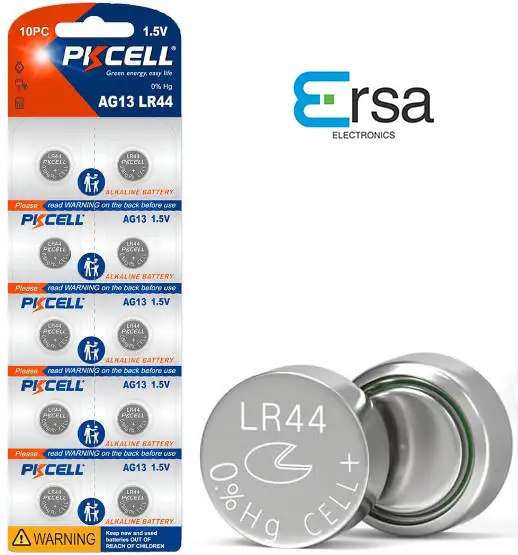
AG13 batteries are ideal for compact devices such as watches, calculators, toys, remote controls, LED flashlights, and medical devices like thermometers. Common equivalents include the LR44 (alkaline), SR44 (silver oxide with a slightly higher 1.55V), and 357A and A76 models, making AG13 a flexible choice for various applications.
Design note: for reliable low-battery alerts in coin-cell devices, use a voltage comparator (LM393 class) to set the threshold/hysteresis.
AG13 Battery Features
The AG13 battery, also known as LR44, is a widely used alkaline button cell battery. It is commonly found in various electronic devices, including watches, calculators, toys, and medical equipment. Below are the key features and specifications of the AG13 battery.
Voltage: 1.5 volts
Dimensions:
- Diameter: 11.4 mm
- Thickness: 5.8 mm
Weight: Approximately 2.0 grams
Maximum Continuous Current: About 20 milliamperes (mA)
Operating Temperature Range: -20°C to 60°C
AG13 batteries typically consist of:
- Positive Electrode: Silver oxide (Ag2O)
- Negative Electrode: Zinc (Zn)
- Electrolyte: A solution of silver chloride (AgCl) and sodium hydroxide (NaOH).
Service Life and Storage:
- AG13 batteries can be stored for several years without significant performance loss, depending on storage conditions. Their service life during use is influenced by the load current and operating environment. For optimal longevity, it is recommended to store unused batteries in a cool, dry place.
Alternatives and Equivalents:
- LR44
- SR44
- 357A
- A76
Environmental Considerations:
AG13 batteries contain heavy metals that can be harmful to the environment, necessitating proper disposal. Many regions have specialized recycling programs to minimize environmental impact.
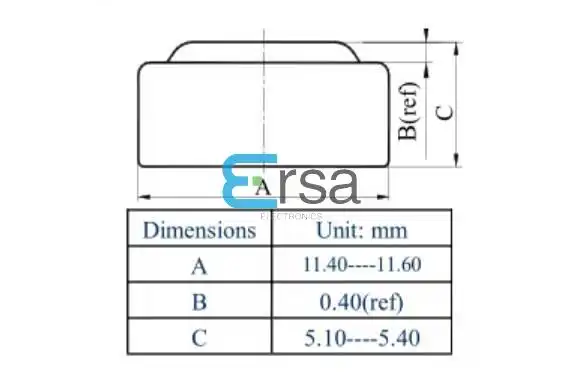
AG13 Battery Dimensions
AG13 Battery Specifications
| Specification | Detail |
| Voltage | 1.5 volts (V) |
| Capacity | Approximately 138 mAh |
| Diameter | 11.6 mm |
| Thickness | 5.4 mm |
| Chemistry | Alkaline (some variants may use Silver Oxide) |
| Positive Electrode Material | Silver Oxide (Ag₂O) or Manganese Dioxide |
| Negative Electrode Material | Zinc (Zn) |
| Electrolyte Composition | May include Silver Chloride (AgCl) and Sodium Hydroxide (NaOH) |
| Operating Temperature Range | -10°C to +60°C |
| Shelf Life | 2-5 years, depending on storage conditions and chemistry type |
| Common Applications | Watches, calculators, toys, remote controls, LED flashlights, thermometers |
| Equivalents | LR44 (alkaline), SR44 (silver oxide, 1.55V), 357A, A76 |
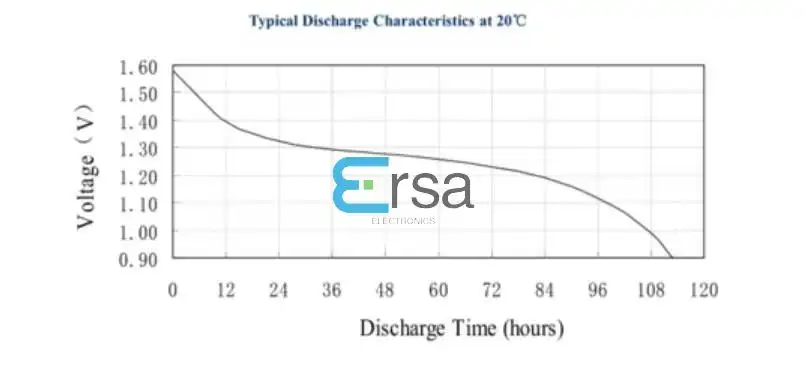
| Typical Discharge Curve | The steady voltage output with the gradual decline |
| Rechargeable | No |
AG13 Battery Applications
The AG13 battery, also known as the LR44, is a versatile alkaline button cell battery widely used in various electronic devices. Below are the primary applications of the AG13 battery:
1. Watches
AG13 batteries are commonly found in both analog and digital watches, providing reliable power for timekeeping.
2. Calculators
These batteries are frequently used in calculators, enabling efficient operation for both basic and scientific calculations.
3. Toys
Many electronic toys utilize AG13 batteries for powering sound effects, lights, and movement mechanisms, making them essential for interactive play.
4. Remote Controls
AG13 batteries serve as a power source for remote controls of televisions, audio systems, and other home electronics, ensuring long-lasting operation.
5. Medical Devices
In the medical field, AG13 batteries power devices such as glucose meters and hearing aids, where reliability and consistent performance are critical.
6. LED Lights
These batteries are often used in small LED lights and handheld lamps, providing stable brightness over extended periods.
7. Digital Devices
AG13 batteries are utilized in various digital devices, including timers, digital thermometers, and notepads, which require compact and efficient power solutions.
8. Audio Equipment
Small audio devices like mini speakers and voice recorders rely on AG13 batteries for stable power output essential for maintaining audio quality.
9. Key Fobs
Car electronic keys often use AG13 batteries to ensure functionality in remote locking and unlocking of vehicles.
10. Miscellaneous Gadgets
Other applications include use in laser pointers, alarms, digital voice recorders, and small cameras, showcasing the battery's versatility across different electronic products.
The AG13 battery's compact size, reliable voltage output (1.5V), and broad compatibility with various devices make it a popular choice in consumer electronics.
AG13 Battery Equivalent
The AG13 battery, also known as LR44, has several equivalents that can be used interchangeably in various devices. Below is a detailed overview of these alternatives, their specifications, and applications:

Key Equivalents of AG13 Battery:
| Equivalent Part | Type | Voltage | Dimensions | Capacity | Common Uses | Notes |
| LR44 | Alkaline | 1.5V | 11.6 mm diameter, 5.4 mm height | 110-130 mAh | Watches, calculators, toys, remote controls, medical devices | Most common designation for AG13, often used interchangeably. |
| A76 | Alkaline | 1.5V | Same as AG13/LR44 | Around 120 mAh | Similar applications to LR44, including toys and small electronics | Commonly associated with Duracell batteries. |
| 357 | Silver Oxide | 1.55V | Same as AG13/LR44 | Approximately 150 mAh | Medical devices, cameras, high-performance watches | Flatter discharge curve and longer lifespan than alkaline batteries, ideal for stable voltage needs. |
| 303 | Silver Oxide | 1.55V | Same as AG13/LR44 | Similar to 357 | Watches, small electronic devices | Better performance than alkaline batteries in low-drain applications. |
| SR44 | Silver Oxide | 1.55V | Same as AG13/LR44 | Around 150 mAh | Digital watches, precision instruments | Preferred for devices needing consistent power, with higher capacity and stability than alkaline. |
| L1154 | Alkaline | 1.5V | Same as AG13/LR44 | Similar to LR44 | Interchangeable with LR44/AG13 in many devices | Commonly used as a substitute for LR44/AG13. |
Beyond physical equivalents (LR44/SR44/357), add a LM393-class comparator hysteresis example to implement a clean low-battery cutoff and avoid brown-out.
Other Notable Equivalents:
These include:
- G13A
- PX76A
- V13GA
- KA76
These designations may vary by manufacturer but generally refer to batteries compatible with the AG13 specifications.
Comparison of Battery Types
| Battery Type | Chemistry | Voltage | Capacity | Common Applications |
| LR44 | Alkaline | 1.5V | 110–130 mAh | Watches, calculators, toys |
| A76 | Alkaline | 1.5V | ~120 mAh | Similar to LR44 |
| 357 | Silver Oxide | 1.55V | ~150 mAh | Medical devices, cameras |
| SR44 | Silver Oxide | 1.55V | ~150 mAh | Digital watches |
| L1154 | Alkaline | 1.5V | ~120 mAh | Various small electronics |
Key Considerations
When selecting a replacement for an AG13 battery:
- For devices requiring consistent power over time (like watches), silver oxide options (e.g., SR44, 357) are preferable due to their higher capacity and stable voltage output.
- Alkaline alternatives (like LR44 and A76) are suitable for less demanding applications but may not last as long under continuous use.
Although AG13, LR44, and SR44 batteries share similar size and voltage, their actual runtime can vary depending on chemistry, capacity, and device power consumption. To estimate how long a specific button cell may last in real usage, you can use this battery life calculator to compare battery capacity, load current, and expected operating time before choosing a replacement.
In conclusion, while the AG13 battery is versatile and widely used across various applications, understanding its equivalents allows consumers to choose the best option based on their specific needs and device requirements.
LR44 Battery: A Viable Equivalent to AG13 Battery
The LR44 battery is indeed a viable equivalent to the AG13 battery, as both share the same physical dimensions and electrical specifications. Here’s a detailed comparison of the two:
Specifications Comparison
| Feature | LR44/AG13 |
| Type | Alkaline Button Cell |
| Nominal Voltage | 1.5 V |
| Capacity | 120-150 mAh |
| Diameter | 11.6 mm (0.457 in) |
| Height | 5.4 mm (0.213 in) |
| Operating Temperature | -10°C to 60°C |
| Weight | Approximately 2 g |
Interchangeability
Equivalent Designations: The LR44 battery is also known by several other designations, including AG13, A76, L1154, and 357. These batteries are interchangeable in most devices due to their identical dimensions and voltage ratings.
Usage: Both LR44 and AG13 batteries are commonly used in small electronic devices such as toys, watches, calculators, and remote controls.
Performance Characteristics
While both batteries have the same nominal voltage, there can be slight variations in capacity depending on the manufacturer. The LR44 typically has a capacity range of about 120-150 mAh, which is comparable to that of the AG13.
The LR44's alkaline chemistry provides a stable discharge rate suitable for low-drain devices, while alternatives like the silver oxide 357 battery may offer better performance in high-drain applications due to their higher capacity and flatter discharge curve.
In summary, the LR44 battery is a direct equivalent to the AG13 battery, making them interchangeable for most applications. When selecting a replacement battery, users can confidently choose either designation based on availability without worrying about compatibility issues.
SR44 Battery: A Viable Equivalent to AG13 Battery
The SR44 battery is a viable equivalent to the AG13 battery, but there are important distinctions between the two that users should be aware of.
Specifications Comparison
| Feature | AG13/LR44 (Alkaline) | SR44 (Silver Oxide) |
| Type | Alkaline Button Cell | Silver Oxide Button Cell |
| Nominal Voltage | 1.5 V | 1.55 V |
| Capacity | 120-150 mAh | Typically 150 mAh |
| Diameter | 11.6 mm | 11.6 mm |
| Height | 5.4 mm | 5.4 mm |
| Discharge Characteristics | Gradual decline | Stable discharge curve |
Interchangeability
Physical Compatibility: Both the SR44 and AG13 batteries share identical physical dimensions, making them interchangeable in many devices designed for button cell batteries.
Voltage Differences: The primary difference lies in their voltage; the SR44 outputs 1.55 volts compared to the AG13's 1.5 volts. This slight increase in voltage can affect performance in sensitive devices, particularly those that require precise voltage levels for optimal operation.
Chemistry and Applications: The AG13 is an alkaline battery, while the SR44 is a silver oxide battery. Silver oxide batteries typically offer better performance in terms of stability and longevity, especially in devices that demand consistent power, such as medical instruments and cameras.
Usage Considerations
Device Compatibility: While many devices will function with either battery, it is essential to consult the device specifications. Some devices may be designed specifically for one type over the other, and using the incorrect type could lead to suboptimal performance or damage.
Applications: Both batteries are commonly used in watches, calculators, toys, and small electronic devices. However, the SR44 is often preferred in applications requiring stable voltage output over extended periods.
In summary, while the SR44 battery can be used as an equivalent to the AG13 battery due to their similar sizes and compatibility, users should consider the differences in voltage and chemistry when selecting a battery for specific devices. The choice between them may depend on the requirements of the device in question and whether it can accommodate the slight voltage difference without issues.
Advantages of Using AG13 Battery
AG13 batteries offer several advantages that make them a popular choice for various electronic devices. Here are the key benefits:
1. Compact Size
Dimensions: The AG13 battery has a small size (approximately 11.6 mm in diameter and 5.4 mm in height), making it suitable for compact electronic devices such as watches, calculators, and toys.
2. Stable Performance
Voltage Consistency: With a nominal voltage of 1.5 volts, AG13 batteries provide consistent power output, which is essential for devices that require stable operation over time.
3. Wide Availability
Common Use: AG13 batteries are widely available in the market, making them easy to find in stores or online. They are commonly used in many consumer electronics, ensuring that replacements can be sourced without difficulty.
4. Long Shelf Life
Storage Durability: These batteries can typically be stored for several years without significant performance degradation, provided they are kept in a cool, dry place. This makes them a reliable choice for devices that may not be used frequently.
5. Cost-Effectiveness
Affordability: AG13 batteries are generally less expensive than silver oxide alternatives, providing a cost-effective solution for powering various devices without sacrificing performance.
6. Versatility
Multiple Applications: AG13 batteries are versatile and can be used in a wide range of applications, including remote controls, digital thermometers, LED flashlights, and more. Their compatibility with different devices enhances their utility.
7. Reliable Manufacturers
Quality Assurance: Many reputable manufacturers produce AG13 batteries (such as Duracell and Energizer), ensuring that consumers have access to high-quality products backed by research and development efforts.
Discharge Characteristics of AG13 Battery
Are AG13 and LR44 Batteries the same?
The AG13 and LR44 batteries are essentially the same, both being interchangeable designations for a common type of alkaline button cell battery. Here are the key details:
Similarities
Dimensions: Both AG13 and LR44 batteries have identical dimensions, with a diameter of 11.6 mm and a thickness of 5.4 mm.
Voltage: They both have a nominal voltage of 1.5 volts, making them suitable for similar applications in small electronic devices such as watches, calculators, and toys.
Interchangeability: Due to their identical specifications, AG13 and LR44 batteries can be used interchangeably in devices designed for either type.
Differences
Chemistry: While LR44 is typically an alkaline battery, AG13 can refer to batteries made by various manufacturers, which may include silver oxide variants. Silver oxide batteries (like SR44) generally provide a more stable voltage and longer life compared to alkaline batteries.
Manufacturers' Designations: The designation AG13 is often used by specific brands (like Energizer) and may imply different chemical compositions depending on the manufacturer.
In conclusion, while AG13 and LR44 are commonly treated as equivalent, it's essential to check the specific type (alkaline vs. silver oxide) when replacing batteries in sensitive devices.
Related Articles:
LR41 Battery Equivalent: A Complete Guide
The Essential Guide to LR44 Batteries: Specifications and Use
LR44 vs 357: Comparing Battery Performance and Suitability
Next step: which ICs pair with this battery?

Related Articles
- ·Qualcomm PM8550 vs. PM8550B vs. PM8550VS: Features, Differences, Applications, and Selection Guide
- ·Qualcomm PM8350 vs. PM8350C: Architecture, Features, Applications, and Selection Guide
- ·Qualcomm PM8150 vs. PM8150B vs. PM8150L: Functions, Architecture, Applications, and Selection Guide
- ·SGM41541 vs. SGM6605: Battery Charger and Synchronous Boost Converter Comparison
- ·ADI LTM4630A vs. LT8645S: Power Module and Silent Switcher Regulator Comparison
- ·Richtek RT8206A vs. RT9013: Architecture, Specifications, Applications, and Design Considerations
- ·MPS MP2657, MPQ6610GJ-AEC1-Z, and MP2856: Identification, Functions, and Application Comparison
- ·TPS6594-Q1 vs. TPS65219-Q1 vs. TPS653860-Q1 vs. LP87745-Q1: TI Automotive PMIC Comparison
- ·Electronic Components Monthly Market Report
- ·MediaTek MT6369, MT6360, MT6365, and MT6375: Functions, Architecture, and Selection Guide
 FAQ