
 German
 Japanese
 Portuguese
 Korea
Korea
 Mexico
 Dutch
Dutch


STM32F103C8T6 Microcontroller: Description, Features, and Applications

What is an STM32F103C8T6?
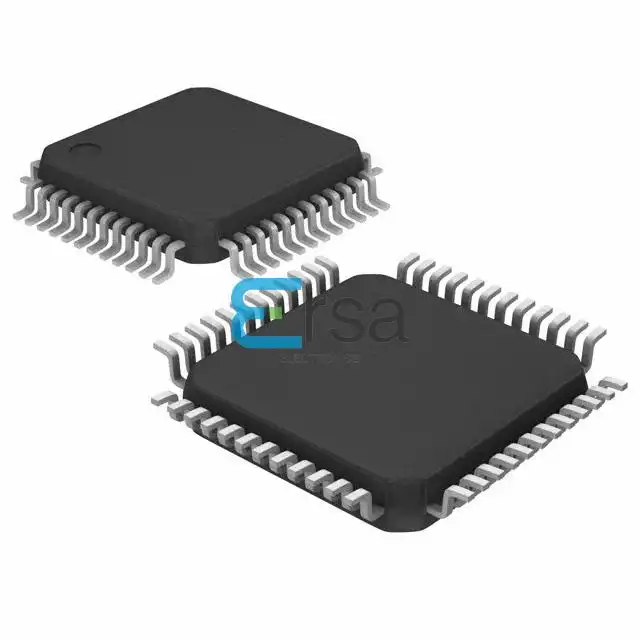
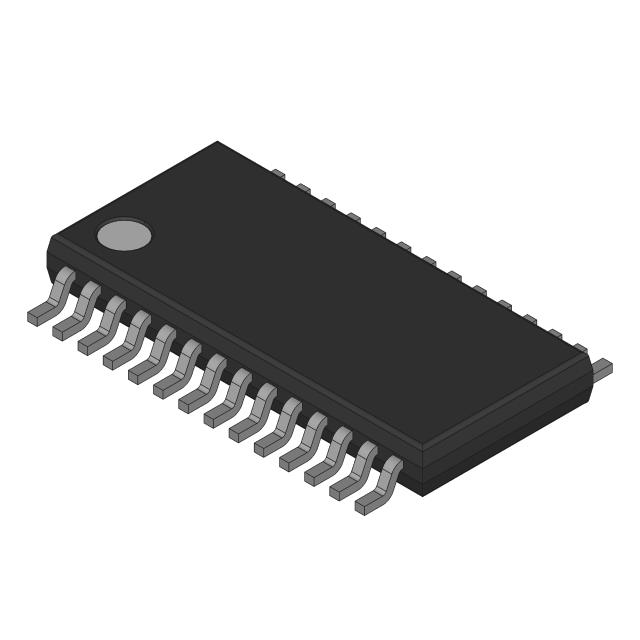
The STM32F103C8T6 is a 32-bit microcontroller from STMicroelectronics, based on the ARM Cortex-M3 architecture. It operates at a maximum frequency of 72 MHz and features 64 KB of flash memory and 20 KB of SRAM. With 37 GPIO pins and 10 analog input pins (12-bit resolution), it supports a wide range of embedded applications. The microcontroller includes multiple communication interfaces, including USART, SPI, I2C, and CAN, and is equipped with several timers for timing functions.

It also supports low-power modes for energy-efficient operation and operates within a temperature range of -40°C to +85°C. The STM32F103C8T6 is commonly used in embedded systems, control systems, and development applications, often in its popular "Blue Pill" development board form factor, which is programmable through Arduino IDE and STM32CubeMX.
STM32F103C8T6 Pinout
Key Features of STM32F103C8T6
The STM32F103C8T6 microcontroller is a versatile and powerful device widely used in embedded systems. Here are its key features:
Core Specifications
- Architecture: ARM Cortex-M3
- Maximum Frequency: 72 MHz
- Operating Voltage: 2.0 V to 3.6 V
- Flash Memory: 64 KB (with options for 128 KB)
- SRAM: 20 KB
Peripheral Features
- GPIO Pins: 37 general-purpose input/output pins
- Analog-to-Digital Converters (ADC): Two 12-bit ADCs with up to 10 channels
- Timers: Four 16-bit timers, including one PWM timer for motor control
- Communication Interfaces: USART: 3 channels, SPI: 2 channels, I2C: 2 channels, CAN: 1 channel
- USB Support: Full-speed USB interface
Performance and Efficiency
- Low Power Consumption: Offers various low-power modes such as sleep, standby, and shutdown, making it suitable for battery-operated devices.
- Rich Peripheral Set: Includes timers, PWM outputs, and multiple communication protocols, allowing for flexible application designs.
STM32F103C8T6 Specifications
| Specification | Details |
| Architecture | ARM Cortex-M3 |
| Operating Voltage | 2.0 V to 3.6 V |
| CPU Frequency | 72 MHz |
| Flash Memory | 64 KB |
| SRAM | 20 KB |
| GPIO Pins | 37 |
| Analog Input Pins | 10 (12-bit resolution) |
| USART Interfaces | 3 |
| SPI Interfaces | 2 |
| I2C Interfaces | 2 |
| CAN Interface | 1 |
| Timers | 3 x 16-bit timers, 1 additional timer |
| Low-Power Modes | Sleep, Stop modes |
| Temperature Range | -40°C to +85°C |
| Package Type | 48-pin LQFP (Low Profile Quad Flat Package) |
Advantages of Using STM32F103C8T6
The STM32F103C8T6 microcontroller offers several advantages that make it a popular choice for various embedded applications. Here are the key benefits:
1. High Performance
Processing Power: With an ARM Cortex-M3 core running at 72 MHz, the STM32F103C8T6 delivers robust performance for complex computations and real-time applications. Its architecture allows for the efficient execution of algorithms, making it suitable for demanding tasks.
2. Energy Efficiency
Low Power Consumption: The microcontroller features multiple low-power modes (Sleep, Stop, and Standby), which significantly reduce energy usage, extending battery life in portable applications. This efficiency is crucial for devices that rely on battery power.
3. Versatile Connectivity
Rich Peripheral Set: It supports numerous communication protocols, including USART, SPI, I2C, CAN, and USB. This versatility allows seamless integration into various systems and simplifies communication with other devices.
4. Extensive Memory Options
Memory Flexibility: The STM32F103C8T6 provides options for 64 KB or 128 KB of Flash memory and 20 KB of SRAM, accommodating a wide range of application requirements without lagging during data processing.
5. Real-Time Capability
Real-Time Performance: The microcontroller excels in real-time applications due to its efficient interrupt handling and fast response times, making it ideal for time-sensitive operations such as motor control and industrial automation.
6. Scalability and Compatibility
Easy Upgrades: Its compatibility with the STM32 family allows for straightforward upgrades and scalability. Developers can easily adapt their designs to new requirements without extensive redesigns.
7. Robust Development Support
Development Tools: A wide range of development tools and libraries are available, including support from the Arduino IDE and STM32CubeMX, which facilitate rapid prototyping and development processes.
8. Debugging Features
Debugging Support: The inclusion of JTAG and Serial Wire Debug (SWD) interfaces simplifies debugging and development, enhancing productivity during the design phase.
STM32F103C8T6 Applications
The STM32F103C8T6 microcontroller is widely used across various industries due to its versatility and performance. Here are some notable applications:
1. Industrial Automation
- Process Control: Utilized to monitor and control industrial processes, leveraging its real-time processing capabilities.
- Data Logging: Employed in systems that require precise data collection and logging for analysis.
2. Consumer Electronics
- Smart Home Devices: Integrated into home automation systems for controlling appliances, lighting, and security.
- Wearable Technology: Used in fitness trackers and health monitors, benefiting from its low power consumption.
3. Automotive Systems
- Engine Control Units (ECUs): Essential for managing engine performance and diagnostics.
- Dashboard Instrumentation: Provides real-time data display and monitoring for vehicle operations.
4. Embedded Systems
- Medical Devices: Applied in portable medical equipment for monitoring vital signs and managing drug delivery systems.
- Consumer Appliances: These are found in various household devices, enhancing functionality through embedded control systems.
5. Wireless Communication
- IoT Applications: Acts as a central node in IoT networks, facilitating communication between devices via protocols like Bluetooth and Wi-Fi.
- RF Modules: Supports wireless data transmission in various applications, including remote sensors.
6. Motor Control
- Robotics: Controls servo motors and stepper motors, enabling precise movement and automation tasks.
- Electric Vehicles: Utilized in motor control systems for efficient operation of electric drives.
7. Data Acquisition Systems
- Environmental Monitoring: Employed to gather and process data from sensors for research and industrial applications.
- Scientific Research: Used in experiments requiring accurate data collection and analysis.
8. Instrumentation and Measurement
- Signal Processing: Handles data logging and signal measurement in instrumentation applications, benefiting from its high-resolution ADCs.
- Control Systems: Manages parameters in various measurement systems, ensuring accuracy and reliability.
STM32F103C8T6 Equivalents
| Equivalent Model | Manufacturer | Architecture | CPU Frequency | Flash Memory | SRAM | Package Type |
| STM32F103C6T6 | STMicroelectronics | ARM Cortex-M3 | 72 MHz | 32 KB | 10 KB | 48-pin LQFP |
| STM32F103R8T6 | STMicroelectronics | ARM Cortex-M3 | 72 MHz | 128 KB | 20 KB | 48-pin LQFP |
| STM32F072C8T6 | STMicroelectronics | ARM Cortex-M0+ | 48 MHz | 64 KB | 16 KB | 48-pin LQFP |
| STM32F303C8T6 | STMicroelectronics | ARM Cortex-M4 | 72 MHz | 64 KB | 16 KB | 48-pin LQFP |
| LPC1768 | NXP Semiconductors | ARM Cortex-M3 | 100 MHz | 512 KB | 64 KB | 64-pin LQFP |
| AT91SAM3X8E | Microchip Technology | ARM Cortex-M3 | 100 MHz | 512 KB | 128 KB | 100-pin LQFP |
The STM32F103C8T6 is part of the STM32F1 series of microcontrollers, but there are several equivalents available across different manufacturers. For example, the STM32F103C6T6 and STM32F103R8T6 from STMicroelectronics share the same architecture and frequency but differ in flash memory and SRAM capacity. The STM32F072C8T6 offers a similar feature set but with a lower-frequency ARM Cortex-M0+ processor, while the STM32F303C8T6 has a more powerful ARM Cortex-M4 processor. Other equivalents, such as the NXP LPC1768 and Microchip AT91SAM3X8E, also provide ARM Cortex-M3 cores, but with different performance characteristics and memory sizes. These alternatives may be suitable depending on specific application requirements for processing power, memory size, and peripheral support.
STM32F103C8T6 Compared to Other STM32 Series
The STM32F103C8T6 microcontroller is part of the STM32 family from STMicroelectronics, which includes various series tailored for different application requirements. Here’s a comparative analysis of the STM32F103C8T6 against other STM32 series microcontrollers:
STM32F103C8T6 vs. Other STM32 Series
| Feature | STM32F103C8T6 | STM32L Series | STM32F4 Series | STM32F7 Series |
| Core | ARM Cortex-M3 | ARM Cortex-M0/M3 | ARM Cortex-M4 | ARM Cortex-M7 |
| Max Frequency | 72 MHz | Up to 32 MHz | Up to 180 MHz | Up to 216 MHz |
| Flash Memory | 64 KB | Up to 1 MB | Up to 1 MB | Up to 2 MB |
| SRAM | 20 KB | Up to 128 KB | Up to 256 KB | Up to 512 KB |
| Power Consumption | Moderate | Ultra-low power | Higher than F1 and L series | Higher than the F4 series |
| Peripheral Set | Basic (USART, SPI, I2C, ADC) | Low-power peripherals | Advanced (more ADCs, DACs) | High-performance peripherals |
| Applications | General embedded applications | Battery-operated devices | Complex applications requiring high processing power | High-performance applications |
Key Comparisons
Performance: The STM32F4 and F7 series are designed for high-performance applications with higher clock speeds and more advanced cores (Cortex-M4 and M7), making them suitable for tasks that require intensive computation, such as digital signal processing.
Power Efficiency: The STM32L series is optimized for low power consumption, making it ideal for battery-operated devices where energy efficiency is critical. In contrast, the STM32F103C8T6 offers moderate power consumption suited for general applications.
Memory Capacity: The STM32F103C8T6 has limited flash memory (64 KB), while the F4 and F7 series can support significantly larger memory sizes, accommodating more complex firmware and applications.
Peripheral Options: The F4 and F7 series provide a richer set of peripherals compared to the F1 series. This includes more ADC channels, higher resolution DACs, and additional communication interfaces, allowing for more complex system designs.
Conclusion
The choice between the STM32F103C8T6 and other STM32 series microcontrollers depends on specific application requirements:
For general-purpose applications with moderate performance needs, the STM32F103C8T6 is a cost-effective solution.
For low-power designs, especially in portable devices, the STM32L series is preferable.
For high-performance tasks requiring significant processing power and advanced features, the STM32F4 or F7 series would be more suitable.
Working Principle of STM32F103C8T6
The STM32F103C8T6 is a 32-bit microcontroller built around the ARM Cortex-M3 core from STMicroelectronics. It operates at a frequency of 72 MHz and is designed for embedded applications requiring a balance of performance and cost-effectiveness.
Core Operation
The STM32F103C8T6 utilizes the ARM Cortex-M3 CPU, known for its efficient handling of complex algorithms9. It supports a variety of operating modes, including operation mode, sleep mode, stop mode, and standby mode, to optimize power consumption based on the application's needs:
Operating Mode: After the power-on reset, the microcontroller automatically runs the program.
Sleep Mode: The core stops the internal clock and program execution upon encountering a "wait for interrupt" (WFI) or "wait for event" (WFE) instruction, but peripherals continue to operate. The core wakes up when a peripheral generates an interrupt or event.
Stop Mode: Setting the SLEEPDEEP bit in the Cortex_PCR and clearing the PDDS bit in the STM32 PCR configures stop mode. In this mode, the clocks of all devices are disabled except for the external interrupt control unit. The device can only be woken up by triggering an external interrupt via a level edge on a GPIO pin or by an RTC alarm event.
Standby Mode: When set to shutdown mode, the CPU stops working upon encountering a WFI or WFE instruction, and the high-speed internal (HSI) and high-speed external (HSE) clocks also enter a shutdown state, but the Flash and SRAM retain power. The device can be woken up by an external interrupt or the RTC module.
Key Features and Functions
Memory: It includes 64 KB of flash memory and 20 KB of SRAM for program storage and execution.
GPIO Pins: With 37 GPIO pins, the chip offers versatile interfacing capabilities.
ADC: It has two 12-bit ADCs with 12 external channels and internal channels for temperature and reference voltage sensing.
Timers: The device incorporates four 16-bit timers/counters suitable for various timing functions, including PWM motor control.
Communication Interfaces: It supports multiple communication protocols, including 2x I2C, 2x SPI, 3x USART, and 1x CAN.
DMA Controller: A seven-channel Direct Memory Access (DMA) controller manages peripheral operations like timers, ADC, SPI, I2C, and USART, enabling data transfers without burdening the CPU.
STM32F103C8T6 Datasheet

Related Articles
- ·HBM3 vs. HBM3E: Complete Technical Comparison for AI, HPC, and Global Component Procurement
- ·How Large Language Models Work
- ·SK Hynix & Samsung: The Unprecedented HBM Expansion Race
- ·Micron 6600 ION 245TB Redefines Data Center
- ·Why Memory and Storage Define the Next Decade
- ·How Artificial Intelligence Acquires “Knowledge”
- ·How DRAM Will Change the World
- ·Why SSD Write Cache Is Crucial for AI Applications
- ·DRAM Product, Technology & Application Guide
- ·HBM4 compared to HBM4E
 FAQ
FAQ






.png?x-oss-process=image/format,webp/resize,h_32)


