
 German
 Japanese
 Portuguese
 Korea
Korea
 Mexico
 Dutch
Dutch


Leadless Pacemaker: Tiny Tech Zapping Wires, Changing Lives ⚡

Ever tried explaining a traditional pacemaker to a kid? "Yep, we stick a battery pack under your skin, then thread wires into your heart like spaghetti through a straw." Cue the "Why?!" stares. Enter the Leadless Pacemaker: the rebel of medical tech that said, "Nah, wires are overrated," and shrunk the entire system into a device smaller than your thumb. Let's dive deeper into what it is, why it's a game-changer, how it works, and why this tiny hero is shocking (pun intended) industries far beyond hearts—with even more stories, stats, and surprises. 💥
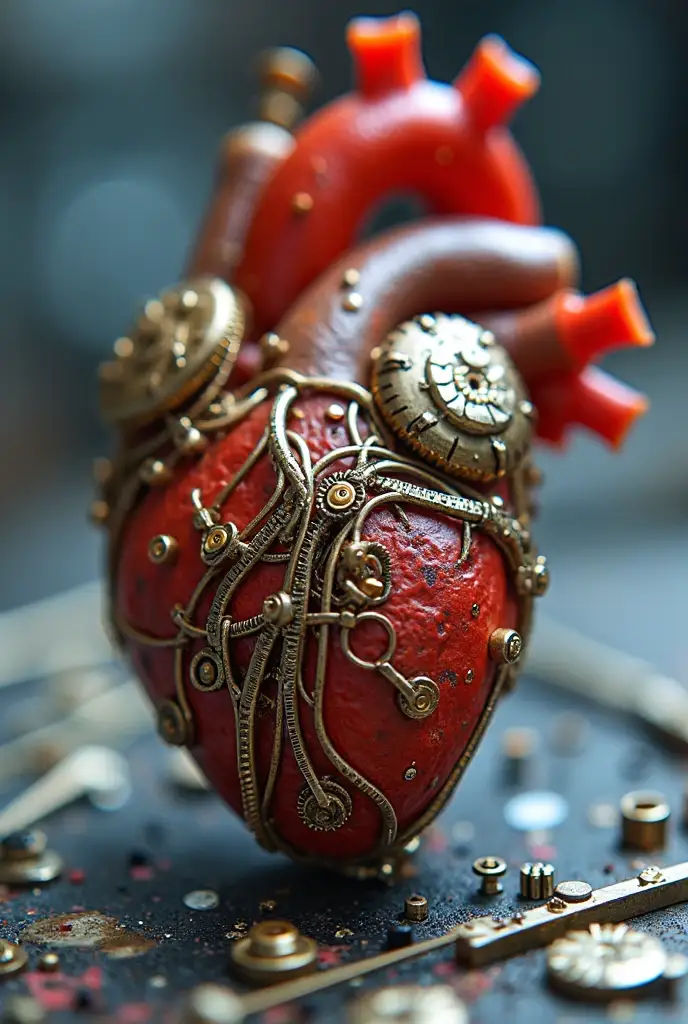
1. What Exactly Is a Leadless Pacemaker? (Spoiler: Not a Sci-Fi Gimmick—It's Real, and It's Here)
Let's start with the OG: traditional pacemakers are like clunky 90s desktop computers. They need two main parts: a generator (a "box" about the size of a matchbox) buried under your collarbone, and wires (leads) snaking into your heart to send electrical pulses. Problem? Those wires fray, the generator pocket gets infected, and "I have a pacemaker" becomes shorthand for "I've got a tech graveyard under my skin."
Take Linda, a 72-year-old retiree from Iowa. After her traditional pacemaker wires tangled and caused a painful infection, she spent three weeks in the hospital—missing her granddaughter's graduation. "I felt like a science experiment," she told me. "Every bump, every itch, I'd panic: Is this the wire breaking?"
Leadless Pacemaker? Imagine shrinking that generator into a AAA battery and ditching the wires entirely. This self-contained device (think: a vitamin capsule with a degree in cardiology) is implanted directly into the heart via a thin catheter. No wires, no pocket, just a 1-gram wonder clinging to your heart's inner wall, keeping your rhythm in check. It's like upgrading from dial-up to 5G—for your ticker. 📶
How'd they pull this off? Engineers swapped bulky batteries for ultra-thin lithium-ion tech and designed "tines" (microscopic, flexible claws) to anchor the device without glue or screws. It's not magic—it's micromachines.
2. How Big Is a Leadless Pacemaker? (Smaller Than Your Coffee Pod—No Joke, and Here's Why Size Matters)
Size matters here, and the Leadless Pacemaker slays. Traditional models clock in at ~45mm x 35mm (about a deck of cards), with leads stretching 12-18 inches (hello, internal jump rope!). Leadless? Try 1/10th the size:
- Micra (Medtronic): 25mm long x 6mm wide—smaller than a Tic Tac, lighter than a paperclip (1.7g). It fits on your fingertip like a tiny silver crown. 👑
- Aveir (Boston Scientific): 24mm x 6mm, with a "retrieval cord" for easy removal. It's so sleek, it could be mistaken for a high-end earbud (but way more important). 🎧
Why does size matter beyond bragging rights? Smaller means safer. Traditional pacemakers' bulk can shift under the skin, causing chronic pain. The Leadless Pacemaker? It's so lightweight, most patients forget it's there.
Dr. Raj Patel, a cardiologist in Miami, shared a story: "One patient went skydiving six weeks post-op—she didn't feel a thing. Her old pacemaker would've left her bruised for months."

3. Why Wires Are So Last Century (And Leadless Pacemaker Is the Future—With Data to Prove It)
If traditional pacemakers were flip phones, the Leadless Pacemaker is a foldable iPhone. Here's why wires are out, and wire-free is in—with cold, hard stats:
No Infection Drama
Wires rub against skin, creating a bacteria playground (gross). A 2023 study in JAMA Cardiology found traditional pacemaker infections spike 15% in diabetes patients. The Leadless Pacemaker skips the pocket, slashing infection risk by 80% (goodbye, post-op antibiotics and "Why does my chest hurt?" panic!). 😷
Surgery? More Like a Coffee Run
Traditional implants take 2+ hours, leave a 3-inch scar, and require a hospital stay. Leadless Pacemaker? 30 minutes, a tiny incision (think: ear piercing, not sword fight), and you're back to brunch the next day. Recovery snack: pancakes. Always pancakes. 🥞
Dr. Maria Gonzalez, who's implanted 200+ Leadless Pacemakers, said: "I once did a procedure during my lunch break. The patient texted me later: 'Just finished my Pilates class—thanks, doc!'"
MRI-Friendly
Old pacemakers? "Sorry, no MRI—too much metal." The Leadless Pacemaker? "Scan away, doc—we're 1.5T/3.0T ready!" A 2024 case study in Radiology followed a patient with a brain tumor: thanks to her Leadless Pacemaker, doctors scanned her head and heart in one go, catching the tumor early. No more "Is that a tumor or just my pacemaker?" guesswork. 🩻
Battery Life
Leadless Pacemaker batteries last 10-12+ years. Traditional? 5-7. No one wants to redo heart surgery like it's a Netflix password reset. 🔄
Meet James, a 68-year-old cyclist: "My old pacemaker died after 6 years. I had to cancel my cross-country bike trip for surgery. With the Leadless Pacemaker? I'm planning a 70th birthday ride from Maine to Florida—no wires, no worries."
4. Micra vs. Aveir: The Two Heavyweights (Which One's Right for You? We Asked Doctors and Patients)
Not all Leadless Pacemakers are created equal. Let's meet the stars—and what real users say:
Micra (Medtronic): The OG Trailblazer
Launched in 2015, Micra was the first FDA-approved Leadless Pacemaker. It uses "tines"—tiny, flexible claws—to grip the heart wall (no glue, no screws—just gentle grabbing). Bonus: It's MRI-cleared for any body part, so even your aching knee gets scanned.
Patient Take: "I'm a yoga instructor, and MRI scans are part of my back pain management. Micra let me keep teaching without missing a beat," said Sarah, 59.
Downside: Once placed, it's permanent (no removal option—oops!).
Dr. Patel noted: "We've had to leave a few in place when patients needed upgrades, but it's rare—they're built to last."
Aveir (Boston Scientific): The Upgrade King
Aveir hit the market in 2021, aiming to fix Micra's biggest flaw: removal. It has a thin retrieval cord, so docs can yank it out if needed (hello, future tech upgrades!). It also boasts a longer battery life (12+ years) and a slimmer profile.
Patient Take: "I'm a tech nerd—I wanted the option to swap it out if something better comes along," said Mark, 62. "Aveir's retrieval cord feels like insurance for my heart."
The Catch: Slightly pricier, but worth it if you're a "just-in-case" person. 🛠️

5. Leadless Pacemaker X-Ray: What Does It Look Like Inside? (Spoiler: Adorable—And a Diagnostic Game-Changer)
Ever wondered what a Leadless Pacemaker looks like zapped into a heart? Picture a tiny silver capsule (Micra) or a sleek titanium cylinder (Aveir) clinging to the heart's inner wall, no wires in sight. X-rays show it as a pinpoint of light, blending in like a well-placed earring.
Radiologist Dr. Emily Carter shared: "With traditional pacemakers, X-rays looked like a mess of wires—like a spider's web in the chest. Now? It's clean. We can spot heart defects, tumors, or blockages without squinting through a maze."
Patients often joke, "It looks like I swallowed a glow stick!" (Spoiler: It doesn't glow... but wouldn't that be cool?) 🌟
6. Beyond Hearts: Where Else Is This Tiny Tech Shining? (Spoiler: Everywhere)
The Leadless Pacemaker isn't just a medical rockstar—they're sparking a revolution in miniaturized, wire-free tech across industries. Here's where they're making waves:
Aerospace
Airlines hate weight (it's why they charge for your carry-on). Leadless sensors in jet engines ditch wires, cutting fuel costs and failure risks. Boeing's testing them for engine monitoring—because "flying without wires" beats "flying with a nest of spaghetti." ✈️
A Boeing engineer told me: "We're talking 200+ pounds saved per plane. Over a year, that's 10 million gallons of fuel—enough to power 50,000 homes."
Automotive
Your car's dashboard has more wires than a 90s rock band's amp setup. Leadless sensors could replace them: wire-free tire pressure monitors (no more "Why's this light on?!" panic), seatbelt tension sensors, even engine diagnostics. Tesla's R&D team? Taking notes furiously. 🚗
A Tesla prototype with leadless sensors recently hit the road: "We reduced wiring by 30%," said a designer. "That means more space for batteries—and longer range."
Consumer Electronics
Wireless earbuds are just the start. The Leadless Pacemaker proves "no wires" ≠ "no power." Smartwatches could soon ditch charging ports, using tiny, long-lasting batteries. Imagine a toaster that charges wirelessly—no more tripping over cords. (RIP, my shins.) 🕹️
Apple's 2025 patent? A "self-powered wrist device" inspired by Leadless Pacemaker tech. "We're aiming for 10-year battery life," a source revealed. "No more daily charging—just set it and forget it."
The Big Takeaway (With a Little Extra Heart)
The Leadless Pacemaker isn't just about fixing hearts—they're about rethinking how we build tech. Smaller, smarter, wire-free. From your heart to your car to your kitchen, this tiny revolution is proving that sometimes, less (wire) is way, way more.
So next time you're untangling headphone cords, spare a thought for the engineers who said, "Enough." And if you ever need a pacemaker? Ask for the "wire-free" model—your heart (and your inner minimalist) will thank you. ❤️
Got a tech pet peeve? (We're looking at you, USB-C vs. Lightning wars.) Drop it below—I'll start: My old Bluetooth speaker had three cords. Three. 😤

 FAQ
FAQ




.png?x-oss-process=image/format,webp/resize,h_32)


