
 German
 Japanese
 Portuguese
 Korea
Korea
 Mexico
 Dutch
Dutch


Analog Devices Inc./Maxim Integrated
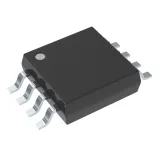
MAX968EUA


Why Choose Us?
Professional Platform
B2B & B2C purchasingDelivery at full speed
1-2 days deliveryWide variety
Original manufacturers365 days guarantee
Responsible quality

.png)


Tech Specifications
MAX968EUA Description
MAX968EUA Description
The MAX968EUA is a high-performance, dual window comparator designed by Analog Devices Inc./Maxim Integrated. This IC is part of the Linear Comparators category and is known for its robust performance and versatile applications. The MAX968EUA features a Common Mode Rejection Ratio (CMRR) of 56.48dB and a Power Supply Rejection Ratio (PSRR) of 80dB, ensuring precise signal comparison even in noisy environments. With a quiescent current of only 16µA, it is highly energy-efficient, making it suitable for battery-powered and low-power applications.
The MAX968EUA operates on a supply voltage range of 1.6V to 5.5V, providing flexibility in power supply requirements. It also boasts a low input bias current of 0.005µA at 5.5V and an input offset voltage of 15mV at 5.5V, which ensures accurate comparisons with minimal error. The comparator has a propagation delay of 20µs, making it suitable for applications requiring fast response times.
MAX968EUA Features
- High CMRR and PSRR: With a CMRR of 56.48dB and PSRR of 80dB, the MAX968EUA ensures accurate comparisons by rejecting common-mode and power supply noise.
- Low Quiescent Current: Consuming a maximum of 16µA, the MAX968EUA is ideal for low-power applications, extending battery life in portable devices.
- Wide Operating Voltage Range: The comparator operates from 1.6V to 5.5V, providing flexibility in power supply options.
- Low Input Bias Current: At 0.005µA, the low input bias current minimizes the impact on the input signal source.
- Low Input Offset Voltage: With a maximum input offset voltage of 15mV at 5.5V, the MAX968EUA ensures high accuracy in signal comparison.
- Fast Propagation Delay: A maximum propagation delay of 20µs allows for quick response times, making it suitable for real-time applications.
- Surface Mount Package: The MAX968EUA is available in a surface mount package, facilitating easy integration into compact designs.
- Moisture Sensitivity Level 1: With an MSL rating of 1 (Unlimited), the MAX968EUA is suitable for a wide range of environmental conditions.
- Compliance: The MAX968EUA is REACH unaffected and ROHS3 compliant, ensuring it meets environmental and safety standards.
MAX968EUA Applications
The MAX968EUA is ideal for applications requiring precise signal comparison and fast response times. Its low power consumption and wide operating voltage range make it suitable for a variety of applications, including:
- Battery Management Systems: The low quiescent current and wide voltage range make it ideal for monitoring battery levels in portable devices.
- Power Supply Monitoring: The high PSRR ensures accurate monitoring of power supply voltages, even in noisy environments.
- Signal Processing: The low input bias current and offset voltage make it suitable for processing sensitive analog signals.
- Automotive Applications: The robust performance and compliance with environmental standards make it suitable for automotive electronics.
- Industrial Control Systems: The fast propagation delay and high CMRR make it ideal for real-time control and monitoring applications.
Conclusion of MAX968EUA
The MAX968EUA is a versatile and high-performance dual window comparator that offers significant advantages over similar models. Its low power consumption, wide operating voltage range, and high CMRR and PSRR make it suitable for a wide range of applications, from battery management to industrial control systems. The MAX968EUA's low input bias current and offset voltage ensure accurate signal comparisons, while its fast propagation delay allows for real-time monitoring and control. Despite being marked as obsolete, the MAX968EUA remains a valuable component for engineers seeking a reliable and efficient comparator solution.
FAQ
Not available to buy online? Want the lower wholesale price? Please Send RFQ to get best price, we will respond immediately









.png?x-oss-process=image/format,webp/resize,h_32)


