
 German
 Japanese
 Portuguese
 Korea
Korea
 Mexico
 Dutch
Dutch


Intel
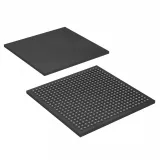
EP1K30FC256-3


Why Choose Us?
Professional Platform
B2B & B2C purchasingDelivery at full speed
1-2 days deliveryWide variety
Original manufacturers365 days guarantee
Responsible quality

.png)


Tech Specifications
EP1K30FC256-3 Description
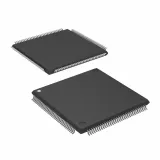
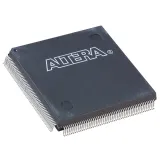
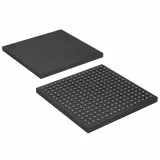
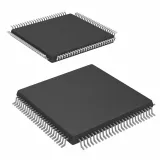
Intel's EP1K30FC256-3 is a field-programmable gate array (FPGA) device that is designed to provide high-performance, low-power, and flexible solutions for a wide range of applications. Here is a description of the model, its features, and potential applications:
Model: EP1K30FC256-3
Description:
The EP1K30FC256-3 is a member of Intel's MAX 10 family of FPGAs. It is a compact, low-power device that offers a balance of performance, power efficiency, and cost-effectiveness. This FPGA is built on a 28-nanometer low-power process technology and features a range of I/O options, making it suitable for various applications.
Features:
-
Performance: The EP1K30FC256-3 offers high-performance capabilities with up to 256 digital signal processing (DSP) blocks and 27,936 logic elements (LEs) for complex computations and data processing tasks.
-
Memory: The device provides up to 1,152 megabits of ultra-high-performance memory blocks, allowing for efficient data storage and retrieval.
-
I/O Options: The EP1K30FC256-3 supports a wide range of I/O standards, including LVCMOS, LVDS, and DDR, making it compatible with various external interfaces and communication protocols.
-
Low Power: Built on a 28-nanometer low-power process technology, the EP1K30FC256-3 is designed to offer power efficiency, making it suitable for battery-powered and energy-sensitive applications.
-
Security: The device features robust security features, such as secure boot and bitstream encryption, to protect intellectual property and ensure data integrity.
-
Development Tools: Intel provides a comprehensive set of development tools, including the Intel Quartus Prime software, to help engineers design, simulate, and program the EP1K30FC256-3 FPGA.
Applications:
-
Communications: The EP1K30FC256-3 can be used in communication systems, such as base stations, routers, and switches, for tasks like data processing, packet classification, and network management.
-
Industrial Automation: The FPGA's low power consumption and flexible I/O options make it suitable for industrial automation applications, such as motor control, sensor interfacing, and process monitoring.
-
Consumer Electronics: The device can be used in consumer electronics, such as smart TVs, set-top boxes, and gaming consoles, for tasks like image and video processing, audio processing, and user interface management.
-
Automotive: The EP1K30FC256-3 can be employed in automotive applications, such as advanced driver assistance systems (ADAS), infotainment systems, and powertrain control, to enable real-time processing and decision-making.
-
IoT and Edge Computing: The FPGA's low power and high-performance capabilities make it suitable for IoT devices and edge computing applications, where data processing and decision-making need to be performed close to the data source.
In summary, Intel's EP1K30FC256-3 is a versatile FPGA device that offers a combination of performance, power efficiency, and flexibility, making it suitable for a wide range of applications in various industries.
FAQ
Not available to buy online? Want the lower wholesale price? Please Send RFQ to get best price, we will respond immediately





.png?x-oss-process=image/format,webp/resize,h_32)


