
 German
 Japanese
 Portuguese
 Korea
Korea
 Mexico
 Dutch
Dutch




Why Choose Us?
Professional Platform
B2B & B2C purchasingDelivery at full speed
1-2 days deliveryWide variety
Original manufacturers365 days guarantee
Responsible quality

.png)



Tech Specifications
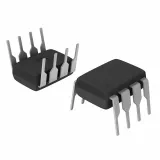
N80C452 Description
The Intel N80C452 is a microcontroller unit (MCU) that was introduced by Intel in the late 1980s. It is a member of the Intel 8051 family of 8-bit microcontrollers, which were widely used in a variety of embedded systems and industrial applications.
Description:
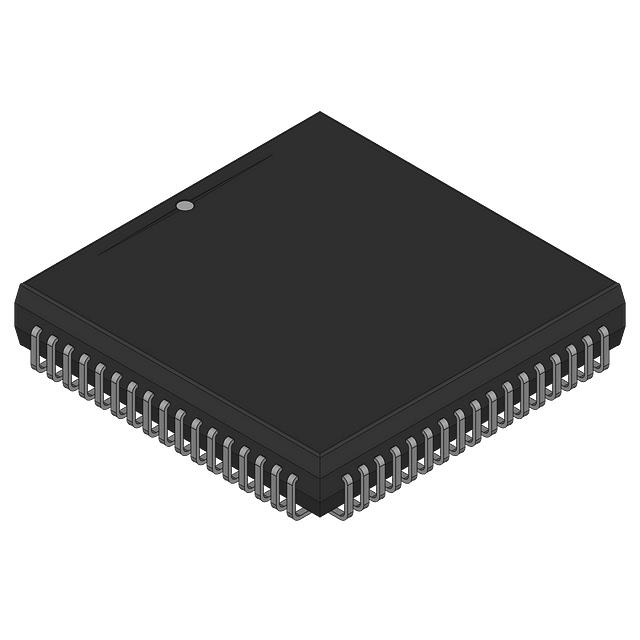
The N80C452 is a high-performance, low-power CMOS 8-bit microcontroller that features a rich set of on-chip peripherals and interfaces. It is fabricated using Intel's advanced CMOS technology and is available in a 40-pin PDIP (plastic dual in-line package) or a 44-pin PLCC (plastic leadless chip carrier) package.
Features:
Some of the key features of the N80C452 include:
- 8-bit CPU with a clock frequency of up to 24 MHz
- 4KB of on-chip ROM (read-only memory)
- 128 bytes of on-chip RAM (random access memory)
- 16-bit timer/counter with three modes of operation
- 16-bit auto-reload timer
- 4-channel 8-bit programmable digital-to-analog converter (DAC)
- 16-bit capture/compare timer
- 16-bit baud rate generator for serial communication
- 16-bit pulse width modulator (PWM)
- 64 bytes of EEPROM (electrically erasable programmable memory)
- 26 general-purpose I/O pins
- Watchdog timer with separate oscillator
- Power-on reset circuit
- Low-power sleep mode
Applications:
The N80C452 was widely used in a variety of applications, including:
- Industrial control systems
- Medical equipment
- Automotive electronics
- Telecommunication systems
- Home appliances
- Office automation equipment
- Robotics
- Security systems
- Data acquisition and signal processing systems
- Embedded systems in general
The N80C452's rich set of on-chip peripherals and interfaces, combined with its high performance and low power consumption, made it a popular choice for many embedded systems and industrial applications. However, it is worth noting that the N80C452 has been largely superseded by more modern microcontrollers, and it is no longer in production.
FAQ
Not available to buy online? Want the lower wholesale price? Please Send RFQ to get best price, we will respond immediately










.png?x-oss-process=image/format,webp/resize,h_32)


