
 German
 Japanese
 Portuguese
 Korea
Korea
 Mexico
 Dutch
Dutch



Texas Instruments
LF444CN


Why Choose Us?
Professional Platform
B2B & B2C purchasingDelivery at full speed
1-2 days deliveryWide variety
Original manufacturers365 days guarantee
Responsible quality

.png)


Tech Specifications
LF444CN Description
LF444CN Description
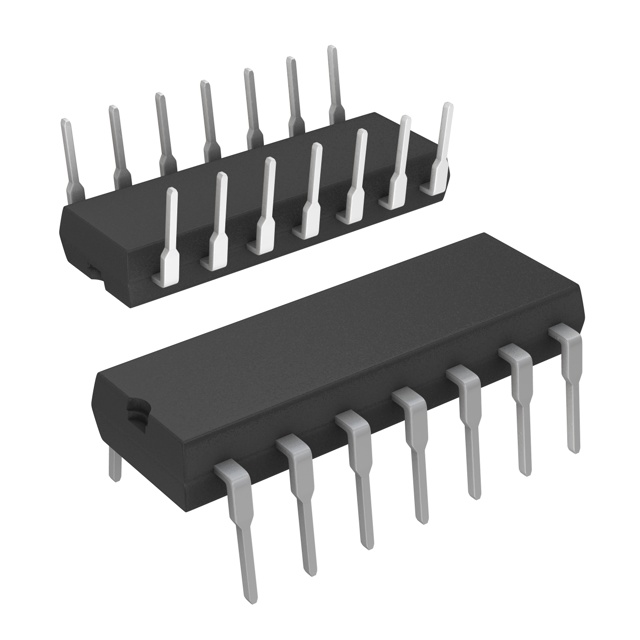
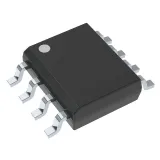
The LF444CN is a high-performance operational amplifier (op-amp) from Texas Instruments, designed for a wide range of analog signal processing applications. This quad op-amp features a JFET input stage, which provides excellent performance characteristics such as low input bias current and high input impedance. The LF444CN is housed in a 14-pin DIP package, making it suitable for through-hole mounting on printed circuit boards.
LF444CN Features
- High Input Impedance: The LF444CN boasts a JFET input stage, resulting in an input bias current as low as 10 pA. This feature is particularly advantageous for applications requiring high input impedance, such as precision signal conditioning and sensor interfacing.
- Wide Supply Voltage Range: With a supply voltage range of 36 V (both minimum and maximum), the LF444CN can operate over a wide range of power supply voltages, making it versatile for various power supply configurations.
- Gain Bandwidth Product: The LF444CN offers a gain bandwidth product of 1 MHz, ensuring stable and precise amplification across a broad frequency spectrum. This characteristic is essential for applications requiring high-frequency signal processing.
- Low Offset Voltage: The input offset voltage is as low as 3 mV, which minimizes errors in precision applications and ensures accurate signal amplification.
- High Slew Rate: The LF444CN has a slew rate of 1 V/µs, enabling it to handle fast-changing signals without distortion. This is particularly useful in applications such as video signal processing and high-speed data acquisition.
- Low Supply Current: The LF444CN consumes only 600 µA across all four channels, making it energy-efficient and suitable for battery-powered or low-power applications.
- High Output Current: Each channel can deliver up to 14 mA of output current, providing robust performance and the ability to drive moderate loads directly.
- Operating Temperature Range: The LF444CN operates reliably within a temperature range of 0°C to 70°C, making it suitable for a variety of industrial and consumer applications.
LF444CN Applications
The LF444CN is well-suited for a variety of applications due to its high performance and versatility. Some specific use cases include:
- Precision Signal Conditioning: The low input bias current and high input impedance make the LF444CN ideal for interfacing with high-impedance sensors, such as photodiodes and strain gauges, ensuring accurate signal acquisition.
- Audio Processing: The wide supply voltage range and high slew rate enable the LF444CN to handle audio signals with minimal distortion, making it suitable for high-fidelity audio amplifiers and preamplifiers.
- Industrial Control Systems: The LF444CN's robust performance and wide operating temperature range make it suitable for industrial applications, such as process control and automation systems, where reliability and precision are critical.
- Data Acquisition Systems: The LF444CN's high gain bandwidth product and low offset voltage make it an excellent choice for data acquisition systems, where accurate and stable signal amplification is required.
Conclusion of LF444CN
The LF444CN from Texas Instruments is a versatile and high-performance quad op-amp, offering a combination of features that make it suitable for a wide range of applications. Its JFET input stage, wide supply voltage range, and high slew rate provide excellent performance characteristics, while its low input bias current and low offset voltage ensure precision and accuracy. Although the LF444CN is now considered obsolete, it remains a reliable and effective solution for applications requiring high-performance analog signal processing. For engineers and designers seeking a robust and versatile op-amp, the LF444CN is a worthy consideration.
FAQ
Not available to buy online? Want the lower wholesale price? Please Send RFQ to get best price, we will respond immediately










.png?x-oss-process=image/format,webp/resize,h_32)


