
 German
 Japanese
 Portuguese
 Korea
Korea
 Mexico
 Dutch
Dutch

Harnessing the Potential of an AC to DC Converter: What You Need to Know

In a world powered by electricity, the humble AC to DC converter is the unsung hero bridging the gap between the energy grid and our daily devices. From charging your smartphone to powering industrial machinery, these compact devices play a critical role in making modern life possible. Let's dive into what AC to DC conversion really entails, how to choose the right converter, and why its future matters.

Understanding AC to DC Conversion
The Basics of Alternating Current
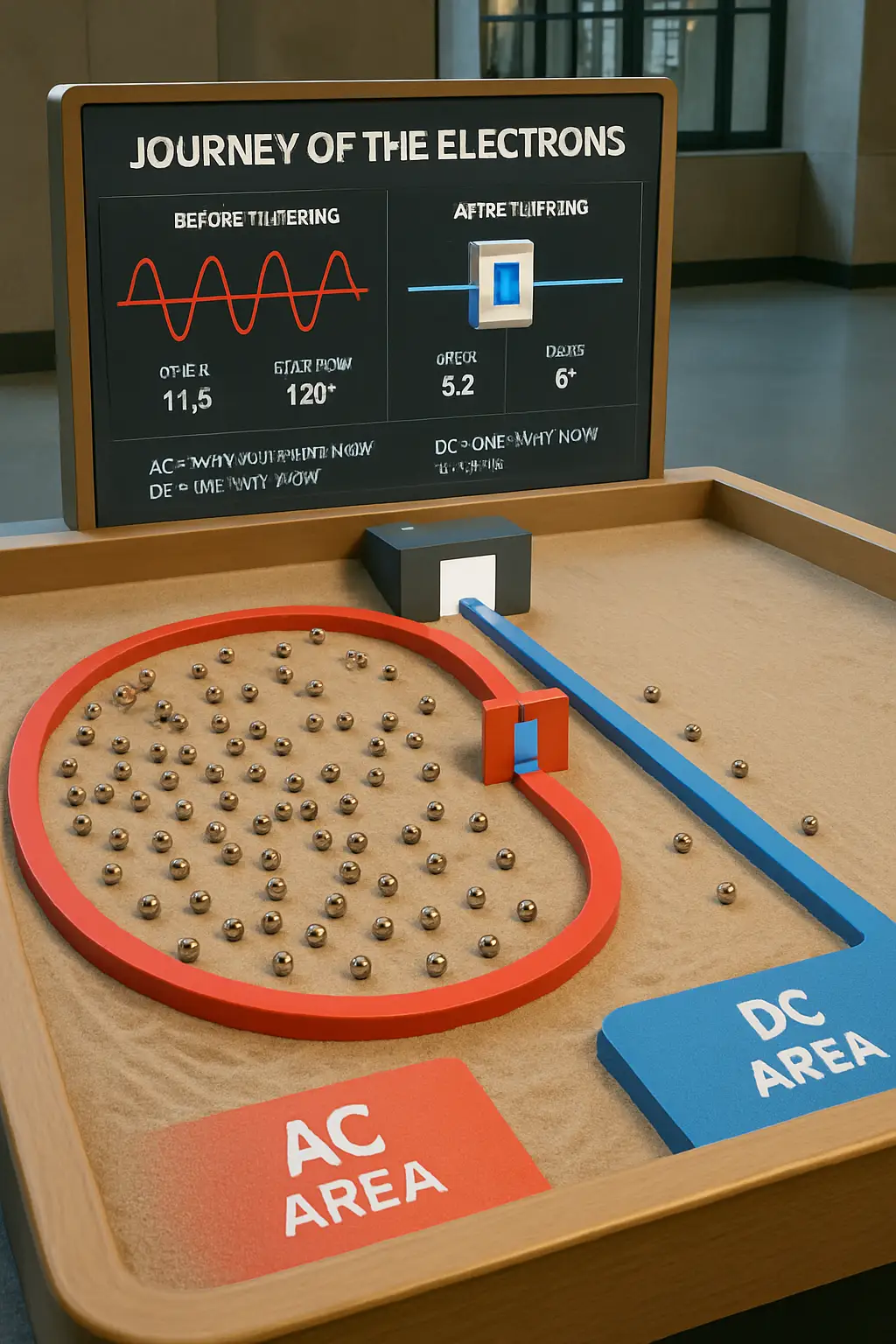
Alternating Current (AC) is the workhorse of the power grid. Imagine a sine wave—current flows forward, then reverses direction, oscillating 50–60 times per second (Hertz). This back-and-forth motion might seem counterintuitive, but it's intentional: AC travels efficiently over long distances with minimal energy loss, making it ideal for transmitting electricity from power plants to homes and businesses. When you plug a device into a wall outlet, you're tapping into this oscillating current.
The Role of Direct Current
Direct Current (DC), by contrast, is a steady, one-way flow of electricity—think of a river instead of a wave. Most electronics (smartphones, laptops, sensors) rely on DC because it delivers consistent voltage, preventing damage to delicate components. Batteries, solar panels, and fuel cells also produce DC, which is why devices need a way to "translate" AC from the grid into the DC they crave.
Types of AC to DC Converters
Linear vs. Switching Converters
Not all converters are created equal. The two primary types—linear and switching—each have unique strengths:
| Feature | Linear Converters | Switching Converters |
|---|---|---|
| Technology | The "old reliable" of the bunch. These use simple circuits to reduce AC voltage to DC, like a faucet slowly turning down water flow. | The modern workhorse. Instead of "dimming" the current, they rapidly switch AC on and off (thousands of times per second) to convert it to DC. |
| Pros | Affordable, low-noise, and easy to design | Up to 95% efficient, compact, and lightweight |
| Cons | Waste energy as heat, bulky and inefficient for high-power needs | More complex (and pricier) than linear converters |
| Best For | Low-power devices (e.g., 5V USB chargers or audio equipment) | Laptops, electric vehicles, and renewable energy systems |
Applications of Each Type
- Linear Converters: Best for small, noise-sensitive devices where simplicity matters—think medical monitors or radio transmitters.
- Switching Converters: Rule the roost in high-power scenarios: EV chargers, solar inverters, and data center power supplies all rely on their efficiency.

Selecting the Right Power Converter
Key Specifications to Consider
Choosing a converter isn't just about picking "linear" or "switching." You'll need to match it to your device's needs:
Voltage & Current
The converter's output voltage (e.g., 12V) and current (amps) must match your device. Too much voltage = fried circuits; too little = no power.
Wattage
Calculate power (Watts = Volts x Amps) to ensure the converter can handle your device's peak demand (e.g., a 60W laptop needs a 60W+ converter).
Efficiency Rating
Look for converters with 85%+ efficiency (common in switching models) to save energy and reduce heat.
Ripple Voltage
This measures how "smooth" the DC output is. Low ripple (<100mV) is critical for sensitive electronics like microcontrollers—imagine trying to write with a shaky hand vs. a steady one.
Leading AC to DC Converter Suppliers
While there's no shortage of brands, industry leaders like Mean Well, Ersa Electronics, and Vicor are trusted for reliability. For consumer devices, Anker and Belkin offer user-friendly adapters, while industrial applications often turn to Siemens or Texas Instruments for custom solutions. Always check for safety certifications (UL, CE) to avoid fire or electrical hazards.
Practical Applications in Industry
Power Supply for Electronics
Nearly every electronic device you own depends on AC to DC conversion:
- Consumer Tech: Your phone's charger converts 120V/240V AC to 5V DC; laptops use 19V DC adapters.
- Industrial Machinery: Factory robots, CNC machines, and sensors run on stable DC to avoid glitches from AC fluctuations.
- Automotive: Modern cars use DC for everything from infotainment systems to electric power steering—even the alternator converts AC (generated by the engine) to DC for the battery.
Renewable Energy Systems
AC to DC conversion is the backbone of green energy:
- Solar Panels: Generate DC, which is converted to AC via inverters for home use—or stored as DC in batteries.
- Wind Turbines: Produce variable AC, which is first rectified to DC (for smoothing) then converted back to grid-compatible AC.
- Energy Storage: Batteries (like Tesla's Powerwall) store DC, requiring converters to feed excess energy back to the grid as AC.
Future Trends in AC to DC Technology
Innovations in Conversion Efficiency
The race for better efficiency is heating up. New materials like silicon carbide (SiC) and gallium nitride (GaN) are replacing traditional silicon in converters, reducing energy loss and allowing smaller, faster designs. GaN chargers, for example, are now common in phone adapters—same power, half the size of older models.
Potential Developments in Converter Design
- Smart Converters: IoT-enabled models that adjust output in real time (e.g., solar inverters that optimize for cloud cover).
- Integration with Energy Storage: Converters that seamlessly switch between grid AC, battery DC, and renewable sources (critical for "smart homes").
- Miniaturization: Tiny, chip-sized converters for wearables and medical implants, where space is at a premium.
Final Thoughts
AC to DC converters may not grab headlines, but they're the silent enablers of our connected world. Whether you're charging a phone or powering a wind farm, understanding their basics helps you choose smarter, more efficient solutions. As technology advances, these little devices will only grow more critical—bridging the gap between the grid of today and the renewable, connected future of tomorrow.
Got a converter question? Drop it in the comments—let's geek out together!

 FAQ
FAQ








.png?x-oss-process=image/format,webp/resize,h_32)


